The Privilege of a Second Chance

Reunited with Judge • February 16th, 2025

I was given two options: immediate surgery or I needed to say goodbye. The surgery wasn’t guaranteed, the risks were high, and there was no promise of a miracle. But when I looked into Judge’s eyes, I knew it wasn’t time for us to part.

You see, his eyes told me everything—full of life, determination, and an unbreakable spirit that’s always defined him. And in those eyes, I saw a Rolodex of memories and moments in which Judge never gave up on me. Not once. Through every high and low, he’s been there, my constant, my protector, my best friend. How could I possibly give up on him now?

The doctors were honest. They told me the risks, the during and post-operative possibilities. But they also told me Judge was strong with an excellent heart—minus a bum spleen, Judge was a relatively healthy German Shepherd. It was all I needed to hear.

But making that choice was a privilege.

Emergency surgery isn’t just a matter of love and loyalty—it’s a matter of resources. It requires financial stability, access to specialized care, and the ability to take time away from life’s other responsibilities to be fully present for recovery. Not everyone has that choice. For many, the cost of life-saving surgery for a pet is simply out of reach. For others, the lack of nearby medical facilities or the inability to take time off work becomes the deciding factor.

When I stood at that crossroads, I was painfully aware of this privilege. I had a support system that rallied around me, offering love, prayers, and help with life’s other demands. I had access to my own veterinarian, the Veterinary Emergency Group, and Cornell’s exceptional veterinary team which carried out the life saving surgery. Without any one of those things, the outcome could have been heartbreakingly different.

This awareness weighed heavily on me because I know so many people face the same gut-wrenching decision without the resources to choose hope. I was able to fight for Judge because I had the privilege to do so. But others have to make the hardest choice of all—not because they don’t love their pets just as fiercely, but because life’s realities leave them no other option.

Judge isn’t just a dog. He’s my family, my guardian, my heart. He’s watched over my son, protected our home, and shown me a love so pure it’s changed me for the better. He is the reason why I started my entire dissertation over and focused on the adolescent-animal bond in secondary settings. In Judge, I saw the power of connection, the depth of loyalty, and the healing power that only a dog’s love can bring. His impact on my life was profound enough to shape my career, my research, and my purpose.

Today, the doctors are hopeful. Even with three liters of blood in his abdomen, the surgery was clean, a successful splenectomy, and Judge is home healing. He’s eating like the picky king of the castle that he is, back to reigning over his Mötley crew, his spirit as unbreakable as ever. Watching Judge return to himself, sneaking back to his spot on the couch, seeing that familiar spark in his eyes cataloging another memory together—it’s nothing short of a miracle.

Judge’s road to recovery won’t be easy, but he’s here, alive, because he never gave up and because I had the privilege to fight for him—just as he’s always fought for me. But for those who aren’t given that choice, my heart aches.

I will never take for granted the opportunity I had to fight for Judge and will advocate for solutions to ensure all pet parents can make balanced choices for the well-being of their furry family member—without having to choose between love and necessity. It’s my hope that one day, every pet parent will have the freedom to choose what’s best for their pet, without limitations.


I want to sincerely thank the veterinary teams at White Plains Animal Hospital, Veterinary Emergency Group of White Plains, and Cornell University Veterinary Specialists of Stamford. Your expertise, compassion, and dedication have meant everything to our family and Judge. You’ve given us more than just a second chance—you’ve given us hope. I am forever grateful for all you’ve done to give us back our Judgie Boy.

Building Trust, One Paw at a Time: Using an Extracurricular Club to Introduce Therapy Dogs in Schools

Many educators and school leaders recognize the benefits of therapy dogs in academic settings but hesitate to implement a full-scale program due to knowledge gaps, logistical challenges, financial constraints, or policy concerns. A Therapy Dog Club offers a structured, low-risk way to introduce animal-assisted therapies, easing leadership apprehensions. In fact, I strongly recommend beginning the therapy dog implementation process in this way to build trust in the program’s effectiveness while addressing concerns in a controlled environment.

So let’s dive in together as I define the concept of a Therapy Dog Club, outline its benefits, and provide a brief guide to getting started.

What is a Therapy Dog Club?

As I define it, a Therapy Dog Club is a student-led, faculty-advised group that brings trained therapy dogs into a school environment on a scheduled basis. The club provides a structured, low-risk way for students and staff to interact with therapy dogs, typically for emotional support, stress relief, and social engagement. It allows students to experience the benefits of animal-assisted interventions without the immediate need for implementing a full-time therapy dog program.

Participation is voluntary, making it an accessible option for a wide range of students. In my view, a Therapy Dog Club operates on a smaller, flexible scale, bringing therapy dogs into the school on specific days rather than having a resident dog on campus daily. Additionally, a Therapy Dog Club may meet after school or during designated extracurricular periods, which can be particularly appealing to school and district leaders.

Benefits of a Therapy Dog Club

Eases Administrative Concerns

Even with strong research supporting the benefits of therapy dogs, one of the biggest barriers to implementation is navigating perceptions, assumptions, and stereotypes. A club helps schools challenge misconceptions and test the waters before committing to a full-time therapy dog program. It also offers:

• Student Autonomy – Participation is voluntary, so students who are uncomfortable around dogs or have allergies can simply opt out. This eliminates concerns about mandatory exposure in classrooms or common areas.

• Waivers for Participants – Schools can require students (and guardians, if necessary) to sign waivers acknowledging participation and understanding any risks. This adds a layer of protection for the school and provides transparency for families.

• Gradual Implementation – Schools can observe how students and staff interact with therapy dogs before considering a larger-scale program. This allows time to refine policies, address concerns, and build community support.

Provides Emotional and Social Benefits for Students

A Therapy Dog Club offers many of the same emotional and mental health benefits as a full program. Interacting with therapy dogs has been shown to reduce stress, improve mood, and boost social interactions—all of which can be particularly helpful for students struggling with anxiety, academic pressure, or social isolation (Maricevic, 2022).

Fosters Student Leadership and Engagement

A Therapy Dog Club empowers students to take on leadership roles by organizing events, coordinating with therapy dog teams, and advocating for expanding the club into a full program. Giving students ownership fosters responsibility, teamwork, and community engagement.

Strengthens Community Partnerships

Starting a club opens the door to collaborations with local therapy dog organizations, shelters, or animal-assisted therapy programs. Schools can invite certified therapy dogs for visits, partner with community groups for educational sessions, or create service-learning opportunities where students volunteer with therapy animals.

Gathers Data to Support a Future Program

If a school is hesitant about implementing a therapy dog program, a club can serve as a pilot initiative to collect data on the impact of animal-assisted therapies. Surveys, testimonials, and anecdotal evidence from students, teachers, parents, and other key stakeholders can provide compelling reasons to expand the club into a permanent program.

How to Start a Therapy Dog Club

Identify a Faculty Advisor – A teacher, counselor, or staff member passionate about student well-being and animal therapy can oversee the club.

Partner with Local Therapy Dog Organizations – Certified therapy dog teams can schedule regular visits to meet with students.

Plan Activities – Meetings can include guest speakers, stress-relief sessions, volunteer opportunities, and advocacy efforts for therapy dog programs.

Involve Students – Let students lead initiatives, create outreach materials, and develop events.

Implement Waivers – Have students (and their guardians, if needed) sign participation waivers to ensure transparency and address liability concerns.

Final Thoughts

A Therapy Dog Club is a low-risk, high-reward way for schools to explore the benefits of therapy dogs before committing to a full program. It fosters a positive school culture, supports student mental health, and builds a foundation for a larger initiative in the future.

If your school is on the fence about a therapy dog program, starting with an extracurricular offering might be the perfect first step. By starting small and scaling thoughtfully, schools can introduce therapy dogs in a way that minimizes risks, maximizes benefits, and paves the way for a sustainable, well-integrated program.

If Therapy Dogs are Good Enough for the USA Gymnastics Team, They’re Good Enough for America’s High School Students

How therapy dogs are alleviating pressure felt by elite athletes even at Olympic levels by Steve Dorfman of The Palm Beach Post

I don’t know about you, but I am totally hyped up for the 2024 Olympic Games, ready to cheer on Team USA in all sports. But let’s be real, the Olympic Games aren’t just any old event—this is the high-pressure world of elite sports, where the best of the best compete in the revered global arena, and when an athlete’s physical fitness and success is dependent upon their emotional wellbeing.

Which is why in the weeks leading up to the Olympic Games, I was elated to learn about USA Gymnastics prioritization of the mental and emotional wellbeing of athletes prior to the start of the games. I loved how my social media algorithm flooded my social media feed with videos and images of the USA Gymnastics team warmly embracing therapy dogs to help manage stress and anxiety.

Naturally, I loved these videos and images, and their recurring appearance inspired me to consider my own advocacy efforts. Maybe if the entire world was able to observe the positive effects of therapy dogs on the wellbeing of elite athletes then there might be a more clear pathway to connect the dots to the potential benefits for other groups, like America’s high school students.

If you know me, then you know that my next series of wonderings centered around one thematic implication: if highly driven and talented athletes benefit from the presence of therapy dogs, then high school students across America could also gain significant advantages from similar support. 

At the end of the day, high school students are not fundamentally different from elite athletes in their need for support. For high school students, the academic environment can be a significant source of stress (Maricevic, 2022). Like the gymnast’s pressure to perform flawlessly in routines, maintain peak physical condition, and compete at high-stakes events, high school students can often feel overwhelming pressure to excel academically, manage social relationships, and plan for the future. Incorporating therapy dogs into schools in the same manner as USA Gymnastics offers a valuable outlet for stress relief and emotional support for adolescents. If therapy dogs can aid aspiring Olympians in achieving their goals, they can also play a crucial role in helping America’s teenagers manage the challenges of high school.

So here we go! Here’s a brief argument for why high school students deserve therapy dogs in their learning environment just as much as elite athletes. Let’s begin!

A Quick Refresher on the Benefits of Therapy Dogs

Therapy dogs are dogs specially trained to offer comfort and companionship in a range of public and private settings, including schools, hospitals, and environments affected by traumatic events (Maricevic, 2022). Their presence profoundly impacts individuals’ emotional and mental health (Maricevic, 2022). Research, including my own, confirms that interacting with therapy dogs significantly reduces anxiety, stress, and symptoms of depression in humans, especially for adolescents (Maricevic, 2022). Furthermore, there are notable physical benefits attached to the human-animal bond, such as increased levels of oxytocin—a hormone linked to bonding and emotional well-being—and decreased levels of cortisol, the stress hormone (McDowall, 2023).

A Beacon of Possibilities

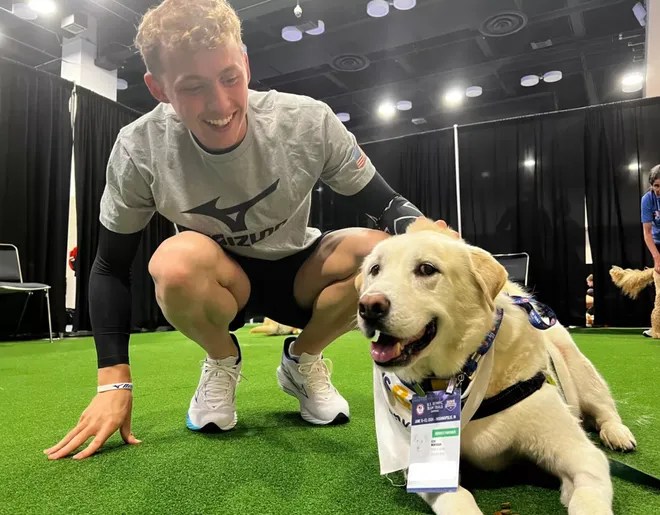
You can thank this entire post to Beacon. Beacon, a 4-year-old golden retriever therapy dog, is a pivotal part of USA Gymnastics’ efforts to transform the sport’s toxic culture.

Beacon, along with a brigade of therapy dogs contributed to the national competitions by offering a calming presence to the athletes (even swimmers). One such athlete, Joscelyn Roberson, expressed her love for Beacon saying, “He’s so cute! I’ve already told people that this is the best thing that U.S.A. Gymnastics can do for us” (Macur, 2024).

Under the leadership of Chief Executive Officer Li Li Leung, the USA Gymnastics organization made significant strides in prioritizing mental health following scandals and revelations about the toxic environment in the sport. Leung underscored the importance of mental wellness, stating, “There’s no question that there was a lesson learned from Tokyo in terms of mental wellness being so critically important” (Macur, 2024). Leung’s commitment to this priority is demonstrated through the inclusion of nearly 20 dog-and-handler teams during the U.S. National Gymnastics Championships in Fort Worth this year, providing much-needed emotional support.

According to NBC News, Beacon, the organization’s “first official therapy dog,” made rounds during the trials, watching over athletes and coaches (Portée 2024). As gymnasts tackled floor routines, balance beams, and vaults, Beacon was there to alleviate the strain of injuries and the stresses of the multi-day event. Beacon’s human-run Instagram page notes that he “loves pet therapy, fridge time” and “making friends with everyone” (Portee, 2024). Beacon’s handler, Tracey Callahan Molnar, shared with ESPN that Beacon’s role involves acting as an “emotional sponge” for athletes, absorbing their stress. As Molnar explained, “Beacon gets tired by the end of the day [and] absorbs the stress of the people they’re relieving the stress off of” (Portee, 2024). Although exhausting work, it is profoundly meaningful.

Extending the Success of Therapy Dogs to High Schools

The success of Beacon and other therapy dogs with the USA Gymnastics team, as well as those that comforted members of the USA Swimming team during qualifying events, raises important questions: if therapy dogs can help aspiring Olympians achieve their dreams, in what ways, if any, can they do the same for America’s teenage population in high schools? Are high school students any less deserving of the same opportunity afforded to Olympic hopefuls? If therapy dogs provide emotional support and stress relief for success in the athletic arena, why shouldn’t they do the same for high school students to thrive in the academic arena? More importantly, why aren’t they?

How therapy dogs are alleviating pressure felt by elite athletes even at Olympic levels by Steve Dorfman of The Palm Beach Post’s photo of American swimmer Carson Foster with therapy dog Izzo. Courtesy of USA Swimming

While elite athletes certainly benefit from therapy dogs, high school students face unique and substantial pressures that make the support of therapy dogs not just beneficial but essential as they experience significant stress and emotional challenges that can deeply impact their academic performance and overall well-being. The academic demands, social pressures, and the uncertainty about the future create a high-stress environment. Therapy dogs offer a much-needed respite, providing emotional support and reducing stress in ways that are crucial for students navigating these formative years.

Not to mention the transition from adolescence to adulthood is a critical period of physical and emotional maturation where students are developing essential life skills, including emotional regulation and social interaction (Maricevic, 2022). Therapy dogs as a presence during this period of development help in fostering emotional resilience, enhancing social skills, and building empathy, foundational skills for personal growth and future success, thus making the presence of therapy dogs an invaluable support system during this developmental stage (Maricevic, 2022).

The research that accompanies my advocacy for therapy dogs in high school settings does not diminish the reality elite athletes face from intense pressure and high expectations. However, their access to support systems and resources is generally more robust and innovative, as observed through the inclusion of Beacon. Elite athletes often have dedicated mental health professionals, coaches, and structured programs to address their needs. In comparison, high school students may lack such comprehensive support, all the more reason to include therapy dogs as a particularly impactful and equitable enhancement to their educational experience, addressing a critical need by supporting students in a holistic and meaningful way, ultimately fostering a healthier, more supportive learning environment (Maricevic, 2022).

The example set by the USA Gymnastics team underscores the powerful role that therapy dogs can play in promoting mental health and emotional well-being. By bringing therapy dogs into high schools, educational leaders can offer students the same level of support that helps elite athletes thrive in their complex lives.

Are you convinced yet that if therapy dogs are good enough for elite athletes they are more than good enough for our high school students?

Well, here’s the deal, you should be convinced by now, and if not, let me share some important information. Incorporating therapy dogs into high schools yields a variety of positive outcomes, from enhancing the overall school environment to the student experience (Maricevic, 2022):

  • High school students experience significant stress and emotional challenges that can deeply impact their academic performance and overall well-being. The academic demands, social pressures, and the uncertainty about the future create a high-stress environment. Therapy dogs offer a much-needed respite, providing emotional support and reducing stress in ways that are crucial for students navigating these formative years.
    • Reduced Stress and Anxiety: Therapy dogs help lower students’ stress and anxiety levels, creating a more relaxed and conducive learning environment.
    • Improved Academic Performance: Lower stress levels leads to better focus and concentration, improving academic performance.
    • Enhanced Emotional Support: Therapy dogs provide unconditional love and companionship, offering a comforting presence that helps students navigate emotional challenges.
  • The transition from adolescence to adulthood is a critical period where students are developing essential life skills, including emotional regulation and social interaction. Therapy dogs help in fostering emotional resilience, enhancing social skills, and building empathy. These skills are foundational for personal growth and future success, making the presence of therapy dogs an invaluable support system during this developmental stage.
    • Increased Social Interaction: The presence of a therapy dog encourages social interaction among students, fostering a sense of community and reducing feelings of isolation.
    • Priotizating Mental Health: Regular interaction with therapy dogs contributes to improved overall mental health, reducing symptoms of depression and anxiety.
    • Development of Empathy and Responsibility: Caring for and interacting with therapy dogs helps students develop empathy and a sense of responsibility.
  • Furthermore, therapy dogs can play a transformative role in creating a positive school environment. They not only alleviate individual stress but also promote a sense of community among students. By reducing feelings of isolation and fostering social interaction, therapy dogs contribute to a more inclusive and supportive school culture.
    • Positive School Environment: The inclusion of therapy dogs creates a more positive and welcoming school environment, promoting happiness and well-being among students, staff and stakeholders in the greater learning community.

Hey Educators, Remember This!

Educators need to remember that while elite athletes face intense pressure and high expectations, they generally have more robust support systems and resources. They often have access to dedicated mental health professionals, coaches, and structured programs to address their needs. Despite this, a transformative leader like USA Gymnastics’ Leung recognized more needed to be done to support athletes and incorporated a seemingly unconventional resource—therapy dogs—to support team members in a truly authentic and organic way.

Educators need to remember that, in comparison to elite athletes, high school students may lack comprehensive support systems in and out of school for a myriad of reasons. This is why the inclusion of therapy dogs would be a particularly impactful and equitable enhancement to the adolescent educational experience. However, it requires a transformative leader with an innovative mindset, like Leung, to recognize the long-term benefits of including a therapy dog within their organization.

It’s clear therapy dogs are good enough for Olympians, then they are more than good enough for America’s high school students. The example set by the USA Gymnastics team highlights the significant role therapy dogs can play in fostering mental health and emotional stability. Educational leaders and stakeholders must put ego aside and kick past-practice to the curb. Bringing therapy dogs into high schools will provide students with the same level of support that contributes to the success of elite athletes. Educational stakeholders must challenge the status quo and make a meaningful advancement in supporting the mental health and emotional well-being of America’s youth. 

USA Today

Celebrating Black History Month: Honoring Tina Turner


In honor of Black History Month, each week I will delve into the heartwarming bond between Black voices and their cherished canine companions.

For my final post, I pay tribute to the remarkable life of the iconic Tina Turner, a music legend who reshaped the rock ‘n’ roll landscape and is forever immortalized as the #Queen of Rock ‘n’ Roll. Tina’s electrifying performances, soulful voice, and resilient spirit made her a music icon and one of my favorite artists to karaoke!

I personally found myself even more inspired by Tina after learning about this 1971 image depicting Tina, her son Ronnie, and their majestic Great Dane, Onyx. You see, this image encapsulates the dynamic energy of the rock legend and the serene strength of a canine companion, solidifying the position held by many, other than myself, that dogs are not just pets; they are steadfast companions, offering a unique and irreplaceable bond, one that transcends barriers imposed by others and the society in which they live.

Additionally, the image suggests Onyx exemplified the quintessential #GreatDane attributes, loyalty and a gentle demeanor, not because of his regal posture, but more so by the body language of Onyx’s humans—Tina’s loving embrace of Onyx, the position of her arm and her beaming smile, not to mention her son’s joyous expression. In this moment, the trio appear to share simultaneous happiness.

I’m left to wonder about the myriad of ways Onyx may have offered Tina unwavering reinforcements through the highs and lows of the early days of her illustrious career, including her personal hardships and quest for true love. In the whirlwind of a demanding career, one may consider that the presence of a loyal canine friend, like Onyx, served as a grounding force, for dogs, with their intuitive understanding and unconditional love, fulfill an area of need within their person.

Tina and Onyx, another beautiful example of the human-animal bond to further substantiate my personal belief that standing alongside every great woman is a stoic canine companion (or four). At the end of the day, dogs really are “Simply the Best.”

Please consider a visit to my Instagram to view posts honoring the incomparable Black voices of Billie Holiday, Oprah, Pauli Murray, and their respective love of dogs.

Celebrating Black History Month: Honoring Pauli Murray

👩🏼‍💻: @empathicpaws
📸: Robert D. Farber archives

In honor of Black History Month, each week, I will delve into the heartwarming bond between Black voices and their cherished canine companions. This week, I honor the trailblazing Pauli Murray – a civil rights activist, legal scholar, and champion for equality.

Along with Pauli’s immense contributions to life as we know it today, Pauli was a steadfast dog lover and it is Pauli’s enduring love for dogs that is beautifully captured in this moment. Pictured here you will find an image of Pauli and cherished companion, “Doc” – officially known as “Black and White We Rise Together,” on the lawn of Benedict College (Farber Archives, 1967).

Throughout Pauli’s remarkable life, dogs transcended the role of mere pets; they were steadfast allies, bearing witness to Pauli’s tireless advocacy for justice, equality, and ideals.

Accompanying their groundbreaking contributions, Pauli’s connection with their canine companions is a testament to the enduring strength found in companionship and the human-animal bond. “Doc” stands as one of the many loyal dogs integral to Pauli’s story, quite possibly offering solace, understanding, and unconditional love.

I am inspired by the thought of Pauli Murray making these profound contributions, accomplishing monumental feats all the while having a loyal canine companion equally steadfast by their side—a symbol of companionship, unwavering support, and a unique kind of partnership, but the most true form of love.

Imagine the comfort of having a faithful friend, witnessing tireless advocacy, celebrating triumphs, and offering solace during challenges. This bond may very well have evoked feelings of determination, resilience, and reaffirmed Pauli’s commitment to making a difference.

Pauli and “Doc,” a testament to the extraordinary impact that the companionship of a beloved dog can have on one’s life, the role they play in the narrative of accomplishments, and the inspiration to continue on my own advocacy journey, with gratitude and love for the pack that remains by my side.

Please consider a visit to my Instagram to view posts honoring the incomparable Black voices of Billie Holiday and Oprah, and their respective love of dogs.

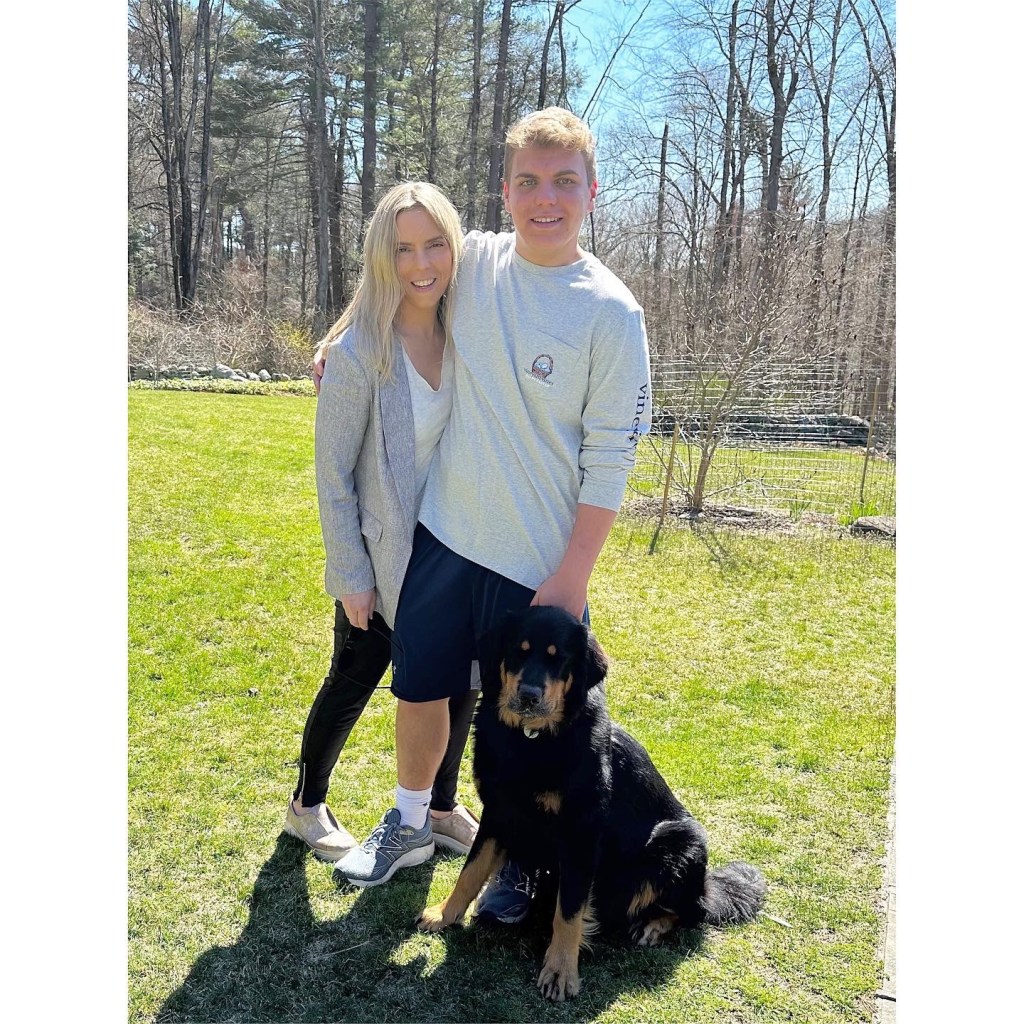
A Generational Love

On the daily, I am the recipient of beautiful, heartfelt comments commending the person that stands by my side in this photo. Many of those comments conclude with a variation of the phrase, “it takes a village.” To which I reply, “Yes, yes it does…”

I am so proud to stand next to my not-so-little-boy, a young man who proudly holds a love for all beings, great and small. It’s a love delicately nurtured and handed down from those who came before him, before me.

Our shared empathic love for animals and ability to recognize the powerful benefits of the human-animal bond is innately within our core— the result of a generational love that transcends all barriers within a given space and time.

And from that love shines a hopeful conviction; he too will use this coveted passion and make this world a better place (in fact, he already is).

For it takes a village— yes, yes it does. But not just any village, it takes a dog-friendly village.

It takes a dog-friendly village to nurture the loving boy and guide him as he becomes the loving man he is destined to be.

Me, Jacob, & Bravo

It’s just Daisy, being Daisy

It’s just Daisy,
being Daisy.

It’s just Daisy,
being—

her gorgeous self,
and knowing
she’s gorgeous,
and expressing
a quiet,
self-confidence,
a happy tail-wag;
the usual.

Look close.
It’s just Daisy,
being Daisy.

She hears
three words.

And Daisy,
just being;
sticks out her tongue,
ever so slightly,
to whisper a reply,
ever so lightly—

“I love you, too.”

© Jessica Maricevic, 2022

A happy Daisy, post-spa day.