Promoting and equitably assisting organizations in the integration of animal-assisted therapies for the physical, mental, and emotional benefit of individuals in public and private settings, one paw at a time.
Unearthing School Needs, Listening, and Fostering Hope
We all know the fact that no two schools are alike. Each school has its unique set of strengths and challenges, its own character and culture, its own needs. Which is why the inquiry conversation, like those I have with school districts interested in learning more about what exactly a therapy dog program would look like in their school, is a truly beautiful thing. Let me tell you why.
During these conversations, I listen… a lot. I listen to educators share their experiences and insights. I get an insider’s perspective that no policy document or data report can ever fully capture. I hear the voices of passionate educators, who use their passion and commitment to paint a vivid picture of the real-world challenges faced by students in the day-to-day realities of the 21st century classroom.
Just Listen
Listening to educators during inquiry conversations is not just about absorbing information; it’s about building a bridge of trust and understanding. It’s about acknowledging the educators expertise, valuing their contributions to the organization, and recognizing how their efforts to even initiate an inquiry conversation in the first place is rooted in the best interest of students.
If an educator in your learning organization is passionate about a cause, advocates for their students’ needs, takes time out of their evening to connect with someone, like me, who can provide insight and thoughts for further consideration, that’s a pretty dang good, awesome, educator. Never, ever, let them go.
Hopes
Inquiry conversations often reveal the hopes and dreams educators hold for their students. These hopes and dreams are deeply rooted in a genuine commitment to fostering the growth, well-being, and success for each learner.
And with each conversation, the voice of the educator carries with it a vision of what they wish for their students. It might be the hope for greater inclusivity with the student body, improved access to resources, or enhanced social-emotional support.
Step One, Done.
So here’s to those next steps, the ones that take a conversation of hypotheticals to reality. And it will be a journey–a journey that involves dedication, collaboration, and a deep commitment to the well-being of students. I am honored and humbled to be included in step one of your process and cannot wait for step two, and three, and four…. thank you.
As a passionate writer, educator, researcher, and the founder of Empathic Paws, my dedication lies in bringing the incredible benefits of therapy dogs to adolescents in your high school.
My Journey
My educational journey includes a bachelor’s degree in English Literature from Stonehill College, a master’s degree in Curriculum and Teaching from Teachers College, Columbia University, and a Doctorate in Educational Leadership from Manhattanville College. Since 2005, I’ve been committed to the adolescent learner, developing curriculum that nurtures empathy, advocacy, and social responsibility for secondary students. This commitment is what led me to my groundbreaking qualitative research in “Therapy Dogs in Secondary Schools: Implementation Processes & Relationships to Students’ Social-Emotional Competencies,” and equips me in providing invaluable insights to the therapy dog implementation process.
The Power of the Paw
Not only am I a dedicated professional, but I also live with my family, which includes our four dogs, in the dog-friendly Sound Shore region of Westchester County, New York. My commitment to Empathic Paws goes beyond my professional life (I too have benefited from the human-animal bond for close to four decades.), making me the perfect champion for bringing therapy dogs into your school environment.
I firmly believe in the untapped potential of the human-animal bond as a genuine way to address the social-emotional needs of a school community, and beyond. Empathic Paws is dedicated to supporting institutions in incorporating animal-assisted therapies, including therapy dogs, utilizing research-based policy and programmatic protocols to meet and potentially exceed the physical, mental, and emotional needs of all stakeholders.
The Empathic Paws’ Approach
To ensure a smooth and successful integration of a therapy dog program in your school, I will use my original 10 Empathic Steps to Establishing a Therapy Dog Program in Your High School. The 10 Empathic steps to Establishing a Therapy Dog Program in Your High School will assist in implementing, establishing, and maintaining the long-term sustainability of a customized therapy dog program for your specific school and identified area of need, as well as educate, honor and empower stakeholders by:
Presenting comprehensive information on animal-assisted therapies and related topics to ensure all stakeholders are well-informed prior to the implementation process.
Remaining rooted in collaboration and empowerment, identified stakeholders will be included in the process.
Providing empathic guidance and expertise to navigate every step of the implementation process
There is no better thought than knowing your visit to Empathic Paws means you are one step closer to creating a unique therapy dog program that enriches the lives of your students and members of your learning community. Together, let’s harness the transformative power of the human-animal bond and enhance the well-being of all who call your high school home.
Get in touch
Ready to start the process? Don’t hesitate to send a message.
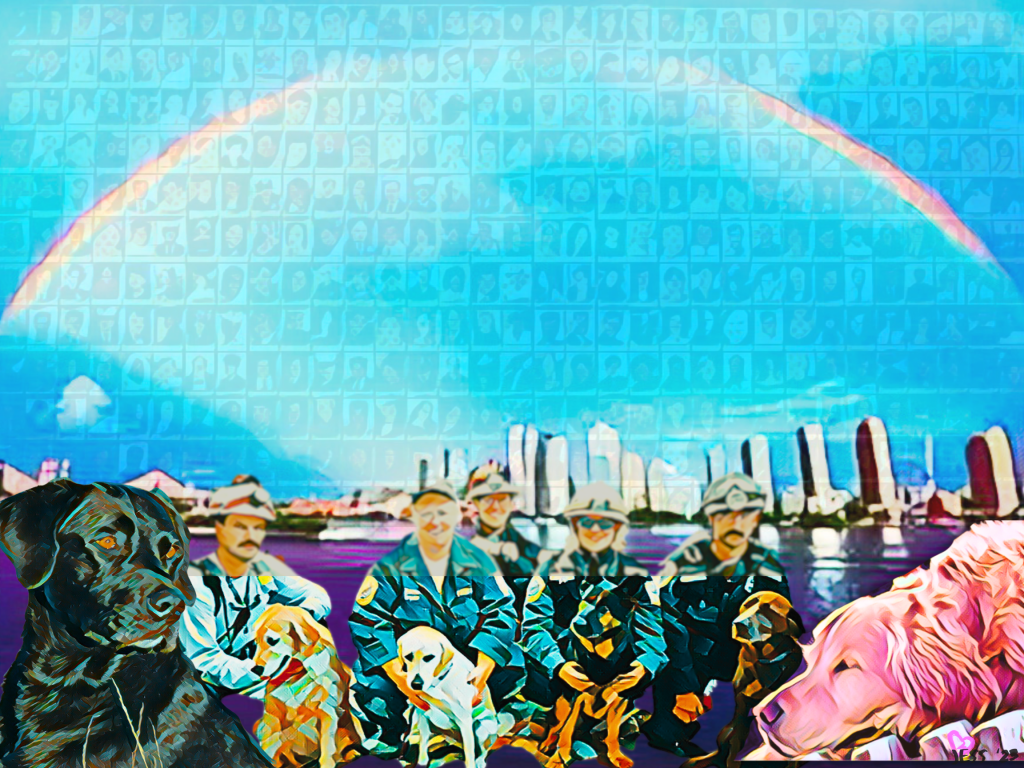
September 11, 2001, a day etched into the collective memory of the United States and the world. A day of unimaginable tragedy and heroism, stories of what would have been and of the unsung heroes-all will forever echo throughout the canyons of Manhattan.
Included in those stories of people, with faces and names, and hopes and dreams, are the tales of those who walked alongside the first responders and volunteers called to action. Tales of those who selflessly traversed the rubble with dignity and respect for those they so desperately hoped to find, while uncovering those taken from this earth far too soon.
In the immediate aftermath of the 9/11 attacks, canine search and rescue teams from across the country descended upon Ground Zero. Teams of highly trained dogs and their handlers played a crucial role in the search and recovery efforts. Dogs of all breeds, and places of origin, who possessed a keen sense of smell, agility, and determination, served as invaluable assets in locating survivors and, tragically, recovering the remains of those who didn’t survive. The canines, and their handlers, worked tirelessly at Ground Zero. They saved lives, and sadly confirmed the ending of chapters just getting started.
The dogs of September 11th provided emotional support to the brave individuals working in the most challenging conditions. However, the humans weren’t the only beings in need of uplifting. After their keen senses only confirmed the gravity of the attack’s impact, an unfathomable loss of life, the search and rescue dogs needed their humans to support their disheartened spirits and provide reassurance that their efforts were valiant and noble. This reciprocal demonstration of empathy and love reveals the deep connection between humans and canines, highlights the profound influence of the human-animal bond, particularly during times of immense adversity and sorrow. In turn, demonstrating how such an extraordinary relationship between two species can, in fact, provide solace, strength, and hope.
The Researcher’s Lens
As a researcher and advocate for the purposeful integration of animal-assisted services and therapies in both the public and private sectors, my commitment to advocating for an increase in opportunities to capitalize on the profound impact of the human-animal bond continues to solidify in strength.
Further studying the actions of the remarkable search and rescue dogs of September 11th, and their heroic human counterparts, only reinforces my position around the immense value added to any given situation when there is an opportunity to integrate animals, like dogs, into various aspects of human life.
Our canine companions are ever-ready to assist whether as search and rescue teams, service dogs, working dogs specifically trained to serve as therapy dogs, those dogs prepared to assist in rehabilitation efforts, to education and mental health support; there is a place for dogs in this human-centric world.
A Call to Action
It is 22 years since the September 11th attacks. Together, let’s honor these amazing beings and their human partners, who’s goodwill stood up to evil’s aftermath, and shined a light of goodness for us all to follow. I welcome you to explore some of the resources hyperlinked below, as well as encourage you to view the PBS documentary, “Hero Dogs of 9/11,” a documentary that offers a poignant look at the dogs who worked tirelessly at Ground Zero and the impact they had on the rescue and recovery efforts.
By sharing the stories of the hero dogs of September 11th, let’s broaden the thinking around the benefits of animal-assisted services, encourage others to consider how the human animal-bond can impact the greater good of humanity. Allow their memory and unconditional acts of love serve as a catalyst for us humans to make space for the healing and supportive power of the human-animal bond, to recognize and harness its fullest potential, not just during times of crisis, but as an integral part of our everyday lives.
Let’s finally allow dogs be a part of the plan to make you,me, and the world a better place than it was the day before.
Honoring the Hero Dogs of September 11th
Bretagne: Bretagne, a Golden Retriever. At the time, she was only 2 years old and had just become certified as a search and rescue dog. Over the course of ten days at Ground Zero, Bretagne worked tirelessly alongside her handler, Denise Corliss. Her unwavering dedication and the comfort she provided to the rescue workers was a heartwarming demonstration of unconditional love.
Apollo: A German Shepherd, Apollo, was another hero on the scene. His handler, Peter Davis, recalls how Apollo would show signs of stress when they found a victim, but he also knew when it was time to be gentle and comforting. This emotional intelligence was crucial during those difficult days.
Trakr: A courageous German Shepherd named Trakr and his handler, James Symington, traveled from Canada to assist in the rescue efforts. Trakr’s sharp sense of smell helped locate the last survivor, Genelle Guzman-McMillan, 27 hours after the towers collapsed.
Sirius: A yellow Labrador Retriever, Sirius was a K-9 officer with the Port Authority Police Department. Tragically, Sirius lost his life in the line of duty during the 9/11 attacks. He was stationed on the 71st floor of the South Tower with his handler, Officer David Lim, when the tower collapsed. Sirius’ sacrifice symbolizes the dedication and courage of the search and rescue dogs and their handlers.
Roselle: Roselle, a yellow Labrador Retriever, was a guide dog for her blind owner, Michael Hingson, who worked on the 78th floor of the North Tower. On that fateful day, Roselle calmly guided Hingson and others down the dark, smoke-filled stairwell, leading them to safety just moments before the tower collapsed. Her poise and steadfastness in a life-threatening situation saved lives.
Jake: Jake, a Black Labrador Retriever, worked with his handler, Mary Flood, a firefighter from the Denver Fire Department. Together, they combed through the wreckage at Ground Zero, helping locate survivors and bring closure to grieving families. Jake’s dedication and hard work earned him the title of “Honorary New York Fire Department Dog.”
Kaiser: Kaiser, a German Shepherd, was another hero dog at Ground Zero. His handler, Detective Brian Grogan, credited Kaiser with finding several survivors during the early days of the search and rescue mission. Their partnership demonstrated the importance of the bond between a handler and their canine partner.
NYPD K9 Steven, named after the late Manhattan Detective Steven McDonald, passed away after a battle with cancer; he was 7 years old. K9 Steven, a Dutch Shepherd, was more than a working dog for the NYPD. He transcended his role as a police dog, mirroring the heroic spirit of his namesake and partner, Officer Joe Brayuha.
For six years, K9 Steven and Officer Joe Brayuha formed an inseparable partnership that showcased an unparalleled commitment to their duty. Together, they undertook deployments with NY Task Force 1, demonstrating their versatility, resilience, and unwavering readiness to rise to challenges in moments of crisis. The trials they overcame together, and the unspoken camaraderie they embodied, oh the stories they must have exchanged…
I felt compelled to reach out to Officer Brayuha and our conversations, though brief, resonated deeply. He shared that K9 Steven had an extraordinary ability to connect with people, “he loved everyone he met.” And as I continued to read Officer Brayuha’s response, it became very clear why, as a dog-lover and advocate for animal-assisted therapies, I was curious to learn more about their bond—a bond that, in essence, is more similar than different from the bond I have with my own dogs, and probably more similar than different from your understanding of the human-animal bond.
K9 Steven and Officer Brayuha are, in fact, archetypal beings themselves, and when combined, they form an archetypal duo, the same archetypal duo easily recognized in movies, literature, and typed across front page headlines of real life. They are the quintessential archetypal duo that navigate archetypal situations together, rely on each other in countless ways to make it through archetypal conflicts and to overcome archetypal antagonists.
In many ways, K9 Steven emerged as a modern-day representation of the tragic hero archetype, bravely confronting cancer head-on, Sadly, when our furry friends receive a cancer diagnosis, it is a very tough archetypal villain to defeat.
Which is why there comes a time when the tragic hero must say goodbye, and that goodbye is especially hard when there is nothing more either archetypal character can do to prevent the inevitable closure to a plot line neither wants to end.
And as is life, the story resumes.
This time though, the onus to continue the duo’s mission and K9 Steven’s legacy doesn’t just fall on Officer Joe Brayuha—it’s a collective effort. And my small part is represented in this post.
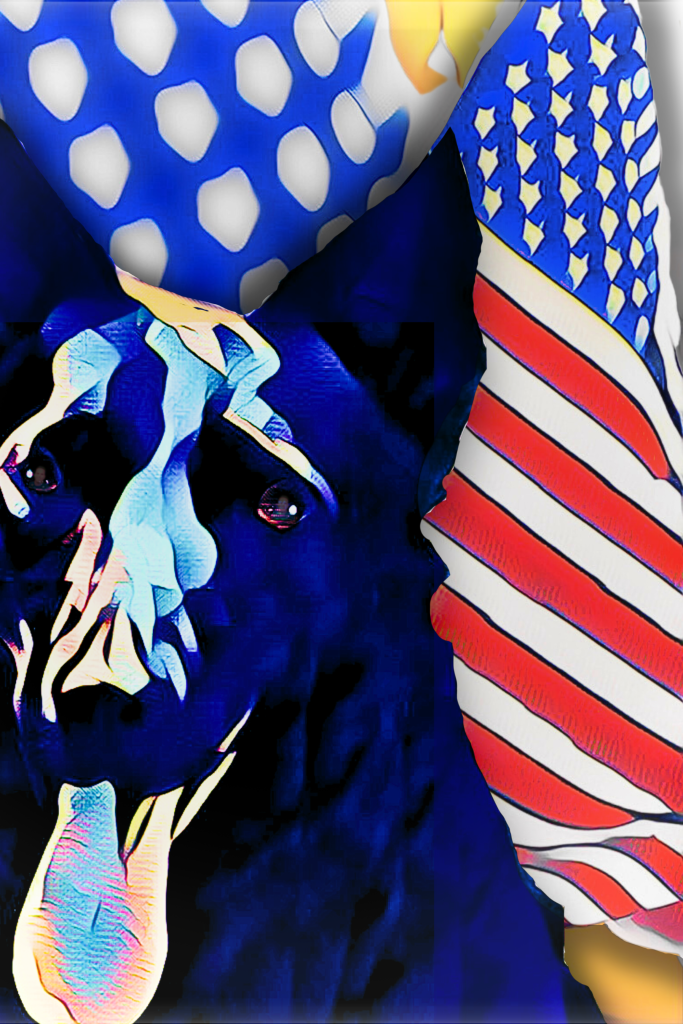
I created a digital collage of K9 Steven, entitled “Good Boy,” and found my creative inspiration from reading about K9 Steven and viewing his Instagram. If you look close you can observe the Chrysler Building and even Officer Brayuha. It is my intention to share a digital copy with Officer Brayuha as well as get a framed copy to him. I hope it will serve as a reminder of the duo’s positive impact, and their continued impact on others.
K9 Steven was most definitely a “good boy.” You’ll be missed, buddy.
My original creation; a digital design to welcome Instagram viewers to visit this blog post. My inspiration for this graphic stems from my love of the ocean, Montauk, and of course, dogs | J. Maricevic, 2023.
I recently read a funny meme. It was something along the lines of, “there are some people who should never have met my dog.” That might even be the exact wording, but I’m not quite sure.
I thought it was a funny post. I even considered reposting it. I thought about being cute and crossing out “dog” and replacing it with “dogs” (because I have four), or changing it to something like, “there are just some people who will never meet my dog, or dogs,” or maybe even, “there are just some people who will never meet my dog, or dogs, again,” because, well…
Listen, I know there are some people who simply do not deserve to be around any living creature due to their decision to treat an innocent being inhumanely. Let me be very clear on that point. Any unkind or abusive treatment is an obvious red flag, a scarlet letter forever emblazoned on a person’s chest, and that’s right, that person will never, ever be around your dogs, or my dogs, nor should they be around any other dogs or innocent beings.
So yes, there is at least one possible exception to the should never meet my dogs scenario. But was the concept behind the post, while produced in jest, further perpetuating negative thinking, energy and creating disharmony?
And then I got to thinking…
Why would there even be a person, or people, in an individual’s life who should never have met a person’s dog, or dogs, or never have the chance to meet a person’s dog in the future, or never have the opportunity to see them again? Yup, that’s a rhetorical question. You and I both have our own answers to our whys.
In normal Jess-fashion, I contemplated, reflected, and personalized the thought to better empathize with a person who holds such strong sentiments, and even take a moment to better empathize with myself.
I reverted back to when I was able to tangibly embrace my passion (that’s 4 years old). Talk about a lot of years, and a lot of memories, and a lot of “stuff” to sift through. Memories, moments, and faces– the flickers of my mental time capsule, going at Mach speed. And with each face, memory, and moment, there were a few, not many, which did include people who, for all intents and purposes, were/are tied up in that silly little meme I referenced at the beginning of my post.
[Enter Thinking]
Ironically enough, the people who, in theory, should never have met my dogs, are the very people who, at the time, probably needed to meet my dogs the most. There are probably people I have yet to meet, who need to meet my dogs. There might even be people who have met my dogs, who really do need to meet them again. I am not quite sure how I feel about coming to such a realization. We fear the unknown right? Or is it that we fear the known?
My original creation; a mock-meme which I like to call, Probably the Ones who Needed to Meet them the Most. This image appears in my most recent instagram post | J. Maricevic, 2023.
A Transformative Impression
Dogs have a unique way of touching lives and teaching valuable lessons through their ability to bring joy, companionship, and help others become more patient, empathic, and responsible (Maricevic, 2022). Meeting another person’s dog can be a transformative experience for some individuals, even if they have had limited exposure to dogs or pets in general. It’s also possible that emotional competency development can happen without directly interacting with a person’s dog (Maricevic, 2022). It can also happen for a person who observes others interact with their furry family member.
Yes, that means when one person is able to witness (1) how another interacts with a dog, (2) how one person can love another being other than themselves or (3) a demonstration of reciprocal and unconditional love in return, those observations alone have the potential to leave a positive impression on a person’s psyche (Maricevic, 2022). Not just any impression, a transformative impression; an impression for the better.
Interacting either directly or indirectly with a dog can model what it looks and feels like to give and receive unconditional love, how to develop trust, embrace responsibilities, and the importance of living in the present moment (Maricevic, 2022). Such observations can also provide an opportunity for empathic growth, as others learn to understand the needs and behaviors of the do, in turn strengthens a person’s ability to develop and form bonds over time with humans and dogs (Maricevic, 2022).
Let’s not forget, dogs are known to have a positive impact on mental health, reducing stress and anxiety. For people who may be struggling emotionally or socially, a dog could provide a source of comfort, support, and a means for connecting with others during moments when feeling isolated, or even ostracized from the world. Dogs serve as a bridge for connectivity, helping to establish, solidify, and even mend relationships.
Got Hope?
At first thought, there might be people who come to mind who should never have met a person’s dog, or never will get the chance to meet a person’s dog, or those who will never have the chance to meet a person’s dog again. Now, minus the aforementioned exception, I challenge that initial thinking. In fact, I propose those should never or will never statements, shift to maybe one day statements.
If one is to change from a never mindset, to a maybe mindset, does that potentiality provide more space for positive thoughts, and less negativity? Does a change from a never mindset, to a maybe mindset create a space for an unexpected connection, a misunderstanding understood, a missed connection redirected, or serendipitous happenstance?
Admittedly, a change in mindset may never bring a moment to reality, and even if it does present itself, the moment might be fleeting or the opportunity anticlimactic. Those maybes may never happen at all. Even so, if there exists an opportunity for personal growth and positive experiences, and that opportunity starts within the individual themselves through self-empowerment and self-actualization, and there is no harm being done to oneself physically or emotionally, no harm being done to another person physically or emotionally, and no harm done to any person’s dog or dogs, then perhaps it’s worthwhile in the long run?
Perhaps, at least start with a shift in mindset. Perhaps be open to the maybe?
Maybe, one day [fill in the blank}.
Easier said than done, you say?
Maybe.
But I figure, on this rainy summer’s day, it’s worth a try. Chalk it up to needing some Vitamin D, being over all this rain, or an exercise in strength conditioning…. ’tis the season to bulk up the mental and emotional fortitude needed for the time when the radiant rays of sunshine give way to crisp fall days.
Inspired by the picturesque Hudson River Valley, where my love and appreciation for dogs first blossomed, I proudly present to you the debut of the new and improved logo for Empathic Paws!
Newly designed logo for Empathic Paws/J. Maricevic (2023)
A Splash of Visual Rhetorical Devices
Allow your eyes to follow the flow of a river, through the protective hills of the valley. Let your vision glance downward towards the river’s end– calm, cool waters.
My self-designed logo captures the rolling hills, meandering river, and lush greenery to create a captivating representation of comfort, security, and love, which in my opinion, is the essence of the Hudson Valley region of New York State, and the place I called home throughout my formative years.
In the central foreground of the logo, resides the graceful silhouettes of my beloved dogs— Judge, Daisy, Bravo, and Bud. Each purposefully placed in a layered, three-dimensional effect, with thoughtful consideration given to their personalities, sizes, and unique demeanors. The convergence of stylistic features and the representation of the “pack” at the center, symbolize the unwavering influence and immeasurable joy that Judge, Daisy, Bravo, and Bud bring to everyone they meet.
At its core, this new logo embodies the motif of home. A home, to me, is a sanctuary, where cherished memories are created, and the presence of a faithful canine companion remains steadfast. As I reflect upon the place where my love for dogs took root, I am reminded of life’s constant flow and its ability to lead us to unexpected destinations. The new Empathic Paws logo symbolizes this journey, showcasing the transformation and growth that brought me, my son, and our dogs to the vibrant Sound Shore region we now call home.
To Honor the Pack, is to Love the Pack
Some may argue that too much thought was put into a logo, but I disagree. The new Empathic Paws logo holds deep significance, not just because I designed it, or because it represents my personal journey from one home to another, and definitely not because it has cute graphics of dogs.
You see, Empathic Paws is not just an idea; it is a passion born from the profound love and appreciation I have for each and every canine companion I am fortunate enough to cherish. It is only appropriate that my new logo serve to honor the influence of my extraordinary pack, forever intertwined with the timeless spirits of their predecessors.
A Shout-Out to the Research
Let me put my “doctor-lens” on the topic for a quick second.
I know from my own qualitative research findings, as well as personal experience, the human-animal bond has the potential to be the antidote for many visible and invisible traumas humans carry with them (Maricevic, 2022).
Research (Maricevic, 2022) suggests the bond itself may cultivate feelings such as, but not limited to, unconditional love, safety, empowerment, happiness, fulfillment, calm, reassurance, confidence, inclusion, recognition, value, and a sense of being heard.
On a macro level, I believe the new logo symbolizes the incredible impact dogs can have on humanity, if given the opportunity to do this much-needed work. The captivating visual composition is aesthetically pleasing to the eye, utilizing soothing blues, vibrant greens, and golden hues, a color palette to evoke a sense of tranquility and vitality, mirroring the warmth and happiness reflective of the positive impact of the human-animal bond (Maricevic, 2022).
An inviting visual representation of the heart and soul of Empathic Paws, this logo is a testament to the unwavering bond shared with our four-legged friends and the power that resides within the gentle paw of a canine companion.
An Ideological Extension of that Cliché, Explained
Do you recognize an archetypal theme attached to the home motif? I’ll help you out a little bit. Regardless of life’s trajectory or physical location, a home is a place that includes the omnipresence of something larger than oneself, to make a person feel what they know in their hearts they deserve to feel in all facets of life, and to reciprocate that feeling, to others, in return.
By that self-proclaimed definition, home is not just a physical place, nor is it defined solely by the traditional sense of the word. Home is a state of being. Which means, for me, home is where my canine companions reside, whether they are standing by my side or resting in my heart. I find comfort in knowing that this logo is an ideological extension of that age-old cliché. You know, the one about homes and hearts? I find comfort in knowing that no matter where life takes me, I am always able to feel, because home is where the dogs are, and thus I am, forever home.
With heartfelt dedication, Empathic Paws strives to extend the genuine feeling of solace and warmth that emanates from the omnipresence of dogs to others longing to feel. It is within this opportunity that individuals can develop deep connections with canine companions, granting them a sense of comfort, belonging, and the unmistakable feeling of home.
I do hope you enjoy the new representation of Empathic Paws. In the coming weeks, you will see a slight restructuring of empathicpaws.com. The slow roll-out of these changes looks to incorporate aspects of the new logo to the site. During this time, you will still be able to access the site and reach out to me if needed. Thank you for reading!
For those of you new to @empathicpaws, I am Dr. Jessica Maricevic, humane-ed reform and animal-assisted therapies advocate, and I am so very glad you’re here.
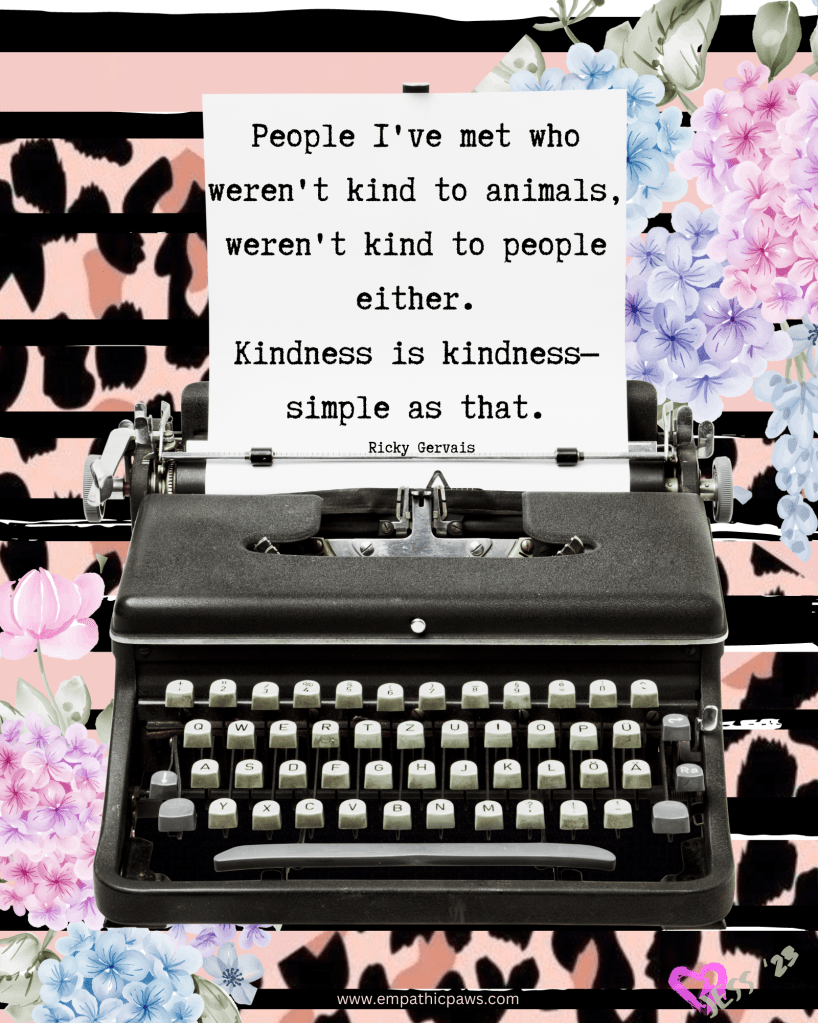
My most recent original graphic design is inspired by the words of comedian and humane advocate, Ricky Gervais. Let’s further the conversation around the interconnectedness of the human-animal relationship and social-emotional competency development and use Mr. Gervais’s words as a springboard.
The human-animal bond serves as a positive influence upon one’s social-emotional competency development, the sustainability of SECs and subsequent evolution of these traits throughout a person’s lifetime. And with that in mind, more consideration is needed within learning organizations on ways to infuse the human-animal relationship to further the radius of influence upon the social capital within the organization.
Allow Mr. Gervais’s words along with my original visual creation to serve as a conversation starter around the human-animal bond and the need to increase opportunities for such bonding in the high school setting.
I recently stumbled upon a TikTok post featuring a table-read for the sketch comedy show, The Muppet Show (1976 – 1981). The clip, posted by TikTok user, @muppetmarissa, includes the voice-overlay of creative mind and Muppet creator, Jim Henson, along with his perspective on the collaborative creative process. The clip progresses, there are many other voices of Muppet Legendary, and then comes the wave of nostalgia.
The Fabric
Now, if you made it this far, it should come as no surprise to learn the obvious. I am a huge Jim Henson fan. I mean, I am writing a reflection on educational leadership with an ode to The Muppets. Don’t worry, it has a purpose, I promise.
I am unsure where @muppetmarissa found this particular clip, but very much look forward to viewing what appears to be a documentary on Jim Henson that I have yet to review. I do know there is a highly anticipated documentary in the works about Jim Henson, directed and produced by the dynamic duo of Ron Howard and Brian Glazer. The release date of the Disney Original Documentary is still to be determined and you can read more about it here in this 2022 press release by The Jim Henson Company.
You see, I consider myself a creative. I allow myself the time, space, and flexibility to be creative in all aspects of my personal and professional interests. I credit my creative identity and all my ventures, from childhood to this very moment, to Jim Henson, his circle of like-minded creatives, the imaginary world they conjured for us kids in the 80s, and how that imaginary world has now transcended space and time.
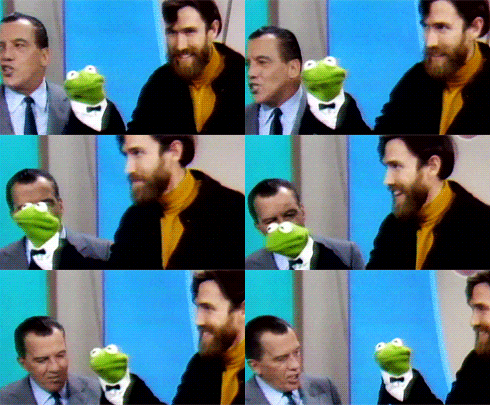
Ed Sullivan, Kermit the Frog and Jim Henson; The Ed Sullivan Show, N.D.
Shared Experience
I also know, I am not the only one who feels this way. Take actor Jason Segel, for example. Segal is best known for his role in the sitcom How I Met Your Mother (2005 – 2014), writing and starring in the iconic film, Forgetting Sarah Marshall (2008), writing and staring in the recent the AppleTV series, Shrinking (2023), and [drumroll please], his love of The Muppets.
Segel does not shy away from his love and appreciation for The Muppets, and even refers to them as his “childhood idols.” An additional interest worth noting is Segel’s idolization of Kermit the Frog, the amphibian embodiment of Henson’s legacy. Segel reveres Kermit almost as much as I revere the little green frog. During an interview to promote his mid-2000s film, The Muppets (2011), Segel was asked to divulge his favorite Muppet, to which he replied “… it’s Kermit. It’s always been Kermit.” I get it.
I get Segel’s #ItsAlwaysBeenKermit belief statement because quite frankly, I have an #ItsAlwaysBeenKermit belief statement, too. So here it goes, my Kermit belief statement:
Everything I learned in life, I learned from a little green frog.
I really get it.
In 2011, Segal took it upon himself to dust off the Muppet memories for us “80s kids,” thanks to writing and staring alongside them for their return to the big screen. That summer, I took my son, who was then 4 years old, along with his cousins, to see Segal’s major motion picture production. We sat in a quaint, Berkshire, Massachusetts movie theater. What could be better than a summertime movie, in the Berkshires, and watching The Muppets? Nothing. There is nothing better. Trust me.
The lights dimmed. The credits rolled, and so did the tears. Let me be more specific. The credits rolled, and so did my tears.
I wish I could say I was overcome with emotion because it was my son’s first time in a movie theater– it wasn’t that. No, it wasn’t tears of joy. Tears of sadness? Nah. Nope, not tears longing for the days of yesterday. I pretty much cried throughout the entire movie.
The Act of Being
For the duration of the film, the adult me was very cognizant of the fact that I was in a theater, surrounded by children, one of them being my own, to watch a film in which my own childhood icons paraded on screen. The film, for all intents and purposes, was presented under the auspices of a children’s movie. But to me, I knew this film was not exclusively targeted to the 4-12 year old demographic, but to their parents, guardians, aunts, uncles, neighbors– to those “80s kids.”
The Muppets (2011) was a film targeted to me, and my tears were tears of being; being seen, heard and valued.
It was so very apparent, how by watching this film, my personal roadmap, goals, dreams, and aspirations were emphatically validated, and not just by any other person, by another like-minded creative, personally and professionally influenced by Henson and his Muppets.
Jason Segel got it– he got me.
I was beingseen, valued, and heard as a person in need of a reminder, a reminder to remember….and I wasn’t the only one. I wasn’t the only one positively influenced by the creative masterminds behind The Muppets. I wasn’t the only one still using the efforts of ingenious creatives, like Henson, to fuel my purpose. I wasn’t the only one who wanted to genuinely find opportunities to advocate for empathy and understanding, to leave my mark on this world, and make it just a little brighter than it was the day before.
There are people, like Segel, who are like me. There are people, like Segel, who, like me, want others to know that even during some of life’s most [fill in the blank] moments, they are seen, heard and valued.
Educational Leadership
As I reflect on my own educational leadership journey, there is the running motif and thematic concept within my writing and it is centered around those three words: seen, valued, and heard (I’ve coined it “the trifecta”). All individuals in an organization need to feel truly seen, valued, and heard for a plethora of reasons; the multitude of stakeholders: who is the cultivator of “the trifecta” one day and who is the receiver the next; interwoven relationships between district, school building leadership and the trickle down effect; leadership philosophy and philosophical approaches to management, transactional vs. transformational…
Now, enter students into the equation. Students must feel seen, heard and valued, and if teachers are the ones to help cultivate and nurture “the trifecta,” then teachers must also be a receiver of those feelings, which then means district and school building leadership must …. round and round we go.
All stakeholders must have equitable access to “the trifecta.” Easier said than done? Meh.
Everything I learned in life, I learned from a little green frog.
I get it, because I believe it. And I also believe in order to cultivate authentic opportunities for others to feel all those things, and more, it takes creative ingenuity, it requires safety and security, transparency, honesty, love, kindness, trust, empathy …. it requires a Kermit-like mindset.
A Kermit-Like Mindset to Leadership and Beyond! That reads as if it’s got some potential, and that is where the next chapter of my leadership journey will start.
During my most recent school building leadership internship course, students were to read one of five articles and provide a response. Below you will find my original thoughts inspired by the reading and analysis of Larry Ferlazzo’s the March 7, 2022 EducationWeek article, entitled, “It’s Time to Debunk the Myths About Standardized Tests.” I had fun writing this piece and hope you enjoy the read.
Standardized tests. Okay, fine. To appease the quantitative data driven mind reading this response, I will give you the token line you know I am programmed to say. Yes, the data produced from standardized tests provides insight into the abilities and deficiencies of students, areas in need of improvement, yada yada. Can you pick up on the sarcasm? Well, it’s there, along with a dramatic eye roll.
Please do not confuse my position around the quantitative data put forth by standardized assessments with my position on data as a whole. I actually love data. Data! Data! Data! I love data. I think that might make for a good bumper sticker, maybe a t-shirt. No, I really do.
Data is evidence.
Data is what I need to prove my point, to validate my position, because my position is never enough to stand on its own, it needs some support.
For example, I can’t rely on a singular data set when it comes to making a statement like the New York Yankees are the best team in baseball (we all know they are the best team in baseball, but still). And that singular data set cannot be my own opinion. Sound the bias alarms.
Following this line of thinking, why should one type of data set, say the data from standardized tests, trump all other data collected specific to evaluating a student’s performance? There is still the need for multiple data points for triangulation purposes, a system of checks and balances, etc, to ensure the findings reflect the data, the data-driven findings are reliable and sound, otherwise, nullify the recommendations.
Data does have a place, but only when that data is well-rounded data and truly meaningful to reflect and act upon. Data becomes meaningful when it reveals evidence, from multiple sources, to support or negate a school or district’s current curricular pathway, or the degree in which teaching practices/protocols established within that school or district effectively meet, or exceed, district, state, national, and at times external learning standards and benchmarks.
The data of value, the data I’m talking about, is the data the standardized test fails to produce.
The data of value, the data I’m talking about is the data society has deemed as a less valuable marker.
You see, data most definitely has value, but that data is “no good,” especially when it suggests there are inequities at play.
That data is “no good,” when it takes a stand-alone moment in time, and gives that moment such tremendous power, quite possibly the power to determine the trajectory of one’s academic career, maybe even their life.
That data is “no good,” when it stems from an assessment catered to the student with just the right amount of socio-economic clout. Clout that, in turn, provides a cushion of support for almost guaranteed success, but does not guarantee the success of their classmate because of that impenetrable socio-economic stratosphere.
Any data produced from an assessment that reveals society’s interference and influence on determining who deserves an opportunity and who does not, is of no value. And it is society, government, the hierarchy established by the macro, and carried out by the micro, that continues to perpetuate this vicious cycle. What does all this “no good” data really try to remedy, or prevent from happening, anyway?
[and then there was silence]
Exactly.
There is no better time than now to make the academic playing field an equitable one, not one determined by the perfunctory toss of a scantron and test booklet– one to the student the system wishes to promote, and one to the student the system wishes to leave behind.
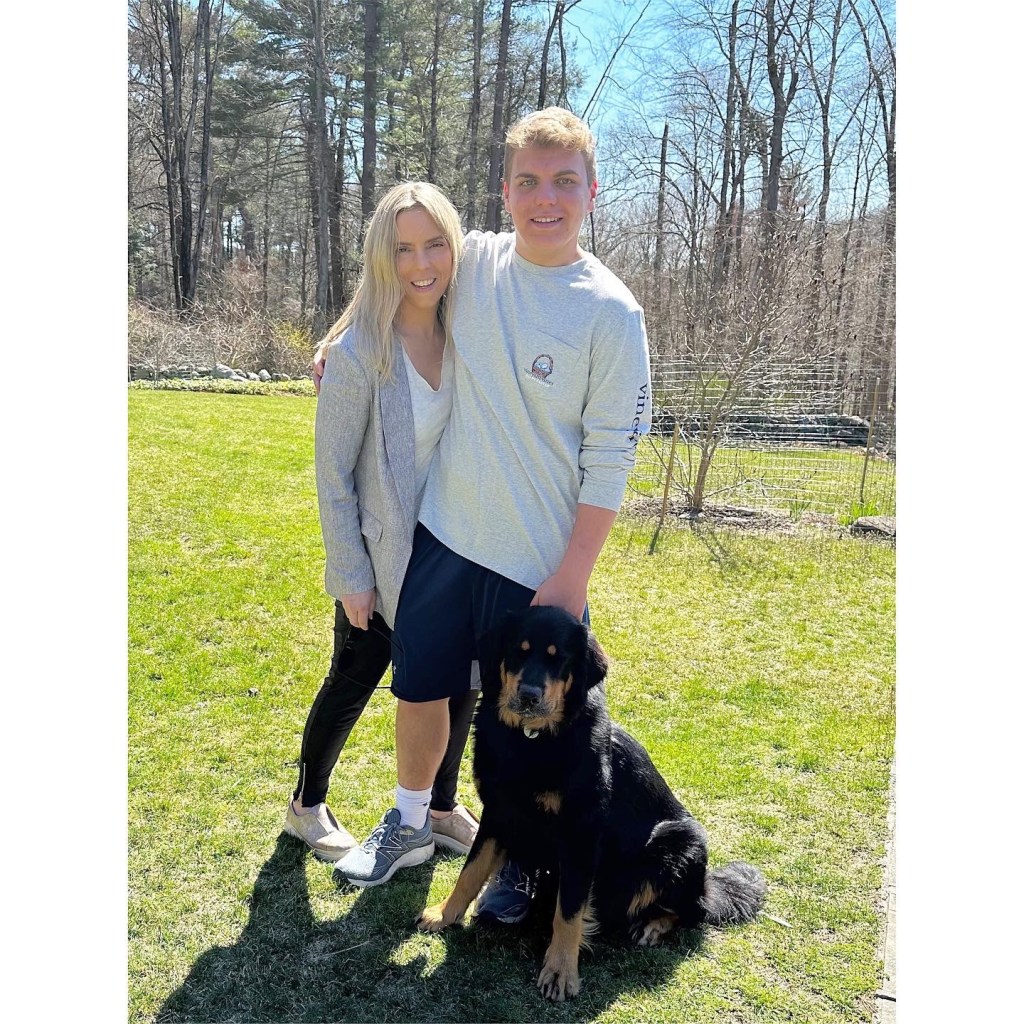
On the daily, I am the recipient of beautiful, heartfelt comments commending the person that stands by my side in this photo. Many of those comments conclude with a variation of the phrase, “it takes a village.” To which I reply, “Yes, yes it does…”
I am so proud to stand next to my not-so-little-boy, a young man who proudly holds a love for all beings, great and small. It’s a love delicately nurtured and handed down from those who came before him, before me.
Our shared empathic love for animals and ability to recognize the powerful benefits of the human-animal bond is innately within our core— the result of a generational love that transcends all barriers within a given space and time.
And from that love shines a hopeful conviction; he too will use this coveted passion and make this world a better place (in fact, he already is).
For it takes a village— yes, yes it does. But not just any village, it takes a dog-friendly village.
It takes a dog-friendly village to nurture the loving boy and guide him as he becomes the loving man he is destined to be.




 Empathic Paws