To Love Like Judge

It’s taken me time to write this—maybe because putting it into words means admitting he’s really gone. But grief has a strange way of nudging us forward—through moments of kindness, memory, and unexpected connection.

You see, the other day I received a friendly question from a local gas station attendant. His question opened the door to this reflection, reminding me that Judge’s presence didn’t just change my life—it left a mark on others, too.


I stopped for gas, and the attendant—always kind and jovial—leaned ever so slightly in through the window with a warm smile.

“Where’s your big dog friend?” he asked, looking toward the back seat as if Judge might be curled up, ready to pop his head up—as was the norm.

I felt the weight of the words before I even spoke. But I said them. The attendant’s face shifted—genuine heartbreak in his expression. He wanted to know what happened to my friend, so I told him.

I thanked him for remembering Judge, for asking, for seeing us. He gave me a fist pump, “I’ll be thinking of you.”

The gas station attendant’s words and supportive fist-pump immediately brought me back to a warm summer evening walk a few seasons ago. An older gentleman on his evening stroll passed us and paused, his eyes soft with admiration. “Magnificent,” he said, nodding. “Simply magnificent.”

At the time, I thought he was talking about Judge, and he was, because Judge was magnificent—“magical,” to quote my son. But today, I wonder if the neighborly observation was referring to us—our bond, our rhythm, the strength in how we moved together, how we communicated.

There was something sacred in my connection with Judge, something that didn’t need to be explained—only admired for the authentic love it displayed. It was beautiful.

Intersectionality of Time and Space

The comment at the gas station isn’t so different from the one that summer day. Both came from strangers who saw something beautiful in our everyday. Both moments remind me that Judge’s legacy isn’t just the love he gave me—it’s the way he made people stop and feel something.

People gravitated toward him. Kids, neighbors, delivery drivers, the mailman who kept treats in his pocket just for Judge—they all felt it.

I’ve come to realize that people didn’t just see a beautiful dog when Judge was around—they felt something in his presence. There was a gentleness about him, a knowing. He carried himself with quiet confidence, never asking for attention but always drawing it.

It wasn’t just that he was loyal or smart or handsome or protective, though he was all of those things. It was the way he made people feel seen, safe, and loved—without needing words. He had that rare gift.

Love Like Judge

You know, whenever I posted a picture of Judge to Instagram, it was usually accompanied by the #mustlovejudge hashtag—a playful twist on the early 2000s rom-com Must Love Dogs. It became my unspoken rule, the standard for who I let into my life, into our life: “Must Love Judge.” If you didn’t get Judge or love him, you probably didn’t get me—or love me—either (not to mention our entire pack). Now, after losing him, I see that phrase a little differently.

It’s not enough to have loved Judge. The real challenge, the real calling, is to love like Judge—offering the same quiet comfort walking with people through joy and sorrow, listening without needing to speak, being loyal, steady, and present.

I once heard that grief is just love that has nowhere to go. I’m not sure I’ll ever be over the loss of Judge—and honestly, I don’t think I want to be. But my everlasting love for Judge does have somewhere to go.

The way forward is to carry what he taught me into every space I enter and meet the world with the same unwavering heart and the same quiet grace. This is Judgie’s Yoda-like life lesson I know he wants me to carry forward, reminding me to hold steadfast to my ability to love unconditionally, to always remember that I am deserving of that same unconditional love from the universe, and to encourage others to do the same.

So I choose love—the kind that asks for nothing but gives everything. The kind that lingers, even after goodbye.

I choose to love like Judge.


I want to take a moment to thank everyone who has been so incredibly supportive and kind throughout Judge’s battle—and through everything since. Your calls, texts, DMs, beautiful flowers, cards, handmade drawings, thoughtful gifts, hugs, and check-ins have lifted us all in ways I can’t fully put into words.

Every gesture, no matter how big or small, has been a testament to the love you had for Judge—and for us.

My wish for you is simple but sincere:

May everyone in this world be lucky enough to experience a love like Judge in their lifetime.

And may we all honor that gift by paying it forward—simply by loving like Judge.

Thank you for standing with my pack. Thank you for loving us through our heartbreaking loss.

We love you,

Jess, Jacob, Daisy, Bravo, & Bud

✌️🫶🐾

The Honorable Judge
September 10, 2017 – March 25, 2025

The Privilege of a Second Chance

Reunited with Judge • February 16th, 2025

I was given two options: immediate surgery or I needed to say goodbye. The surgery wasn’t guaranteed, the risks were high, and there was no promise of a miracle. But when I looked into Judge’s eyes, I knew it wasn’t time for us to part.

You see, his eyes told me everything—full of life, determination, and an unbreakable spirit that’s always defined him. And in those eyes, I saw a Rolodex of memories and moments in which Judge never gave up on me. Not once. Through every high and low, he’s been there, my constant, my protector, my best friend. How could I possibly give up on him now?

The doctors were honest. They told me the risks, the during and post-operative possibilities. But they also told me Judge was strong with an excellent heart—minus a bum spleen, Judge was a relatively healthy German Shepherd. It was all I needed to hear.

But making that choice was a privilege.

Emergency surgery isn’t just a matter of love and loyalty—it’s a matter of resources. It requires financial stability, access to specialized care, and the ability to take time away from life’s other responsibilities to be fully present for recovery. Not everyone has that choice. For many, the cost of life-saving surgery for a pet is simply out of reach. For others, the lack of nearby medical facilities or the inability to take time off work becomes the deciding factor.

When I stood at that crossroads, I was painfully aware of this privilege. I had a support system that rallied around me, offering love, prayers, and help with life’s other demands. I had access to my own veterinarian, the Veterinary Emergency Group, and Cornell’s exceptional veterinary team which carried out the life saving surgery. Without any one of those things, the outcome could have been heartbreakingly different.

This awareness weighed heavily on me because I know so many people face the same gut-wrenching decision without the resources to choose hope. I was able to fight for Judge because I had the privilege to do so. But others have to make the hardest choice of all—not because they don’t love their pets just as fiercely, but because life’s realities leave them no other option.

Judge isn’t just a dog. He’s my family, my guardian, my heart. He’s watched over my son, protected our home, and shown me a love so pure it’s changed me for the better. He is the reason why I started my entire dissertation over and focused on the adolescent-animal bond in secondary settings. In Judge, I saw the power of connection, the depth of loyalty, and the healing power that only a dog’s love can bring. His impact on my life was profound enough to shape my career, my research, and my purpose.

Today, the doctors are hopeful. Even with three liters of blood in his abdomen, the surgery was clean, a successful splenectomy, and Judge is home healing. He’s eating like the picky king of the castle that he is, back to reigning over his Mötley crew, his spirit as unbreakable as ever. Watching Judge return to himself, sneaking back to his spot on the couch, seeing that familiar spark in his eyes cataloging another memory together—it’s nothing short of a miracle.

Judge’s road to recovery won’t be easy, but he’s here, alive, because he never gave up and because I had the privilege to fight for him—just as he’s always fought for me. But for those who aren’t given that choice, my heart aches.

I will never take for granted the opportunity I had to fight for Judge and will advocate for solutions to ensure all pet parents can make balanced choices for the well-being of their furry family member—without having to choose between love and necessity. It’s my hope that one day, every pet parent will have the freedom to choose what’s best for their pet, without limitations.


I want to sincerely thank the veterinary teams at White Plains Animal Hospital, Veterinary Emergency Group of White Plains, and Cornell University Veterinary Specialists of Stamford. Your expertise, compassion, and dedication have meant everything to our family and Judge. You’ve given us more than just a second chance—you’ve given us hope. I am forever grateful for all you’ve done to give us back our Judgie Boy.

Building Trust, One Paw at a Time: Using an Extracurricular Club to Introduce Therapy Dogs in Schools

Many educators and school leaders recognize the benefits of therapy dogs in academic settings but hesitate to implement a full-scale program due to knowledge gaps, logistical challenges, financial constraints, or policy concerns. A Therapy Dog Club offers a structured, low-risk way to introduce animal-assisted therapies, easing leadership apprehensions. In fact, I strongly recommend beginning the therapy dog implementation process in this way to build trust in the program’s effectiveness while addressing concerns in a controlled environment.

So let’s dive in together as I define the concept of a Therapy Dog Club, outline its benefits, and provide a brief guide to getting started.

What is a Therapy Dog Club?

As I define it, a Therapy Dog Club is a student-led, faculty-advised group that brings trained therapy dogs into a school environment on a scheduled basis. The club provides a structured, low-risk way for students and staff to interact with therapy dogs, typically for emotional support, stress relief, and social engagement. It allows students to experience the benefits of animal-assisted interventions without the immediate need for implementing a full-time therapy dog program.

Participation is voluntary, making it an accessible option for a wide range of students. In my view, a Therapy Dog Club operates on a smaller, flexible scale, bringing therapy dogs into the school on specific days rather than having a resident dog on campus daily. Additionally, a Therapy Dog Club may meet after school or during designated extracurricular periods, which can be particularly appealing to school and district leaders.

Benefits of a Therapy Dog Club

Eases Administrative Concerns

Even with strong research supporting the benefits of therapy dogs, one of the biggest barriers to implementation is navigating perceptions, assumptions, and stereotypes. A club helps schools challenge misconceptions and test the waters before committing to a full-time therapy dog program. It also offers:

• Student Autonomy – Participation is voluntary, so students who are uncomfortable around dogs or have allergies can simply opt out. This eliminates concerns about mandatory exposure in classrooms or common areas.

• Waivers for Participants – Schools can require students (and guardians, if necessary) to sign waivers acknowledging participation and understanding any risks. This adds a layer of protection for the school and provides transparency for families.

• Gradual Implementation – Schools can observe how students and staff interact with therapy dogs before considering a larger-scale program. This allows time to refine policies, address concerns, and build community support.

Provides Emotional and Social Benefits for Students

A Therapy Dog Club offers many of the same emotional and mental health benefits as a full program. Interacting with therapy dogs has been shown to reduce stress, improve mood, and boost social interactions—all of which can be particularly helpful for students struggling with anxiety, academic pressure, or social isolation (Maricevic, 2022).

Fosters Student Leadership and Engagement

A Therapy Dog Club empowers students to take on leadership roles by organizing events, coordinating with therapy dog teams, and advocating for expanding the club into a full program. Giving students ownership fosters responsibility, teamwork, and community engagement.

Strengthens Community Partnerships

Starting a club opens the door to collaborations with local therapy dog organizations, shelters, or animal-assisted therapy programs. Schools can invite certified therapy dogs for visits, partner with community groups for educational sessions, or create service-learning opportunities where students volunteer with therapy animals.

Gathers Data to Support a Future Program

If a school is hesitant about implementing a therapy dog program, a club can serve as a pilot initiative to collect data on the impact of animal-assisted therapies. Surveys, testimonials, and anecdotal evidence from students, teachers, parents, and other key stakeholders can provide compelling reasons to expand the club into a permanent program.

How to Start a Therapy Dog Club

Identify a Faculty Advisor – A teacher, counselor, or staff member passionate about student well-being and animal therapy can oversee the club.

Partner with Local Therapy Dog Organizations – Certified therapy dog teams can schedule regular visits to meet with students.

Plan Activities – Meetings can include guest speakers, stress-relief sessions, volunteer opportunities, and advocacy efforts for therapy dog programs.

Involve Students – Let students lead initiatives, create outreach materials, and develop events.

Implement Waivers – Have students (and their guardians, if needed) sign participation waivers to ensure transparency and address liability concerns.

Final Thoughts

A Therapy Dog Club is a low-risk, high-reward way for schools to explore the benefits of therapy dogs before committing to a full program. It fosters a positive school culture, supports student mental health, and builds a foundation for a larger initiative in the future.

If your school is on the fence about a therapy dog program, starting with an extracurricular offering might be the perfect first step. By starting small and scaling thoughtfully, schools can introduce therapy dogs in a way that minimizes risks, maximizes benefits, and paves the way for a sustainable, well-integrated program.

Harmonizing Tails: My Unsuspecting Connection with Peter Frampton

Recently, I enjoyed an exciting post by fellow dog lover, Rocker Dog Podcast, teasing his most recent interview with the legendary singer Peter Frampton. I was elated to learn Frampton shares a deep affection for German Shepherds, just like me. As a dog enthusiast, this connection sparked my interest, but it is a particular image shared by Rocker Dog Podcast that transports me to the past and strikes a chord with a classic tune.

The picture in question features a young Peter Frampton alongside his faithful companion, Rocky.

And immediately I started singing, one of Frampton’s iconic songs, “Show Me the Way.”

The connection between Frampton and his German Shepherd, Rocky, seems to echo the sentiment many have towards dogs and their unique way of showing their people a path in life.

For me, such a connection with dogs goes beyond mere companionship; it’s a source of inspiration and guidance. As a proud owner of a German Shepherd, my Judgie Boy, I know firsthand how these intelligent and loyal animals illuminate the way forward. German Shepherds, like many dogs, demonstrate unwavering loyalty, boundless love, an intuitive understanding, and often act as a guiding light through life’s twists and turns (at least that’s what my Judgie, and all my dogs, have done for me).

Frampton’s photograph with Rocky displays a beautiful symbiosis between a musician and his canine confidant. It makes me reflect on how our dogs become more than just pets; they become our mentors, teaching us about loyalty, resilience, and the joy of living in the present moment.

“Show Me the Way,” a song that touches the hearts of many, now takes on a new layer of meaning for me. It becomes a melody of gratitude for the four-legged friends who, much like Peter Frampton’s Rocky, show me the way in life’s journey.

As Rocker Dog Podcast’s interview with Frampton unfolds, it brings to light the current chapter of Frampton’s canine companionship. The legendary singer shares heartwarming details about his present dog, a Labradoodle— his service dog, Bigsby.

Labradoodles are known for their intelligence and hypoallergenic qualities, and as a service dog highlights a different dimension of the bond between humans and their furry friends. The Labradoodle’s unique combination of friendliness and intelligence aligns seamlessly with Frampton’s lifestyle, showcasing how dogs adapt to their owners’ needs, providing comfort and practical aid. Bigsby is still undergoing training to provide assistance and support to Frampton, and Frampton is very much a part of this training.

During the podcast, Frampton delves into how Bigsby has become an integral part of his daily routine, offering not only companionship but also essential assistance. The revelation about Bigsby adds a contemporary touch to Frampton’s journey with canine companions. It emphasizes the evolving nature of our relationships with dogs, from the iconic Rocky to the modern-day support and friendship provided by Bigsby. It also sheds light on the broader role that dogs play in our lives, not only as loving companions but also as dedicated service animals, enhancing the quality of life for their human counterparts and exemplifies the incredible versatility that dogs bring into our lives.

As a dog lover, hearing about Peter Frampton’s experiences with Bigsby resonates with me. It reinforces the idea that, regardless of fame or status, the connection between humans and dogs transcends boundaries. The Labradoodle’s role as a service dog further underscores the incredible impact dogs can have on our well-being, providing assistance, comfort, and unwavering loyalty.

In the end, Rocker Dog Podcast’s post and interview not only celebrates the enduring love for German Shepherds but also showcases the evolving dynamics of the relationship between Frampton and his canine companions. Bigsby, the Labradoodle service dog, stands as a testament to the adaptability and versatility of our four-legged friends, reminding us of the myriad ways in which dogs continue to enrich and contribute to our lives.

The Canine Advantage: Enhancing Mental Wellness in Professional Sports

Dr. Jessica Maricevic’s 5 Key Advantages of Including Therapy Dogs to Your Professional Sports Organization

In the high-stakes world of professional sports, the physical prowess of athletes often takes center stage, leaving their mental well-being in the shadows. As teams strive for excellence, it’s crucial to recognize the holistic needs of their players.

One innovative approach worth exploring is the inclusion of therapy dogs to support the mental wellness of athletes and foster a healthier organizational environment. Below is an overview of my research-based advantages of including therapy dogs to your professional sports organization (Maricevic, 2022):

1. Stress Reduction and Anxiety Management:
Professional athletes face immense pressure, both on and off the field. Introducing therapy dogs to the team dynamic can provide a natural and effective means of stress reduction. Numerous studies have shown that interacting with dogs can lower cortisol levels and release oxytocin, promoting a sense of calm and reducing anxiety. In high-stakes situations, a therapy dog could be a game-changer in helping athletes manage stress.

2. Team Cohesion and Communication:
A therapy dog can serve as a unifying force within the team, fostering camaraderie and open communication. The presence of a non-judgmental companion can break down barriers, encouraging athletes to connect with each other on a more personal level. Improved team dynamics can translate into better on-field collaboration and synergy.

3. Mental Resilience and Performance Optimization:
Success in professional sports often hinges on mental resilience. Therapy dogs can aid in developing this resilience by providing unconditional support during challenging times. Athletes may find comfort and motivation in the consistent presence of a loyal companion, enhancing their mental fortitude and ultimately contributing to better performance outcomes.

4. Enhancing the Team Environment:
A therapy dog isn’t just beneficial for individual athletes; it can positively impact the entire team environment. A relaxed and supportive atmosphere can contribute to increased job satisfaction, lower burnout rates, and a more positive organizational culture. Teams that prioritize mental wellness are likely to attract top-tier talent and retain experienced athletes.

5. Community Engagement and Brand Image:
Beyond the team’s internal dynamics, incorporating a therapy dog can bolster community engagement and enhance the organization’s public image. Athletes participating in community events alongside therapy dogs can create a positive and relatable image, fostering a deeper connection between the team and its fan base.

While there is no guarantee that the inclusion of a therapy dog will bring the championship at the end of the season, the mere presence of the therapy dog in your professional sports organization represents a progressive step toward prioritizing the mental wellness of athletes and creating a healthier team environment. By recognizing the symbiotic relationship between mental and physical well-being, teams can position themselves at the forefront of athlete care, ultimately contributing to sustained success on and off the field.

Celebrating Black History Month: Honoring Tina Turner


In honor of Black History Month, each week I will delve into the heartwarming bond between Black voices and their cherished canine companions.

For my final post, I pay tribute to the remarkable life of the iconic Tina Turner, a music legend who reshaped the rock ‘n’ roll landscape and is forever immortalized as the #Queen of Rock ‘n’ Roll. Tina’s electrifying performances, soulful voice, and resilient spirit made her a music icon and one of my favorite artists to karaoke!

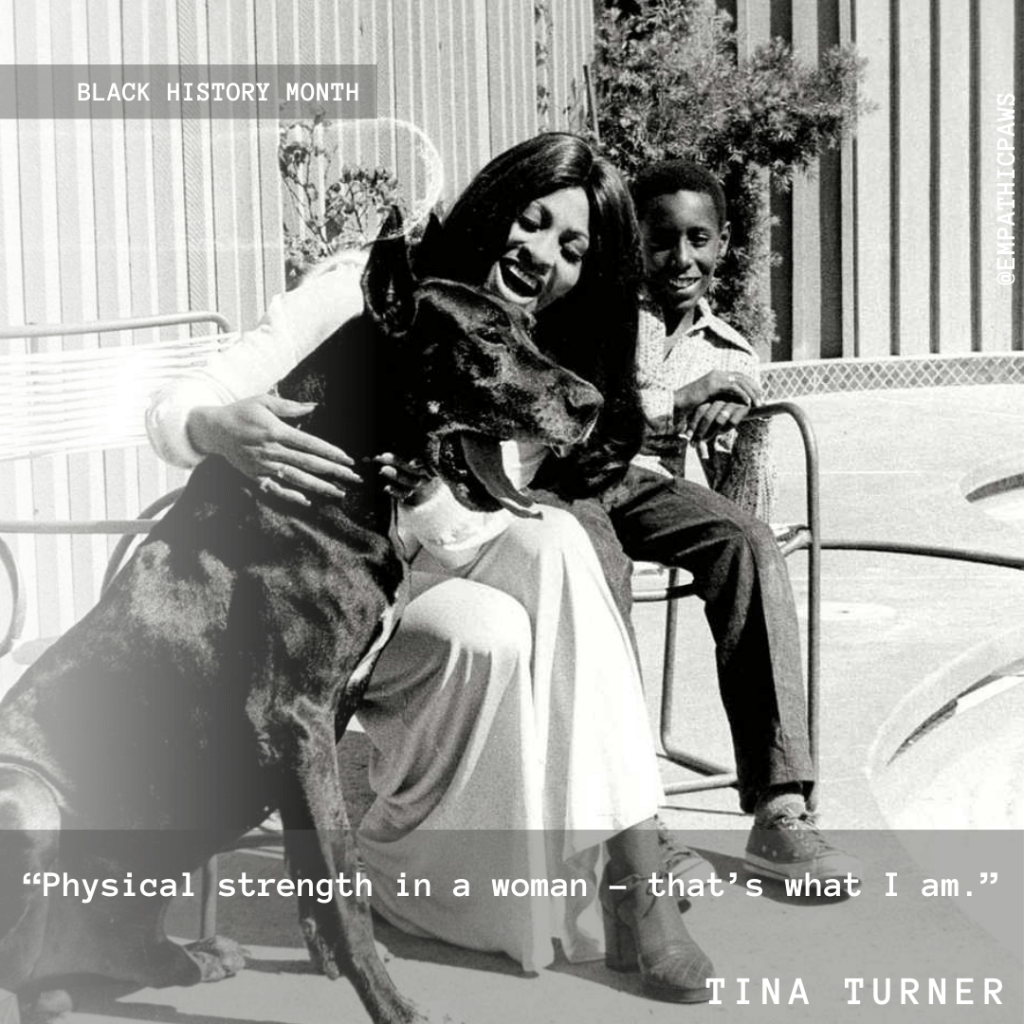
I personally found myself even more inspired by Tina after learning about this 1971 image depicting Tina, her son Ronnie, and their majestic Great Dane, Onyx. You see, this image encapsulates the dynamic energy of the rock legend and the serene strength of a canine companion, solidifying the position held by many, other than myself, that dogs are not just pets; they are steadfast companions, offering a unique and irreplaceable bond, one that transcends barriers imposed by others and the society in which they live.

Additionally, the image suggests Onyx exemplified the quintessential #GreatDane attributes, loyalty and a gentle demeanor, not because of his regal posture, but more so by the body language of Onyx’s humans—Tina’s loving embrace of Onyx, the position of her arm and her beaming smile, not to mention her son’s joyous expression. In this moment, the trio appear to share simultaneous happiness.

I’m left to wonder about the myriad of ways Onyx may have offered Tina unwavering reinforcements through the highs and lows of the early days of her illustrious career, including her personal hardships and quest for true love. In the whirlwind of a demanding career, one may consider that the presence of a loyal canine friend, like Onyx, served as a grounding force, for dogs, with their intuitive understanding and unconditional love, fulfill an area of need within their person.

Tina and Onyx, another beautiful example of the human-animal bond to further substantiate my personal belief that standing alongside every great woman is a stoic canine companion (or four). At the end of the day, dogs really are “Simply the Best.”

Please consider a visit to my Instagram to view posts honoring the incomparable Black voices of Billie Holiday, Oprah, Pauli Murray, and their respective love of dogs.

Celebrating Black History Month: Honoring Pauli Murray

👩🏼‍💻: @empathicpaws
📸: Robert D. Farber archives

In honor of Black History Month, each week, I will delve into the heartwarming bond between Black voices and their cherished canine companions. This week, I honor the trailblazing Pauli Murray – a civil rights activist, legal scholar, and champion for equality.

Along with Pauli’s immense contributions to life as we know it today, Pauli was a steadfast dog lover and it is Pauli’s enduring love for dogs that is beautifully captured in this moment. Pictured here you will find an image of Pauli and cherished companion, “Doc” – officially known as “Black and White We Rise Together,” on the lawn of Benedict College (Farber Archives, 1967).

Throughout Pauli’s remarkable life, dogs transcended the role of mere pets; they were steadfast allies, bearing witness to Pauli’s tireless advocacy for justice, equality, and ideals.

Accompanying their groundbreaking contributions, Pauli’s connection with their canine companions is a testament to the enduring strength found in companionship and the human-animal bond. “Doc” stands as one of the many loyal dogs integral to Pauli’s story, quite possibly offering solace, understanding, and unconditional love.

I am inspired by the thought of Pauli Murray making these profound contributions, accomplishing monumental feats all the while having a loyal canine companion equally steadfast by their side—a symbol of companionship, unwavering support, and a unique kind of partnership, but the most true form of love.

Imagine the comfort of having a faithful friend, witnessing tireless advocacy, celebrating triumphs, and offering solace during challenges. This bond may very well have evoked feelings of determination, resilience, and reaffirmed Pauli’s commitment to making a difference.

Pauli and “Doc,” a testament to the extraordinary impact that the companionship of a beloved dog can have on one’s life, the role they play in the narrative of accomplishments, and the inspiration to continue on my own advocacy journey, with gratitude and love for the pack that remains by my side.

Please consider a visit to my Instagram to view posts honoring the incomparable Black voices of Billie Holiday and Oprah, and their respective love of dogs.

Celebrating Humble Honors: A Journey Among Champions in Advocacy

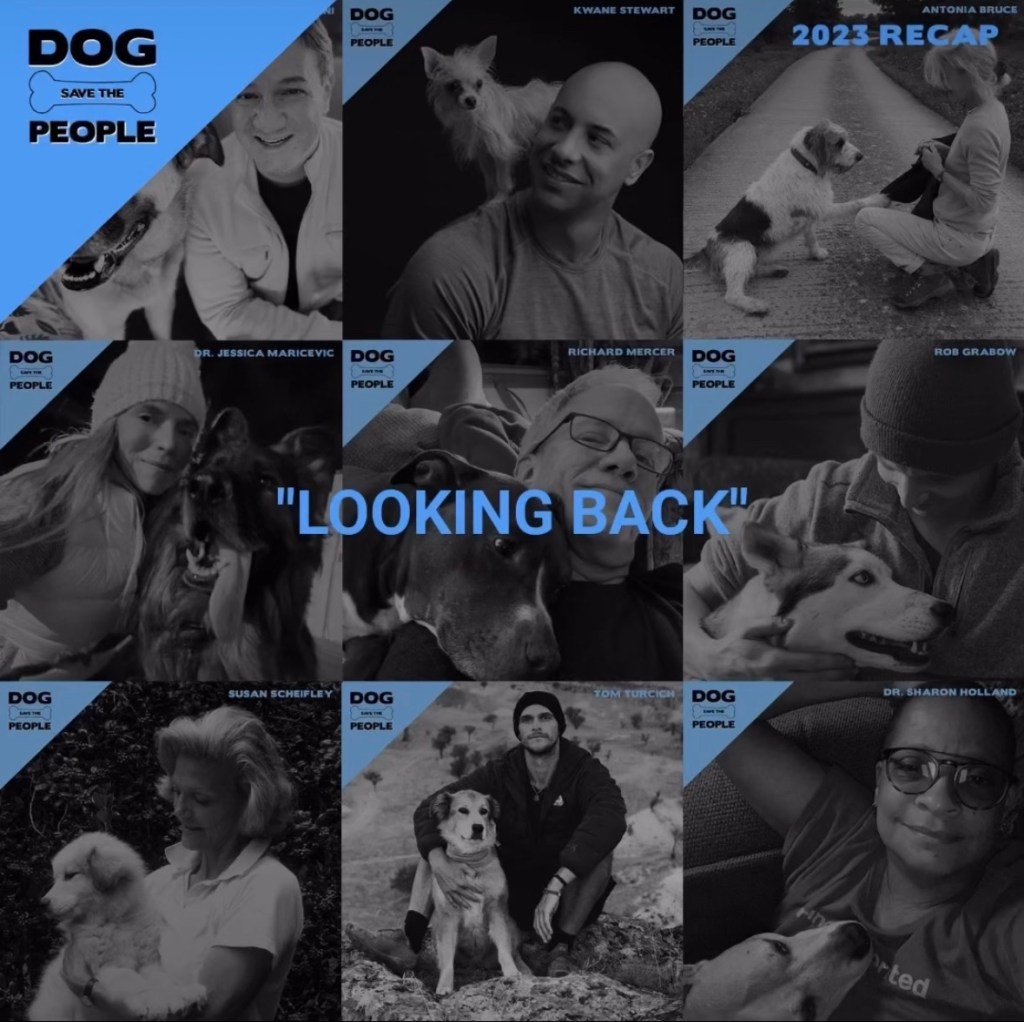
Dog Save the People’s most recent Instagram post

As 2023 comes to an end, I am reminded of an extraordinary privilege afforded to me this year—being featured alongside incredible human-animal bond advocates in the 2023 podcast series, Dog Save the People. In a world filled with remarkable voices dedicated to uplifting humanity, there are those who stand out, inspiring change and progress. To find myself nestled amidst luminaries—a Nobel Prize winner and CNN’s #2023HeroOfTheYear, well, to say it was a surreal experience would be an understatement.

The honor was not just a personal triumph. Dog Save the People’s decision to devote an entire episode to my research and to unpack the why behind the need for therapy dogs in high school settings, gave credence to my research, the human-animal bond (specifically the one between teenagers and therapy dogs), and so much more. But here’s the best part, I’m not the only person to hold such convictions.

Dog Save the People’s dedication to nurturing meaningful discussions, with a focus on the profound bond between humans and animals, is truly commendable. Each episode’s authentic portrayal and reverence for diverse perspectives reflects an unwavering commitment to fostering impactful dialogue for the greater good.

And then there’s my voice.

The inclusion of my voice alongside this esteemed 2023 group of guests serves as a reminder of the collective strength found in passionate advocacy. It’s a testament to the transformative potential of shared conversations and the ripple effect they create.

To those who stood by EmpathicPaws, supported my ventures, and rallied for the advocacy work addressing the human-animal bond across public and private sectors, and continue to do so, I extend my deepest gratitude.

And as I glance at the time, the minutes tick closer to 2024. It’s exciting to affirm my empathic journey is one that is far from over. Here’s to carrying forth the torch of empathy and advocacy into the new year. Together, let our collective voices resonate louder, ushering in positive change—one paw at a time.

A Generational Love

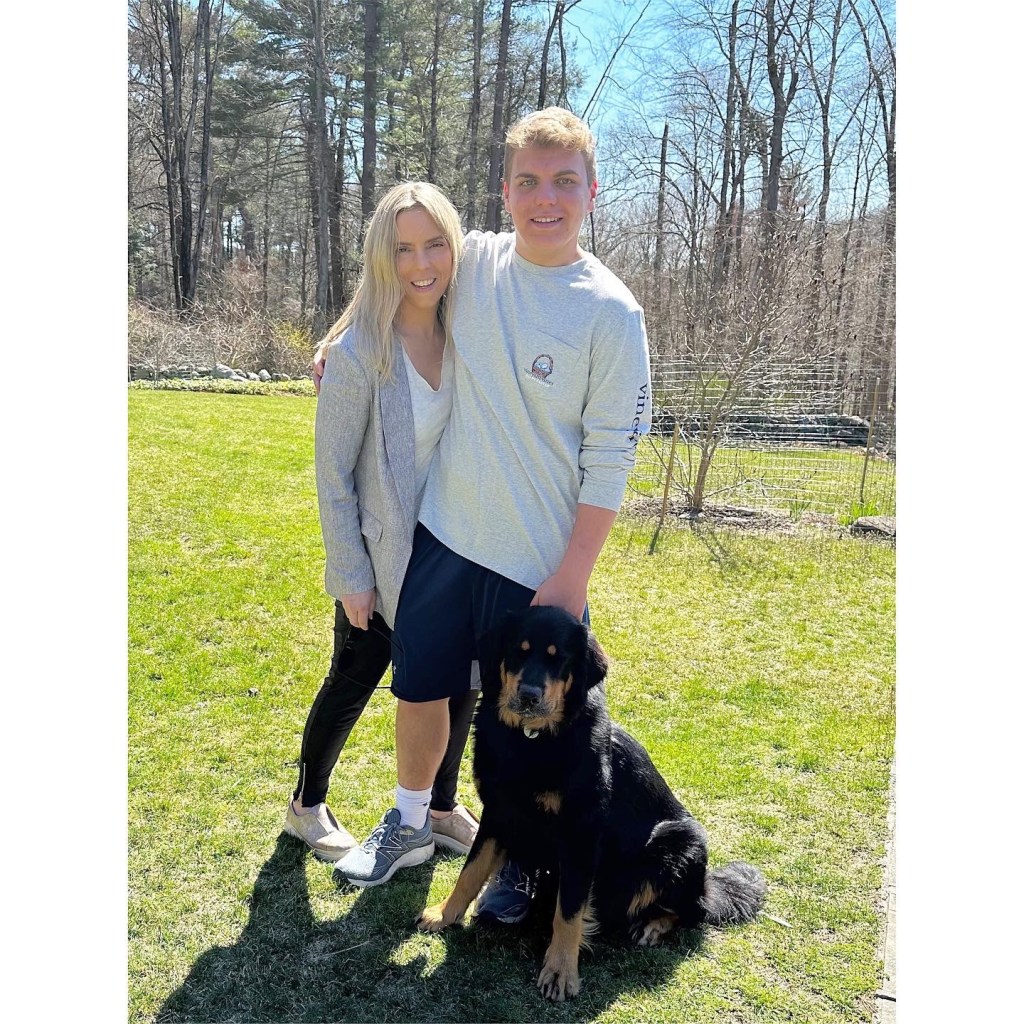
On the daily, I am the recipient of beautiful, heartfelt comments commending the person that stands by my side in this photo. Many of those comments conclude with a variation of the phrase, “it takes a village.” To which I reply, “Yes, yes it does…”

I am so proud to stand next to my not-so-little-boy, a young man who proudly holds a love for all beings, great and small. It’s a love delicately nurtured and handed down from those who came before him, before me.

Our shared empathic love for animals and ability to recognize the powerful benefits of the human-animal bond is innately within our core— the result of a generational love that transcends all barriers within a given space and time.

And from that love shines a hopeful conviction; he too will use this coveted passion and make this world a better place (in fact, he already is).

For it takes a village— yes, yes it does. But not just any village, it takes a dog-friendly village.

It takes a dog-friendly village to nurture the loving boy and guide him as he becomes the loving man he is destined to be.

Me, Jacob, & Bravo

It’s Never ‘Just’ a Walk

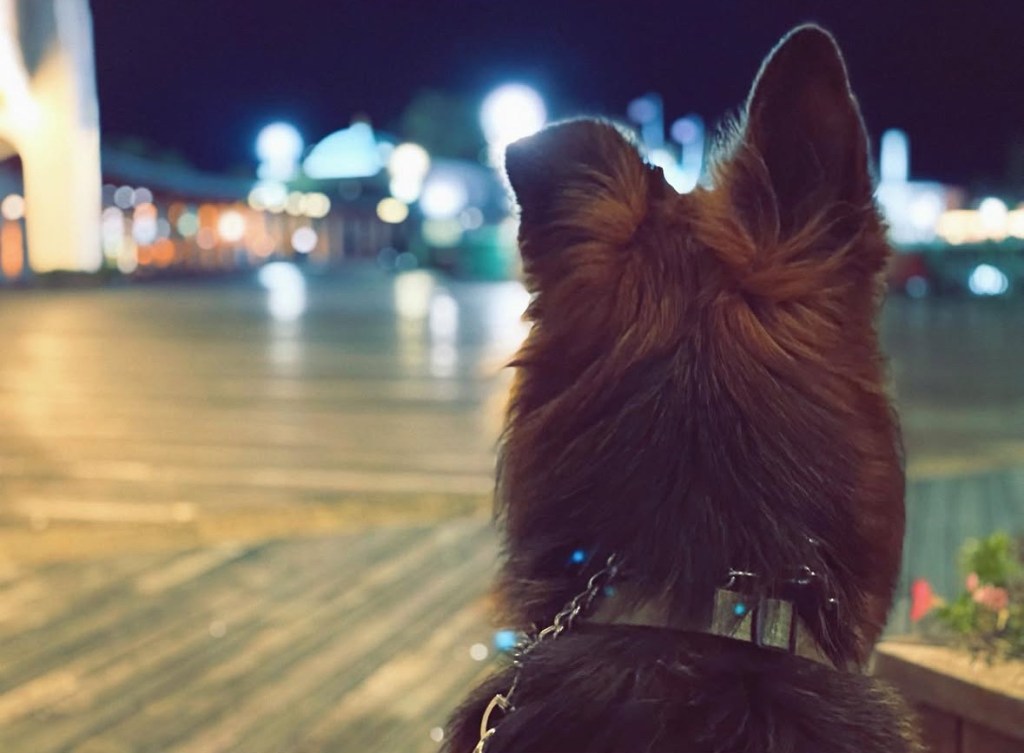
Even though you might think otherwise, an outing with your doggo is never just a walk. Found moments for cognitive stimulation, whether one-on-one with a doggo, like here with Judgie Boy or the entire pack, requires just as much from me, the human, as it does for my doggo(s). It also allows me to stay current with my doggo’s communicative ways and presents opportunities for creative ingenuity to keep the fun fresh (yes, even when revisiting cognitive challenges for practice, that’s fresh-fun too)!

Our human-animal bond is strengthened by infusing opportunities for cognitive stimulation when on any venture together. And it’s this active-time spent together that invigorates the body, mind & emotions; allows for new perspectives to the world on a micro & macro level; cultivates empathy… it’s never just a walk.

So give it a try! Spice up the active-time with your doggo. Start small. Make it manageable. Enhance the good stuff you’re already doing. Consider your usual active routine & possible on-the-spot opportunities the routine itself may provide (i.e. setting), try-out an added layer of cognitive stimulation (like I’m doing here with weaving between the pillars), evaluate your doggo’s response to the activity, reassess & revise as needed.

There is one non-negotiable, no negative reinforcement! If your doggo presents a hesitant response to the added activity, respect the presentation of the doggo’s feelings with love & reassurance. Empathize with your doggo, even say “let’s try again tomorrow,” & resume the enjoyable aspects of the routine as you and your doggo have established. Build upon the fun and cognitive stimulation, love the moment, love your doggo for trying something new, & give yourself a pat on the back while you’re at it, your efforts are noticed by the one who matters, your doggo.

Don’t have a doggo but still want “in” on some of this good stuff? Here are a few ideas:

  • Join a friend on a walk with their doggo(s)
  • #Volunteer at a local animal shelter
  • #Foster! Give some one-on-one active time to a doggo who needs it most! The result (1) you adopt the doggo or (2) get that doggo ready for their furever family
  • #Share this post with others
  • Connect with me ✌️❤️🐾