The Privilege of a Second Chance

Reunited with Judge • February 16th, 2025

I was given two options: immediate surgery or I needed to say goodbye. The surgery wasn’t guaranteed, the risks were high, and there was no promise of a miracle. But when I looked into Judge’s eyes, I knew it wasn’t time for us to part.

You see, his eyes told me everything—full of life, determination, and an unbreakable spirit that’s always defined him. And in those eyes, I saw a Rolodex of memories and moments in which Judge never gave up on me. Not once. Through every high and low, he’s been there, my constant, my protector, my best friend. How could I possibly give up on him now?

The doctors were honest. They told me the risks, the during and post-operative possibilities. But they also told me Judge was strong with an excellent heart—minus a bum spleen, Judge was a relatively healthy German Shepherd. It was all I needed to hear.

But making that choice was a privilege.

Emergency surgery isn’t just a matter of love and loyalty—it’s a matter of resources. It requires financial stability, access to specialized care, and the ability to take time away from life’s other responsibilities to be fully present for recovery. Not everyone has that choice. For many, the cost of life-saving surgery for a pet is simply out of reach. For others, the lack of nearby medical facilities or the inability to take time off work becomes the deciding factor.

When I stood at that crossroads, I was painfully aware of this privilege. I had a support system that rallied around me, offering love, prayers, and help with life’s other demands. I had access to my own veterinarian, the Veterinary Emergency Group, and Cornell’s exceptional veterinary team which carried out the life saving surgery. Without any one of those things, the outcome could have been heartbreakingly different.

This awareness weighed heavily on me because I know so many people face the same gut-wrenching decision without the resources to choose hope. I was able to fight for Judge because I had the privilege to do so. But others have to make the hardest choice of all—not because they don’t love their pets just as fiercely, but because life’s realities leave them no other option.

Judge isn’t just a dog. He’s my family, my guardian, my heart. He’s watched over my son, protected our home, and shown me a love so pure it’s changed me for the better. He is the reason why I started my entire dissertation over and focused on the adolescent-animal bond in secondary settings. In Judge, I saw the power of connection, the depth of loyalty, and the healing power that only a dog’s love can bring. His impact on my life was profound enough to shape my career, my research, and my purpose.

Today, the doctors are hopeful. Even with three liters of blood in his abdomen, the surgery was clean, a successful splenectomy, and Judge is home healing. He’s eating like the picky king of the castle that he is, back to reigning over his Mötley crew, his spirit as unbreakable as ever. Watching Judge return to himself, sneaking back to his spot on the couch, seeing that familiar spark in his eyes cataloging another memory together—it’s nothing short of a miracle.

Judge’s road to recovery won’t be easy, but he’s here, alive, because he never gave up and because I had the privilege to fight for him—just as he’s always fought for me. But for those who aren’t given that choice, my heart aches.

I will never take for granted the opportunity I had to fight for Judge and will advocate for solutions to ensure all pet parents can make balanced choices for the well-being of their furry family member—without having to choose between love and necessity. It’s my hope that one day, every pet parent will have the freedom to choose what’s best for their pet, without limitations.


I want to sincerely thank the veterinary teams at White Plains Animal Hospital, Veterinary Emergency Group of White Plains, and Cornell University Veterinary Specialists of Stamford. Your expertise, compassion, and dedication have meant everything to our family and Judge. You’ve given us more than just a second chance—you’ve given us hope. I am forever grateful for all you’ve done to give us back our Judgie Boy.

Building Trust, One Paw at a Time: Using an Extracurricular Club to Introduce Therapy Dogs in Schools

Many educators and school leaders recognize the benefits of therapy dogs in academic settings but hesitate to implement a full-scale program due to knowledge gaps, logistical challenges, financial constraints, or policy concerns. A Therapy Dog Club offers a structured, low-risk way to introduce animal-assisted therapies, easing leadership apprehensions. In fact, I strongly recommend beginning the therapy dog implementation process in this way to build trust in the program’s effectiveness while addressing concerns in a controlled environment.

So let’s dive in together as I define the concept of a Therapy Dog Club, outline its benefits, and provide a brief guide to getting started.

What is a Therapy Dog Club?

As I define it, a Therapy Dog Club is a student-led, faculty-advised group that brings trained therapy dogs into a school environment on a scheduled basis. The club provides a structured, low-risk way for students and staff to interact with therapy dogs, typically for emotional support, stress relief, and social engagement. It allows students to experience the benefits of animal-assisted interventions without the immediate need for implementing a full-time therapy dog program.

Participation is voluntary, making it an accessible option for a wide range of students. In my view, a Therapy Dog Club operates on a smaller, flexible scale, bringing therapy dogs into the school on specific days rather than having a resident dog on campus daily. Additionally, a Therapy Dog Club may meet after school or during designated extracurricular periods, which can be particularly appealing to school and district leaders.

Benefits of a Therapy Dog Club

Eases Administrative Concerns

Even with strong research supporting the benefits of therapy dogs, one of the biggest barriers to implementation is navigating perceptions, assumptions, and stereotypes. A club helps schools challenge misconceptions and test the waters before committing to a full-time therapy dog program. It also offers:

• Student Autonomy – Participation is voluntary, so students who are uncomfortable around dogs or have allergies can simply opt out. This eliminates concerns about mandatory exposure in classrooms or common areas.

• Waivers for Participants – Schools can require students (and guardians, if necessary) to sign waivers acknowledging participation and understanding any risks. This adds a layer of protection for the school and provides transparency for families.

• Gradual Implementation – Schools can observe how students and staff interact with therapy dogs before considering a larger-scale program. This allows time to refine policies, address concerns, and build community support.

Provides Emotional and Social Benefits for Students

A Therapy Dog Club offers many of the same emotional and mental health benefits as a full program. Interacting with therapy dogs has been shown to reduce stress, improve mood, and boost social interactions—all of which can be particularly helpful for students struggling with anxiety, academic pressure, or social isolation (Maricevic, 2022).

Fosters Student Leadership and Engagement

A Therapy Dog Club empowers students to take on leadership roles by organizing events, coordinating with therapy dog teams, and advocating for expanding the club into a full program. Giving students ownership fosters responsibility, teamwork, and community engagement.

Strengthens Community Partnerships

Starting a club opens the door to collaborations with local therapy dog organizations, shelters, or animal-assisted therapy programs. Schools can invite certified therapy dogs for visits, partner with community groups for educational sessions, or create service-learning opportunities where students volunteer with therapy animals.

Gathers Data to Support a Future Program

If a school is hesitant about implementing a therapy dog program, a club can serve as a pilot initiative to collect data on the impact of animal-assisted therapies. Surveys, testimonials, and anecdotal evidence from students, teachers, parents, and other key stakeholders can provide compelling reasons to expand the club into a permanent program.

How to Start a Therapy Dog Club

Identify a Faculty Advisor – A teacher, counselor, or staff member passionate about student well-being and animal therapy can oversee the club.

Partner with Local Therapy Dog Organizations – Certified therapy dog teams can schedule regular visits to meet with students.

Plan Activities – Meetings can include guest speakers, stress-relief sessions, volunteer opportunities, and advocacy efforts for therapy dog programs.

Involve Students – Let students lead initiatives, create outreach materials, and develop events.

Implement Waivers – Have students (and their guardians, if needed) sign participation waivers to ensure transparency and address liability concerns.

Final Thoughts

A Therapy Dog Club is a low-risk, high-reward way for schools to explore the benefits of therapy dogs before committing to a full program. It fosters a positive school culture, supports student mental health, and builds a foundation for a larger initiative in the future.

If your school is on the fence about a therapy dog program, starting with an extracurricular offering might be the perfect first step. By starting small and scaling thoughtfully, schools can introduce therapy dogs in a way that minimizes risks, maximizes benefits, and paves the way for a sustainable, well-integrated program.

A Case of the Mondays

After a relaxing weekend with our dogs, Monday morning hits hard. The easygoing days replaced by the usual work routine, and it’s clear the pack feels the shift too. Judge, Daisy, Bud, and Bravo all know when it’s time for me to head out the door. Their eyes reflect a shared disappointment. Yup, somebody’s got a case of the Mondays and it’s not just me.

But there’s a silver lining embedded within the dreaded Monday. After hours apart, walking through the door to the pack’s excitement makes life feel lighter. No matter how long the day was, that afternoon greeting, tails wagging as if no time has passed, immediately erases the stress and brings a smile to my face.

Need proof? Take this photo from Monday evening. Here, Bravo is affectionately letting me know how happy he is to be together again. He may not use words, but Bravo’s expression of love says it all. Sharing a moment like this after a long day is a reminder that despite the weekday grind, our bond remains strong. Reuniting isn’t just about making up for lost time—it’s about resetting the connection. Just like in any relationship, whether with family or friends, reconnecting after time apart strengthens the bond.

Bravo, Bud, Daisy, and Judge; their love reminds me that, even after a busy day, the simple act of coming home to a house filled with love is always the best part of every day—and the perfect remedy for any case of the Mondays.

Four Dogs and a Vacuum: Building Trust, Security, and Life Lessons

Sure, you’ve heard daunting stories about what life is like vacuuming with pets in the house. Funny thing, in our household, when it comes time to vacuum—every day—it’s surprisingly calm. Despite having 450 pounds of dog sprawled across the floor—Judge, our German Shepherd; Daisy, our Leonberger; Bud, our Golden Retriever; and the lovable Bravo, who is a little bit of everything—no one so much as flinches when the vacuum comes out. Come to think of it, not one of my dogs, from the age of 4 to this moment, has ever feared the vacuum. Here’s why that matters, what it says about the generational trust we’ve built together, and the lessons we can learn from our furry friends about human interactions.

The Vacuum Chronicles

I pull the vacuum cleaner out of the closet, and instead of the pandemonium of scattering dogs, there’s just a curious head tilt from Judge, a sleepy glance from Daisy, a wagging tail from Bud, and a completely unphased response from Bravo. The vacuum roars to life, and still, these four canine companions remain calm, cool, and collected.

Building Trust, One Woof at a Time

The journey to this serene scene wasn’t instantaneous. It took patience and a lot of love. From the very beginning, I ensured that the vacuum wasn’t some monstrous, roaring beast but just another part of our daily life. I introduced it slowly, letting each dog investigate it while it was off.

Over time, they learned that the vacuum was not an enemy but just a loud, rolling thing that sometimes interrupted nap time. Judge, with his naturally protective instincts, came to understand that if I was okay with the vacuum, he could be too. Daisy, usually unbothered by much of anything, followed suit, trusting the calm energy in the room. Bud viewed the vacuum as just another opportunity to be close to me, and our clever mutt figured out that it meant lots of praise and treats for staying calm.

The Power of Routine

Dogs are creatures of habit. By incorporating the vacuum into our regular cleaning routine, it became just another predictable event in their day. They knew what to expect and trusted that their environment remained safe. This familiarity reinforced their sense of security.

Judge, with his keen sense of order, appreciated the predictability. Daisy, who could sleep through a thunderstorm, found comfort in the consistency. Bud, ever the optimist, embraced the routine as just another part of his happy day. And Bravo, ever adaptable, saw it as a non-event.

Judge + Daisy + Bud + Bravo = 450 Pounds of Trust

In our household, trust isn’t measured by pounds, but if it were, we’d have a solid 450 pounds of it. Our four dogs, with their distinct personalities, have all come to understand that in our house, their people are their protectors and providers. They know that if we’re calm, they can be too.

Why It Matters

Their lack of fear towards the vacuum cleaner is more than just a convenient quirk; it’s a testament to the trust and security we’ve built. It shows that these dogs feel safe and cared for, confident that their world is predictable and loving.

This calmness extends beyond vacuuming. It means they’re more relaxed during thunderstorms, less anxious about trips to the vet, and more open to new experiences. It’s a reflection of their overall emotional well-being, a sign that they trust in the safety and stability of their home.

Lessons for Human Interactions

So, what can we learn from our fearless pack of dogs? Quite a lot, actually. The same principles of trust, routine, and security that apply to our pets can transform our relationships with people.

  • Consistency Matters: Just as our dogs trust us because we’re consistent in our actions, being reliable and predictable in our human relationships builds trust and security. People, like dogs, appreciate knowing what to expect.
  • Patience and Understanding: Introducing new concepts or experiences slowly and with empathy—whether it’s a vacuum cleaner for dogs or a new idea for a colleague—helps foster acceptance and reduce anxiety.
  • Creating Safe Spaces: Providing a sense of safety and security is essential. Whether it’s a calm household for our pets or a supportive environment for our friends and family, people thrive when they feel safe and cared for.
  • Building Mutual Respect: Respect is a two-way street. Just as our dogs trust that we won’t harm them, we should strive to show mutual respect in our interactions, valuing each other’s boundaries and needs.

In the end, our dogs’ serene response to the vacuum cleaner is a small but powerful reminder of the trust and security we’ve built together. It’s also a lesson in how these same principles can enhance our human interactions. After all, whether we have four legs or two, trust and security are the cornerstones of any strong relationship filled with happiness and love.

Celebrating Black History Month: Honoring Tina Turner


In honor of Black History Month, each week I will delve into the heartwarming bond between Black voices and their cherished canine companions.

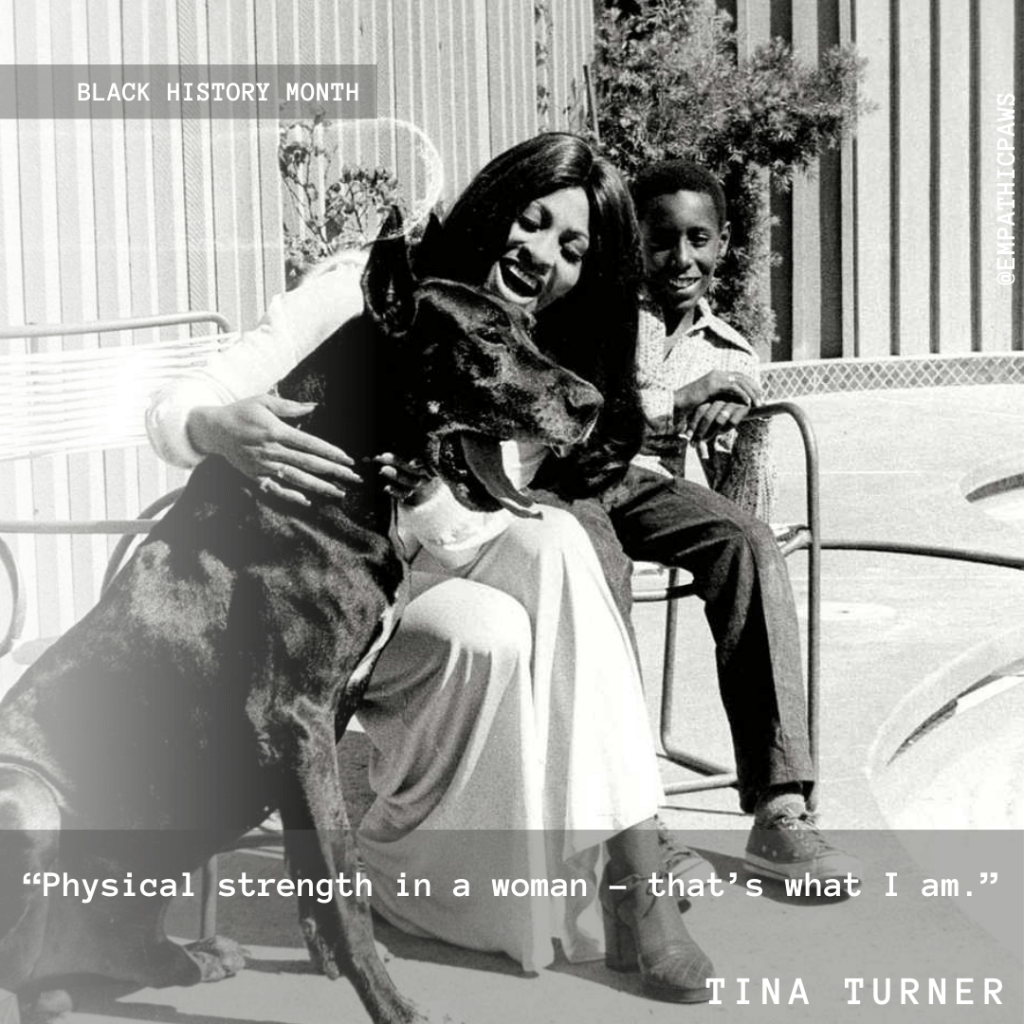
For my final post, I pay tribute to the remarkable life of the iconic Tina Turner, a music legend who reshaped the rock ‘n’ roll landscape and is forever immortalized as the #Queen of Rock ‘n’ Roll. Tina’s electrifying performances, soulful voice, and resilient spirit made her a music icon and one of my favorite artists to karaoke!

I personally found myself even more inspired by Tina after learning about this 1971 image depicting Tina, her son Ronnie, and their majestic Great Dane, Onyx. You see, this image encapsulates the dynamic energy of the rock legend and the serene strength of a canine companion, solidifying the position held by many, other than myself, that dogs are not just pets; they are steadfast companions, offering a unique and irreplaceable bond, one that transcends barriers imposed by others and the society in which they live.

Additionally, the image suggests Onyx exemplified the quintessential #GreatDane attributes, loyalty and a gentle demeanor, not because of his regal posture, but more so by the body language of Onyx’s humans—Tina’s loving embrace of Onyx, the position of her arm and her beaming smile, not to mention her son’s joyous expression. In this moment, the trio appear to share simultaneous happiness.

I’m left to wonder about the myriad of ways Onyx may have offered Tina unwavering reinforcements through the highs and lows of the early days of her illustrious career, including her personal hardships and quest for true love. In the whirlwind of a demanding career, one may consider that the presence of a loyal canine friend, like Onyx, served as a grounding force, for dogs, with their intuitive understanding and unconditional love, fulfill an area of need within their person.

Tina and Onyx, another beautiful example of the human-animal bond to further substantiate my personal belief that standing alongside every great woman is a stoic canine companion (or four). At the end of the day, dogs really are “Simply the Best.”

Please consider a visit to my Instagram to view posts honoring the incomparable Black voices of Billie Holiday, Oprah, Pauli Murray, and their respective love of dogs.

Celebrating Humble Honors: A Journey Among Champions in Advocacy

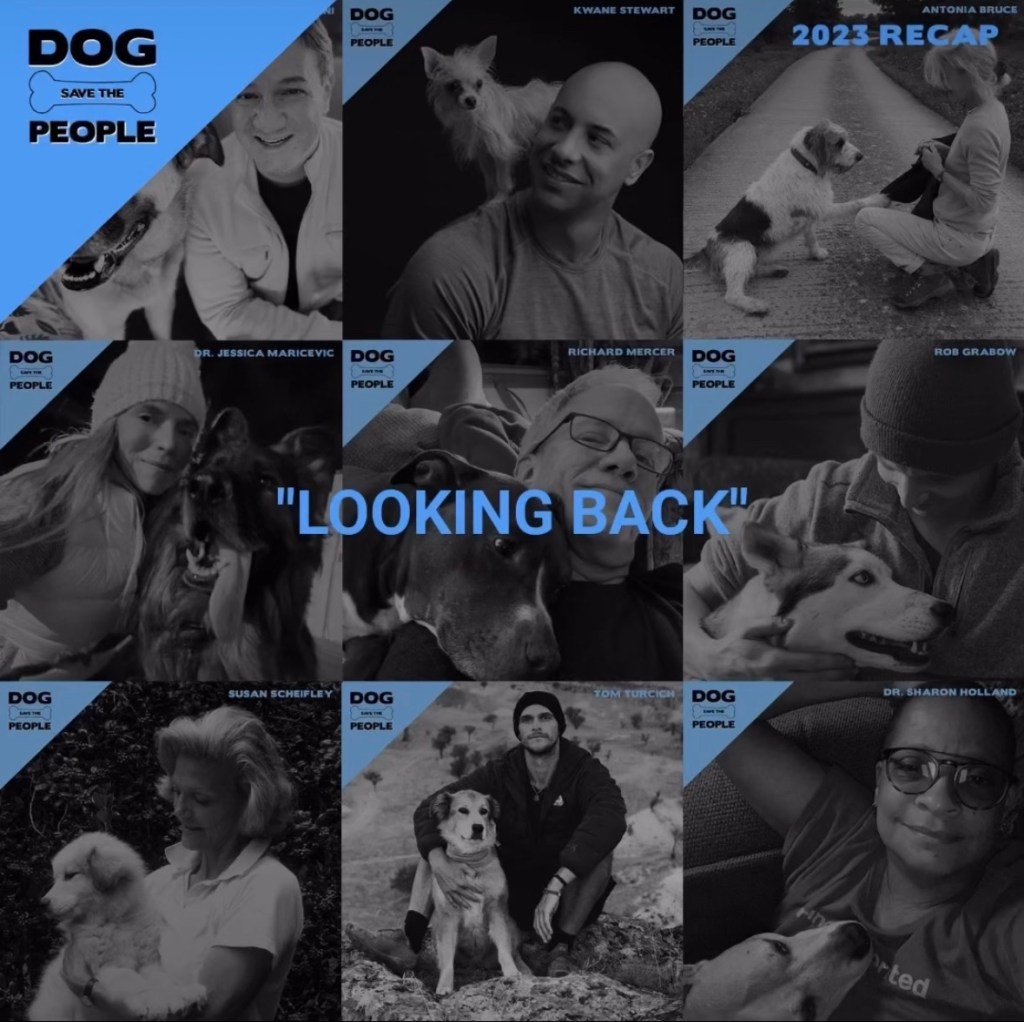
Dog Save the People’s most recent Instagram post

As 2023 comes to an end, I am reminded of an extraordinary privilege afforded to me this year—being featured alongside incredible human-animal bond advocates in the 2023 podcast series, Dog Save the People. In a world filled with remarkable voices dedicated to uplifting humanity, there are those who stand out, inspiring change and progress. To find myself nestled amidst luminaries—a Nobel Prize winner and CNN’s #2023HeroOfTheYear, well, to say it was a surreal experience would be an understatement.

The honor was not just a personal triumph. Dog Save the People’s decision to devote an entire episode to my research and to unpack the why behind the need for therapy dogs in high school settings, gave credence to my research, the human-animal bond (specifically the one between teenagers and therapy dogs), and so much more. But here’s the best part, I’m not the only person to hold such convictions.

Dog Save the People’s dedication to nurturing meaningful discussions, with a focus on the profound bond between humans and animals, is truly commendable. Each episode’s authentic portrayal and reverence for diverse perspectives reflects an unwavering commitment to fostering impactful dialogue for the greater good.

And then there’s my voice.

The inclusion of my voice alongside this esteemed 2023 group of guests serves as a reminder of the collective strength found in passionate advocacy. It’s a testament to the transformative potential of shared conversations and the ripple effect they create.

To those who stood by EmpathicPaws, supported my ventures, and rallied for the advocacy work addressing the human-animal bond across public and private sectors, and continue to do so, I extend my deepest gratitude.

And as I glance at the time, the minutes tick closer to 2024. It’s exciting to affirm my empathic journey is one that is far from over. Here’s to carrying forth the torch of empathy and advocacy into the new year. Together, let our collective voices resonate louder, ushering in positive change—one paw at a time.

The Beauty of the Inquiry Conversation

Unearthing School Needs, Listening, and Fostering Hope

We all know the fact that no two schools are alike. Each school has its unique set of strengths and challenges, its own character and culture, its own needs. Which is why the inquiry conversation, like those I have with school districts interested in learning more about what exactly a therapy dog program would look like in their school, is a truly beautiful thing. Let me tell you why.

During these conversations, I listen… a lot. I listen to educators share their experiences and insights. I get an insider’s perspective that no policy document or data report can ever fully capture. I hear the voices of passionate educators, who use their passion and commitment to paint a vivid picture of the real-world challenges faced by students in the day-to-day realities of the 21st century classroom.

Just Listen

Listening to educators during inquiry conversations is not just about absorbing information; it’s about building a bridge of trust and understanding. It’s about acknowledging the educators expertise, valuing their contributions to the organization, and recognizing how their efforts to even initiate an inquiry conversation in the first place is rooted in the best interest of students.

If an educator in your learning organization is passionate about a cause, advocates for their students’ needs, takes time out of their evening to connect with someone, like me, who can provide insight and thoughts for further consideration, that’s a pretty dang good, awesome, educator. Never, ever, let them go.

Hopes 

Inquiry conversations often reveal the hopes and dreams educators hold for their students. These hopes and dreams are deeply rooted in a genuine commitment to fostering the growth, well-being, and success for each learner.

And with each conversation, the voice of the educator carries with it a vision of what they wish for their students. It might be the hope for greater inclusivity with the student body, improved access to resources, or enhanced social-emotional support. 

Step One, Done.

So here’s to those next steps, the ones that take a conversation of hypotheticals to reality. And it will be a journey–a journey that involves dedication, collaboration, and a deep commitment to the well-being of students. I am honored and humbled to be included in step one of your process and cannot wait for step two, and three, and four…. thank you.

Shoulda. Woulda. Coulda.

My original creation; a digital design to welcome Instagram viewers to visit this blog post. My inspiration for this graphic stems from my love of the ocean, Montauk, and of course, dogs | J. Maricevic, 2023.

I recently read a funny meme. It was something along the lines of, “there are some people who should never have met my dog.” That might even be the exact wording, but I’m not quite sure.

I thought it was a funny post. I even considered reposting it. I thought about being cute and crossing out “dog” and replacing it with “dogs” (because I have four), or changing it to something like, “there are just some people who will never meet my dog, or dogs,” or maybe even, “there are just some people who will never meet my dog, or dogs, again,” because, well…

Listen, I know there are some people who simply do not deserve to be around any living creature due to their decision to treat an innocent being inhumanely. Let me be very clear on that point. Any unkind or abusive treatment is an obvious red flag, a scarlet letter forever emblazoned on a person’s chest, and that’s right, that person will never, ever be around your dogs, or my dogs, nor should they be around any other dogs or innocent beings.

So yes, there is at least one possible exception to the should never meet my dogs scenario. But was the concept behind the post, while produced in jest, further perpetuating negative thinking, energy and creating disharmony?

And then I got to thinking…

Why would there even be a person, or people, in an individual’s life who should never have met a person’s dog, or dogs, or never have the chance to meet a person’s dog in the future, or never have the opportunity to see them again? Yup, that’s a rhetorical question. You and I both have our own answers to our whys.

In normal Jess-fashion, I contemplated, reflected, and personalized the thought to better empathize with a person who holds such strong sentiments, and even take a moment to better empathize with myself.

I reverted back to when I was able to tangibly embrace my passion (that’s 4 years old). Talk about a lot of years, and a lot of memories, and a lot of “stuff” to sift through. Memories, moments, and faces– the flickers of my mental time capsule, going at Mach speed.  And with each face, memory, and moment, there were a few, not many, which did include people who, for all intents and purposes, were/are tied up in that silly little meme I referenced at the beginning of my post.

[Enter Thinking]

Ironically enough, the people who, in theory, should never have met my dogs, are the very people who, at the time, probably needed to meet my dogs the most. There are probably people I have yet to meet, who need to meet my dogs. There might even be people who have met my dogs, who really do need to meet them again. I am not quite sure how I feel about coming to such a realization. We fear the unknown right? Or is it that we fear the known?

My original creation; a mock-meme which I like to call, Probably the Ones who Needed to Meet them the Most. This image appears in my most recent instagram post | J. Maricevic, 2023.

A Transformative Impression

Dogs have a unique way of touching lives and teaching valuable lessons through their ability to bring joy, companionship, and help others become more patient, empathic, and responsible (Maricevic, 2022). Meeting another person’s dog can be a transformative experience for some individuals, even if they have had limited exposure to dogs or pets in general. It’s also possible that emotional competency development can happen without directly interacting with a person’s dog (Maricevic, 2022). It can also happen for a person who observes others interact with their furry family member.

Yes, that means when one person is able to witness (1) how another interacts with a dog, (2) how one person can love another being other than themselves or (3) a demonstration of reciprocal and unconditional love in return, those observations alone have the potential to leave a positive impression on a person’s psyche (Maricevic, 2022). Not just any impression, a transformative impression; an impression for the better.

Interacting either directly or indirectly with a dog can model what it looks and feels like to give and receive unconditional love, how to develop trust, embrace responsibilities, and the importance of living in the present moment (Maricevic, 2022). Such observations can also provide an opportunity for empathic growth, as others learn to understand the needs and behaviors of the do, in turn strengthens a person’s ability to develop and form bonds over time with humans and dogs (Maricevic, 2022).

Let’s not forget, dogs are known to have a positive impact on mental health, reducing stress and anxiety. For people who may be struggling emotionally or socially, a dog could provide a source of comfort, support, and a means for connecting with others during moments when feeling isolated, or even ostracized from the world. Dogs serve as a bridge for connectivity, helping to establish, solidify, and even mend relationships.

Got Hope?

At first thought, there might be people who come to mind who should never have met a person’s dog, or never will get the chance to meet a person’s dog, or those who will never have the chance to meet a person’s dog again. Now, minus the aforementioned exception, I challenge that initial thinking. In fact, I propose those should never or will never statements, shift to maybe one day statements.

If one is to change from a never mindset, to a maybe mindset, does that potentiality provide more space for positive thoughts, and less negativity? Does a change from a never mindset, to a maybe mindset create a space for an unexpected connection, a misunderstanding understood, a missed connection redirected, or serendipitous happenstance?

Admittedly, a change in mindset may never bring a moment to reality, and even if it does present itself, the moment might be fleeting or the opportunity anticlimactic. Those maybes may never happen at all. Even so, if there exists an opportunity for personal growth and positive experiences, and that opportunity starts within the individual themselves through self-empowerment and self-actualization, and there is no harm being done to oneself physically or emotionally, no harm being done to another person physically or emotionally, and no harm done to any person’s dog or dogs, then perhaps it’s worthwhile in the long run?

Perhaps, at least start with a shift in mindset. Perhaps be open to the maybe?

Maybe, one day [fill in the blank}.

Easier said than done, you say?

Maybe.

But I figure, on this rainy summer’s day, it’s worth a try. Chalk it up to needing some Vitamin D, being over all this rain, or an exercise in strength conditioning…. ’tis the season to bulk up the mental and emotional fortitude needed for the time when the radiant rays of sunshine give way to crisp fall days.

No shouldas, wouldas, couldas.

I got hope.

I’m going to give it a try.

It’s Cool to Be Kind

For those of you new to @empathicpaws, I am Dr. Jessica Maricevic, humane-ed reform and animal-assisted therapies advocate, and I am so very glad you’re here.

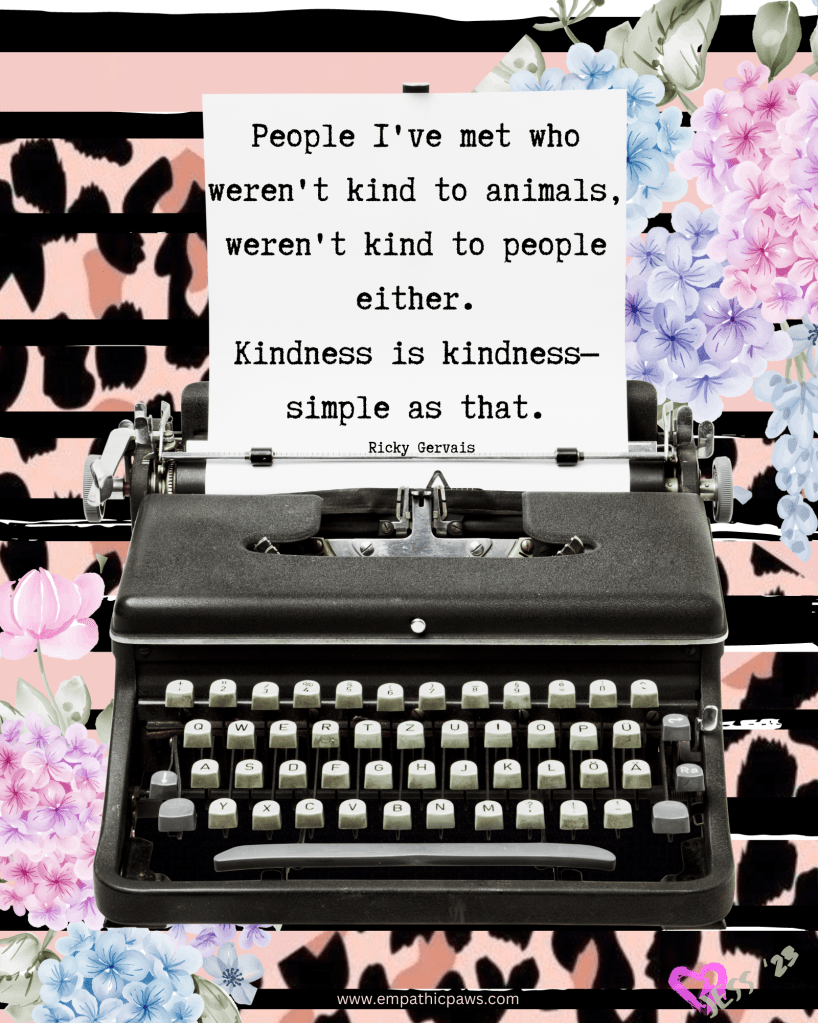
My most recent original graphic design is inspired by the words of comedian and humane advocate, Ricky Gervais. Let’s further the conversation around the interconnectedness of the human-animal relationship and social-emotional competency development and use Mr. Gervais’s words as a springboard.

©️ J. Maricevic, 2023

The human-animal bond serves as a positive influence upon one’s social-emotional competency development, the sustainability of SECs and subsequent evolution of these traits throughout a person’s lifetime. And with that in mind, more consideration is needed within learning organizations on ways to infuse the human-animal relationship to further the radius of influence upon the social capital within the organization.

Allow Mr. Gervais’s words along with my original visual creation to serve as a conversation starter around the human-animal bond and the need to increase opportunities for such bonding in the high school setting.

The Act of Being: A Kermit-Like Mindset to Leadership and Beyond

TikTok Inspired

I recently stumbled upon a TikTok post featuring a table-read for the sketch comedy show, The Muppet Show (1976 – 1981). The clip, posted by TikTok user, @muppetmarissa, includes the voice-overlay of creative mind and Muppet creator, Jim Henson, along with his perspective on the collaborative creative process. The clip progresses, there are many other voices of Muppet Legendary, and then comes the wave of nostalgia.

The Fabric

Now, if you made it this far, it should come as no surprise to learn the obvious. I am a huge Jim Henson fan. I mean, I am writing a reflection on educational leadership with an ode to The Muppets. Don’t worry, it has a purpose, I promise.

I am unsure where @muppetmarissa found this particular clip, but very much look forward to viewing what appears to be a documentary on Jim Henson that I have yet to review. I do know there is a highly anticipated documentary in the works about Jim Henson, directed and produced by the dynamic duo of Ron Howard and Brian Glazer. The release date of the Disney Original Documentary is still to be determined and you can read more about it here in this 2022 press release by The Jim Henson Company.

You see, I consider myself a creative. I allow myself the time, space, and flexibility to be creative in all aspects of my personal and professional interests. I credit my creative identity and all my ventures, from childhood to this very moment, to Jim Henson, his circle of like-minded creatives, the imaginary world they conjured for us kids in the 80s, and how that imaginary world has now transcended space and time.

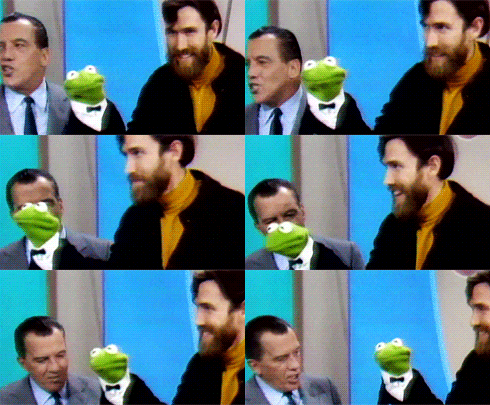
Ed Sullivan, Kermit the Frog and Jim Henson; The Ed Sullivan Show, N.D.

Shared Experience

I also know, I am not the only one who feels this way. Take actor Jason Segel, for example. Segal is best known for his role in the sitcom How I Met Your Mother (2005 – 2014), writing and starring in the iconic film, Forgetting Sarah Marshall (2008), writing and staring in the recent the AppleTV series, Shrinking (2023), and [drumroll please], his love of The Muppets.

Segel does not shy away from his love and appreciation for The Muppets, and even refers to them as his “childhood idols.” An additional interest worth noting is Segel’s idolization of Kermit the Frog, the amphibian embodiment of Henson’s legacy. Segel reveres Kermit almost as much as I revere the little green frog. During an interview to promote his mid-2000s film, The Muppets (2011), Segel was asked to divulge his favorite Muppet, to which he replied “… it’s Kermit. It’s always been Kermit.” I get it.

I get Segel’s #ItsAlwaysBeenKermit belief statement because quite frankly, I have an #ItsAlwaysBeenKermit belief statement, too. So here it goes, my Kermit belief statement:

Everything I learned in life, I learned from a little green frog

I really get it.

In 2011, Segal took it upon himself to dust off the Muppet memories for us “80s kids,” thanks to writing and staring alongside them for their return to the big screen. That summer, I took my son, who was then 4 years old, along with his cousins, to see Segal’s major motion picture production. We sat in a quaint, Berkshire, Massachusetts movie theater. What could be better than a summertime movie, in the Berkshires, and watching The Muppets? Nothing. There is nothing better. Trust me.

The lights dimmed. The credits rolled, and so did the tears. Let me be more specific. The credits rolled, and so did my tears.

I wish I could say I was overcome with emotion because it was my son’s first time in a movie theater– it wasn’t that. No, it wasn’t tears of joy. Tears of sadness? Nah. Nope, not tears longing for the days of yesterday. I pretty much cried throughout the entire movie. 

The Act of Being

For the duration of the film, the adult me was very cognizant of the fact that I was in a theater, surrounded by children, one of them being my own, to watch a film in which my own childhood icons paraded on screen. The film, for all intents and purposes, was presented under the auspices of a children’s movie. But to me, I knew this film was not exclusively targeted to the 4-12 year old demographic, but to their parents, guardians, aunts, uncles, neighbors– to those “80s kids.”

The Muppets (2011) was a film targeted to me, and my tears were tears of being; being seen, heard and valued

It was so very apparent, how by watching this film, my personal roadmap, goals, dreams, and aspirations were emphatically validated, and not just by any other person, by another like-minded creative, personally and professionally influenced by Henson and his Muppets.

Jason Segel got it– he got me.

I was being seen, valued, and heard as a person in need of a reminder, a reminder to remember….and I wasn’t the only one. I wasn’t the only one positively influenced by the creative masterminds behind The Muppets. I wasn’t the only one still using the efforts of ingenious creatives, like Henson, to fuel my purpose. I wasn’t the only one who wanted to genuinely find opportunities to advocate for empathy and understanding, to leave my mark on this world, and make it just a little brighter than it was the day before.

There are people, like Segel, who are like me. There are people, like Segel, who, like me, want others to know that even during some of life’s most [fill in the blank] moments, they are seen, heard and valued.

Educational Leadership

As I reflect on my own educational leadership journey, there is the running motif and thematic concept within my writing and it is centered around those three words: seen, valued, and heard (I’ve coined it “the trifecta”). All individuals in an organization need to feel truly seen, valued, and heard for a plethora of reasons; the multitude of stakeholders: who is the cultivator of “the trifecta” one day and who is the receiver the next; interwoven relationships between district, school building leadership and the trickle down effect; leadership philosophy and philosophical approaches to management, transactional vs. transformational…

Now, enter students into the equation. Students must feel seen, heard and valued, and if teachers are the ones to help cultivate and nurture “the trifecta,” then teachers must also be a receiver of those feelings, which then means district and school building leadership must …. round and round we go.

All stakeholders must have equitable access to “the trifecta.” Easier said than done? Meh.

Everything I learned in life, I learned from a little green frog.

I get it, because I believe it. And I also believe in order to cultivate authentic opportunities for others to feel all those things, and more, it takes creative ingenuity, it requires safety and security, transparency, honesty, love, kindness, trust, empathy …. it requires a Kermit-like mindset.

A Kermit-Like Mindset to Leadership and Beyond! That reads as if it’s got some potential, and that is where the next chapter of my leadership journey will start.