If Therapy Dogs are Good Enough for the USA Gymnastics Team, They’re Good Enough for America’s High School Students

How therapy dogs are alleviating pressure felt by elite athletes even at Olympic levels by Steve Dorfman of The Palm Beach Post

I don’t know about you, but I am totally hyped up for the 2024 Olympic Games, ready to cheer on Team USA in all sports. But let’s be real, the Olympic Games aren’t just any old event—this is the high-pressure world of elite sports, where the best of the best compete in the revered global arena, and when an athlete’s physical fitness and success is dependent upon their emotional wellbeing.

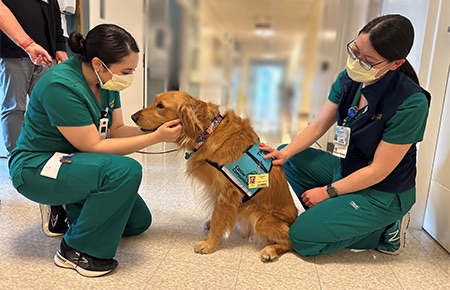
Which is why in the weeks leading up to the Olympic Games, I was elated to learn about USA Gymnastics prioritization of the mental and emotional wellbeing of athletes prior to the start of the games. I loved how my social media algorithm flooded my social media feed with videos and images of the USA Gymnastics team warmly embracing therapy dogs to help manage stress and anxiety.

Naturally, I loved these videos and images, and their recurring appearance inspired me to consider my own advocacy efforts. Maybe if the entire world was able to observe the positive effects of therapy dogs on the wellbeing of elite athletes then there might be a more clear pathway to connect the dots to the potential benefits for other groups, like America’s high school students.

If you know me, then you know that my next series of wonderings centered around one thematic implication: if highly driven and talented athletes benefit from the presence of therapy dogs, then high school students across America could also gain significant advantages from similar support. 

At the end of the day, high school students are not fundamentally different from elite athletes in their need for support. For high school students, the academic environment can be a significant source of stress (Maricevic, 2022). Like the gymnast’s pressure to perform flawlessly in routines, maintain peak physical condition, and compete at high-stakes events, high school students can often feel overwhelming pressure to excel academically, manage social relationships, and plan for the future. Incorporating therapy dogs into schools in the same manner as USA Gymnastics offers a valuable outlet for stress relief and emotional support for adolescents. If therapy dogs can aid aspiring Olympians in achieving their goals, they can also play a crucial role in helping America’s teenagers manage the challenges of high school.

So here we go! Here’s a brief argument for why high school students deserve therapy dogs in their learning environment just as much as elite athletes. Let’s begin!

A Quick Refresher on the Benefits of Therapy Dogs

Therapy dogs are dogs specially trained to offer comfort and companionship in a range of public and private settings, including schools, hospitals, and environments affected by traumatic events (Maricevic, 2022). Their presence profoundly impacts individuals’ emotional and mental health (Maricevic, 2022). Research, including my own, confirms that interacting with therapy dogs significantly reduces anxiety, stress, and symptoms of depression in humans, especially for adolescents (Maricevic, 2022). Furthermore, there are notable physical benefits attached to the human-animal bond, such as increased levels of oxytocin—a hormone linked to bonding and emotional well-being—and decreased levels of cortisol, the stress hormone (McDowall, 2023).

A Beacon of Possibilities

You can thank this entire post to Beacon. Beacon, a 4-year-old golden retriever therapy dog, is a pivotal part of USA Gymnastics’ efforts to transform the sport’s toxic culture.

Beacon, along with a brigade of therapy dogs contributed to the national competitions by offering a calming presence to the athletes (even swimmers). One such athlete, Joscelyn Roberson, expressed her love for Beacon saying, “He’s so cute! I’ve already told people that this is the best thing that U.S.A. Gymnastics can do for us” (Macur, 2024).

Under the leadership of Chief Executive Officer Li Li Leung, the USA Gymnastics organization made significant strides in prioritizing mental health following scandals and revelations about the toxic environment in the sport. Leung underscored the importance of mental wellness, stating, “There’s no question that there was a lesson learned from Tokyo in terms of mental wellness being so critically important” (Macur, 2024). Leung’s commitment to this priority is demonstrated through the inclusion of nearly 20 dog-and-handler teams during the U.S. National Gymnastics Championships in Fort Worth this year, providing much-needed emotional support.

According to NBC News, Beacon, the organization’s “first official therapy dog,” made rounds during the trials, watching over athletes and coaches (Portée 2024). As gymnasts tackled floor routines, balance beams, and vaults, Beacon was there to alleviate the strain of injuries and the stresses of the multi-day event. Beacon’s human-run Instagram page notes that he “loves pet therapy, fridge time” and “making friends with everyone” (Portee, 2024). Beacon’s handler, Tracey Callahan Molnar, shared with ESPN that Beacon’s role involves acting as an “emotional sponge” for athletes, absorbing their stress. As Molnar explained, “Beacon gets tired by the end of the day [and] absorbs the stress of the people they’re relieving the stress off of” (Portee, 2024). Although exhausting work, it is profoundly meaningful.

Extending the Success of Therapy Dogs to High Schools

The success of Beacon and other therapy dogs with the USA Gymnastics team, as well as those that comforted members of the USA Swimming team during qualifying events, raises important questions: if therapy dogs can help aspiring Olympians achieve their dreams, in what ways, if any, can they do the same for America’s teenage population in high schools? Are high school students any less deserving of the same opportunity afforded to Olympic hopefuls? If therapy dogs provide emotional support and stress relief for success in the athletic arena, why shouldn’t they do the same for high school students to thrive in the academic arena? More importantly, why aren’t they?
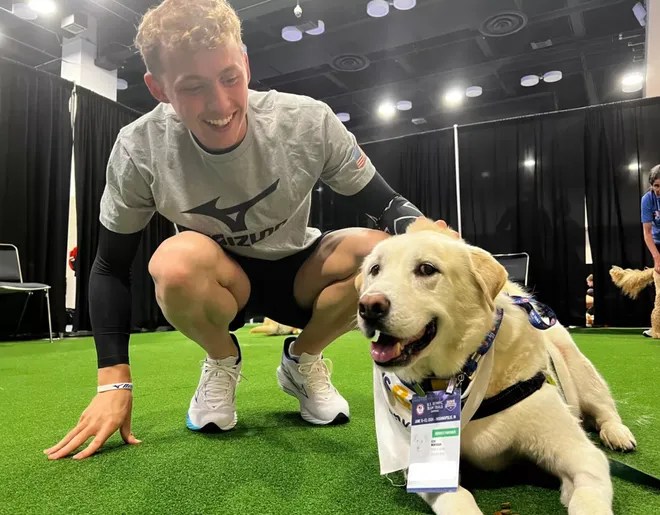
How therapy dogs are alleviating pressure felt by elite athletes even at Olympic levels by Steve Dorfman of The Palm Beach Post’s photo of American swimmer Carson Foster with therapy dog Izzo. Courtesy of USA Swimming

While elite athletes certainly benefit from therapy dogs, high school students face unique and substantial pressures that make the support of therapy dogs not just beneficial but essential as they experience significant stress and emotional challenges that can deeply impact their academic performance and overall well-being. The academic demands, social pressures, and the uncertainty about the future create a high-stress environment. Therapy dogs offer a much-needed respite, providing emotional support and reducing stress in ways that are crucial for students navigating these formative years.

Not to mention the transition from adolescence to adulthood is a critical period of physical and emotional maturation where students are developing essential life skills, including emotional regulation and social interaction (Maricevic, 2022). Therapy dogs as a presence during this period of development help in fostering emotional resilience, enhancing social skills, and building empathy, foundational skills for personal growth and future success, thus making the presence of therapy dogs an invaluable support system during this developmental stage (Maricevic, 2022).

The research that accompanies my advocacy for therapy dogs in high school settings does not diminish the reality elite athletes face from intense pressure and high expectations. However, their access to support systems and resources is generally more robust and innovative, as observed through the inclusion of Beacon. Elite athletes often have dedicated mental health professionals, coaches, and structured programs to address their needs. In comparison, high school students may lack such comprehensive support, all the more reason to include therapy dogs as a particularly impactful and equitable enhancement to their educational experience, addressing a critical need by supporting students in a holistic and meaningful way, ultimately fostering a healthier, more supportive learning environment (Maricevic, 2022).

The example set by the USA Gymnastics team underscores the powerful role that therapy dogs can play in promoting mental health and emotional well-being. By bringing therapy dogs into high schools, educational leaders can offer students the same level of support that helps elite athletes thrive in their complex lives.

Are you convinced yet that if therapy dogs are good enough for elite athletes they are more than good enough for our high school students?

Well, here’s the deal, you should be convinced by now, and if not, let me share some important information. Incorporating therapy dogs into high schools yields a variety of positive outcomes, from enhancing the overall school environment to the student experience (Maricevic, 2022):

  • High school students experience significant stress and emotional challenges that can deeply impact their academic performance and overall well-being. The academic demands, social pressures, and the uncertainty about the future create a high-stress environment. Therapy dogs offer a much-needed respite, providing emotional support and reducing stress in ways that are crucial for students navigating these formative years.
    • Reduced Stress and Anxiety: Therapy dogs help lower students’ stress and anxiety levels, creating a more relaxed and conducive learning environment.
    • Improved Academic Performance: Lower stress levels leads to better focus and concentration, improving academic performance.
    • Enhanced Emotional Support: Therapy dogs provide unconditional love and companionship, offering a comforting presence that helps students navigate emotional challenges.
  • The transition from adolescence to adulthood is a critical period where students are developing essential life skills, including emotional regulation and social interaction. Therapy dogs help in fostering emotional resilience, enhancing social skills, and building empathy. These skills are foundational for personal growth and future success, making the presence of therapy dogs an invaluable support system during this developmental stage.
    • Increased Social Interaction: The presence of a therapy dog encourages social interaction among students, fostering a sense of community and reducing feelings of isolation.
    • Priotizating Mental Health: Regular interaction with therapy dogs contributes to improved overall mental health, reducing symptoms of depression and anxiety.
    • Development of Empathy and Responsibility: Caring for and interacting with therapy dogs helps students develop empathy and a sense of responsibility.
  • Furthermore, therapy dogs can play a transformative role in creating a positive school environment. They not only alleviate individual stress but also promote a sense of community among students. By reducing feelings of isolation and fostering social interaction, therapy dogs contribute to a more inclusive and supportive school culture.
    • Positive School Environment: The inclusion of therapy dogs creates a more positive and welcoming school environment, promoting happiness and well-being among students, staff and stakeholders in the greater learning community.

Hey Educators, Remember This!

Educators need to remember that while elite athletes face intense pressure and high expectations, they generally have more robust support systems and resources. They often have access to dedicated mental health professionals, coaches, and structured programs to address their needs. Despite this, a transformative leader like USA Gymnastics’ Leung recognized more needed to be done to support athletes and incorporated a seemingly unconventional resource—therapy dogs—to support team members in a truly authentic and organic way.

Educators need to remember that, in comparison to elite athletes, high school students may lack comprehensive support systems in and out of school for a myriad of reasons. This is why the inclusion of therapy dogs would be a particularly impactful and equitable enhancement to the adolescent educational experience. However, it requires a transformative leader with an innovative mindset, like Leung, to recognize the long-term benefits of including a therapy dog within their organization.

It’s clear therapy dogs are good enough for Olympians, then they are more than good enough for America’s high school students. The example set by the USA Gymnastics team highlights the significant role therapy dogs can play in fostering mental health and emotional stability. Educational leaders and stakeholders must put ego aside and kick past-practice to the curb. Bringing therapy dogs into high schools will provide students with the same level of support that contributes to the success of elite athletes. Educational stakeholders must challenge the status quo and make a meaningful advancement in supporting the mental health and emotional well-being of America’s youth. 

USA Today

Four Dogs and a Vacuum: Building Trust, Security, and Life Lessons

Sure, you’ve heard daunting stories about what life is like vacuuming with pets in the house. Funny thing, in our household, when it comes time to vacuum—every day—it’s surprisingly calm. Despite having 450 pounds of dog sprawled across the floor—Judge, our German Shepherd; Daisy, our Leonberger; Bud, our Golden Retriever; and the lovable Bravo, who is a little bit of everything—no one so much as flinches when the vacuum comes out. Come to think of it, not one of my dogs, from the age of 4 to this moment, has ever feared the vacuum. Here’s why that matters, what it says about the generational trust we’ve built together, and the lessons we can learn from our furry friends about human interactions.

The Vacuum Chronicles

I pull the vacuum cleaner out of the closet, and instead of the pandemonium of scattering dogs, there’s just a curious head tilt from Judge, a sleepy glance from Daisy, a wagging tail from Bud, and a completely unphased response from Bravo. The vacuum roars to life, and still, these four canine companions remain calm, cool, and collected.

Building Trust, One Woof at a Time

The journey to this serene scene wasn’t instantaneous. It took patience and a lot of love. From the very beginning, I ensured that the vacuum wasn’t some monstrous, roaring beast but just another part of our daily life. I introduced it slowly, letting each dog investigate it while it was off.

Over time, they learned that the vacuum was not an enemy but just a loud, rolling thing that sometimes interrupted nap time. Judge, with his naturally protective instincts, came to understand that if I was okay with the vacuum, he could be too. Daisy, usually unbothered by much of anything, followed suit, trusting the calm energy in the room. Bud viewed the vacuum as just another opportunity to be close to me, and our clever mutt figured out that it meant lots of praise and treats for staying calm.

The Power of Routine

Dogs are creatures of habit. By incorporating the vacuum into our regular cleaning routine, it became just another predictable event in their day. They knew what to expect and trusted that their environment remained safe. This familiarity reinforced their sense of security.

Judge, with his keen sense of order, appreciated the predictability. Daisy, who could sleep through a thunderstorm, found comfort in the consistency. Bud, ever the optimist, embraced the routine as just another part of his happy day. And Bravo, ever adaptable, saw it as a non-event.

Judge + Daisy + Bud + Bravo = 450 Pounds of Trust

In our household, trust isn’t measured by pounds, but if it were, we’d have a solid 450 pounds of it. Our four dogs, with their distinct personalities, have all come to understand that in our house, their people are their protectors and providers. They know that if we’re calm, they can be too.

Why It Matters

Their lack of fear towards the vacuum cleaner is more than just a convenient quirk; it’s a testament to the trust and security we’ve built. It shows that these dogs feel safe and cared for, confident that their world is predictable and loving.

This calmness extends beyond vacuuming. It means they’re more relaxed during thunderstorms, less anxious about trips to the vet, and more open to new experiences. It’s a reflection of their overall emotional well-being, a sign that they trust in the safety and stability of their home.

Lessons for Human Interactions

So, what can we learn from our fearless pack of dogs? Quite a lot, actually. The same principles of trust, routine, and security that apply to our pets can transform our relationships with people.

  • Consistency Matters: Just as our dogs trust us because we’re consistent in our actions, being reliable and predictable in our human relationships builds trust and security. People, like dogs, appreciate knowing what to expect.
  • Patience and Understanding: Introducing new concepts or experiences slowly and with empathy—whether it’s a vacuum cleaner for dogs or a new idea for a colleague—helps foster acceptance and reduce anxiety.
  • Creating Safe Spaces: Providing a sense of safety and security is essential. Whether it’s a calm household for our pets or a supportive environment for our friends and family, people thrive when they feel safe and cared for.
  • Building Mutual Respect: Respect is a two-way street. Just as our dogs trust that we won’t harm them, we should strive to show mutual respect in our interactions, valuing each other’s boundaries and needs.

In the end, our dogs’ serene response to the vacuum cleaner is a small but powerful reminder of the trust and security we’ve built together. It’s also a lesson in how these same principles can enhance our human interactions. After all, whether we have four legs or two, trust and security are the cornerstones of any strong relationship filled with happiness and love.

In High Schools, Therapy Dogs Give Teens Permission to Feel

Photo by Carlos Santiago on Pexels.com

In the bustling halls of high schools across the country, amidst the chatter of students and the ringing of bells, a new kind of support system is quietly at work. It doesn’t come in the form of a teacher, counselor, or peer, but rather, on four paws, with a wagging tail and a pair of soulful eyes.

Therapy dogs are becoming a fixture in high schools, offering a unique form of emotional support that aligns with the principles outlined in Dr. Marc Brackett’s “Permission to Feel.” Brackett, a professor at Yale University and the founding director of the Yale Center for Emotional Intelligence, advocates for the recognition, understanding, labeling, expressing, and regulating of emotions as essential components of emotional well-being. 

A Moment of Inspiration

The idea to explore this intersection between therapy dogs and emotional education came to me while scrolling through the social media platform “X.” Yesterday, Brackett posted a poignant reflection following a talk he gave at Yale reunion weekend. In his post, he shared, “I gave a talk today at @Yale reunion weekend. I shared how only 40% of us had someone in our childhood who gave us #PermissionToFeel. At the end of my talk, a man approached me and shared how he didn’t get an emotion education from his parents. But he did from his two daughters. I was moved that he shared this with me and by the fact that our children can be our teachers. This man felt blessed to have children that gave him permission to feel. Puts tears in my eyes just writing this. Tears of joy, of course.”

Brackett’s words resonated deeply with me, particularly the notion that emotional education can come from unexpected places, even from those younger than us. It prompted me to think about how therapy dogs in high schools grant teens the permission to feel, much like the daughters did for their father.

A Calming Presence

For many students, the school environment can be a source of significant stress and anxiety. Academic pressures, social dynamics, and personal challenges can create a cocktail of emotions that can be overwhelming (Maricevic, 2022). Therapy dogs offer a calming presence that helps students recognize their own emotional states. Many students report that seeing the therapy dog helps them feel a sense of calm, allowing the stress to melt away and enabling them to think more clearly about their feelings.

This initial recognition is a crucial first step. Therapy dogs help students become more aware of their emotions, which is often the most challenging part of emotional intelligence (Maricevic, 2022). 

Understanding and Reflecting

Interacting with therapy dogs also encourages students to understand the sources and reasons behind their feelings. The non-verbal communication and unconditional affection from a dog can prompt introspection and self-reflection. Students often find that spending time with the therapy dog helps them think more deeply about why they are feeling stressed or anxious, aiding them in understanding their emotions better.

Finding the Words

One of the most significant challenges in emotional development is the ability to accurately label emotions. Therapy dogs act as a bridge, making it easier for students to discuss their feelings with counselors or peers. The comfort provided by the dog can facilitate conversations that might otherwise be difficult. School counselors observe that students often find it easier to open up about their feelings when they’re with the dog, as the dog’s presence provides a sense of safety and acceptance.

Expressing and Managing Emotions

Expressing emotions is another critical component of Brackett’s framework. Therapy dogs provide a non-judgmental outlet for students to express their feelings (Maricevic, 2022). Students often feel that they can tell the dog anything, without fear of being judged or misunderstood (Maricevic, 2022).

Moreover, the presence of a therapy dog can help students develop strategies to regulate their emotions. Research has shown that interacting with dogs can reduce levels of cortisol, a stress hormone, and increase levels of oxytocin, a hormone associated with bonding and stress relief (Petersson et al., 2017). This physiological response can help students feel more balanced and in control. Many students report that the therapy dog helps them calm down when they’re feeling overwhelmed, serving as a furry therapist (Maricevic, 2022).

A Growing Trend

As more schools recognize the benefits of therapy dogs, their presence is becoming more common. Programs are being established across the country, bringing these gentle companions into the lives of students who need them most. School administrators note that the impact is profound, with noticeable improvements in students’ emotional well-being since introducing the therapy dog program (Maricevic, 2022).

In a world where teens are often bombarded with pressures and expectations, therapy dogs are providing a much-needed respite. They are giving students the permission to feel—fully, deeply, and without judgment. And in doing so, they are helping to foster a generation of emotionally intelligent and resilient young adults.

The Power of Empathy: How Therapy Dogs in High School Can Fill an Empathy Void

Photo by Ivan Babydov on Pexels.com

Empathy is a cornerstone of human connection, fostering relationships and emotional well-being. In an insightful CNN article, Dr. Katie Hurley highlights the contagious nature of empathy and the crucial role parents play in modeling it for their teens. However, what happens when a teen lacks an empathic parent or guardian? How can these adolescents learn to cultivate empathy? One promising solution lies in the unique power of the canine companion.

The Empathy Deficit

Dr. Hurley’s article underscores the importance of parental warmth and emotional support in developing a teen’s empathy. The study Dr. Hurley references demonstrates a clear generational transmission of empathic behaviors from parents to children and beyond. But for teens who do not have access to such nurturing environments, this pathway to empathy can be obstructed, leading to potential emotional and social difficulties.

Benefits of Therapy Dogs

Enter therapy dogs. These specially trained animals offer unconditional love, companionship, and emotional support, which can be incredibly beneficial for teens struggling with empathy development. Therapy dogs have been shown to help individuals, particularly those with emotional and social challenges, to open up and engage in empathic behaviors.

Emotional Support: Therapy dogs provide a non-judgmental and consistent source of emotional support. Their presence can help teens feel understood and valued, which is essential for building self-esteem and emotional resilience (Maricevic, 2022).

Stress Reduction: Interacting with therapy dogs has been proven to reduce stress levels, which can create a more conducive environment for learning and practicing empathy. Lower stress levels allow teens to focus more on others’ feelings and less on their own anxieties (Maricevic, 2022).

Social Skills Improvement: Therapy dogs encourage social interactions. Teens may feel more comfortable practicing empathy and social skills with a dog first, which can then translate to better interactions with peers (Maricevic, 2022).

Modeling Empathy: By caring for and understanding the needs of a therapy dog, teens can learn to recognize and respond to emotions, a skill that is directly transferable to human relationships (Maricevic, 2022).

Real-Life Applications: Therapy Dogs in High School Settings

Several schools and therapy programs have successfully integrated therapy dogs to help students develop empathy and other social skills (Maricevic, 2022). For instance, programs like “Reading to Dogs” in libraries and schools encourage children and teens to read aloud to therapy dogs, improving their reading skills and building a sense of empathy and connection.

While the absence of an empathic parent can pose significant challenges for a teen’s emotional development, therapy dogs offer a viable and effective alternative to cultivate empathy. By providing emotional support, reducing stress, improving social skills, and modeling empathic behaviors, therapy dogs can fill a crucial gap, ensuring that all teens have the opportunity to develop this essential human trait (Maricevic, 2022).

Which is why the integration of therapy dogs in high school settings is an innovative approach that has proven to be highly beneficial in fostering empathy, reducing stress, and enhancing social skills among students (Maricevic, 2022). Here are some specific ways therapy dogs can make a significant impact in high schools:

Stress Relief and Mental Health Support

High school can be an incredibly stressful time for students due to academic pressures, social dynamics, and the challenges of adolescence (Maricevic, 2022). Therapy dogs can provide a calming presence, helping students manage stress and anxiety. Schools that have implemented therapy dog programs often report noticeable improvements in the overall mental health of their students (Maricevic, 2022).

Counseling Sessions: Therapy dogs can be incorporated into school counseling sessions. Their presence helps create a more relaxed environment, making it easier for students to open up and discuss their feelings and issues (Maricevic, 2022). This can be particularly beneficial for students who are reluctant to seek help from a counselor.

Stress-Relief Zones: Some high schools have established designated areas where students can interact with therapy dogs during breaks or free periods (Maricevic, 2022). These stress-relief zones provide a much-needed respite from the pressures of school life and offer a safe space for students to unwind and recharge.

Crisis Intervention: In the aftermath of traumatic events, therapy dogs can be brought in to provide comfort and emotional support to students. Their calming presence can help students feel safer and more secure, aiding in the healing process (Maricevic, 2022).

Enhancing Empathy and Social Skills

Therapy dogs can play a crucial role in teaching students empathy and improving their social skills. Interacting with dogs requires understanding their needs and emotions, which can translate into better interpersonal skills among students (Maricevic, 2022).

Empathy Workshops: Schools can organize workshops where students learn about empathy and emotional intelligence through interactions with therapy dogs. These workshops can include activities such as caring for the dogs, understanding their body language, and practicing gentle and respectful handling. These experiences can help students develop a deeper understanding of empathy, which they can then apply in their interactions with peers (Maricevic, 2022).

Social Skills Groups: Therapy dogs can be used in social skills groups to help students practice and enhance their social interactions. For example, students with social anxiety or autism spectrum disorders can benefit greatly from the presence of a therapy dog, which can act as a social bridge, making it easier for them to engage with others (Maricevic, 2022)

Peer Mediation Programs: Therapy dogs can be integrated into peer mediation programs, where students help resolve conflicts among their peers. The presence of a therapy dog can create a more relaxed atmosphere, making it easier for students to communicate openly and resolve their issues amicably (Maricevic, 2022).

Academic Benefits

The presence of therapy dogs in high schools can also have positive effects on academic performance (Maricevic, 2022). By reducing stress and creating a more supportive and relaxed environment, students may find it easier to focus and perform better academically (Maricevic, 2022).

Reading Programs: Similar to programs in elementary schools, high schools can implement reading programs where students read aloud to therapy dogs. This can be particularly beneficial for students who struggle with reading or have low confidence in their reading abilities. The non-judgmental presence of a dog can help them practice without fear of criticism, improving their skills and confidence over time (Maricevic, 2022).

Attendance and Engagement: Schools that have therapy dog programs often see improvements in student attendance and engagement. The presence of therapy dogs can make school a more welcoming and enjoyable place, encouraging students to attend regularly and participate more actively in their classes (Maricevic, 2022).

Exam Stress Reduction: During exam periods, therapy dogs can be brought in to help students cope with the heightened stress and anxiety. Short interactions with therapy dogs before exams can help calm students and improve their focus and performance (Maricevic, 2022).

Building a Supportive School Community

Therapy dogs can help create a more supportive and inclusive school community by bringing students, teachers, and staff together (Maricevic, 2022).

Community Events: Schools can host events and activities centered around therapy dogs, such as “dog days” where therapy dogs visit the school, or fundraising events for local animal shelters. These events can foster a sense of community and shared purpose among students and staff (Maricevic, 2022).

Teacher and Staff Support: Therapy dogs can also provide support for teachers and staff, who often face high levels of stress. A happier and more relaxed staff can contribute to a more positive school environment, benefiting everyone in the school community (Maricevic, 2022).

Positive School Culture: The presence of therapy dogs can contribute to a more positive school culture by promoting kindness, compassion, and empathy. Students may be more inclined to engage in positive behaviors and support their peers, creating a more inclusive and welcoming environment (Maricevic, 2022).

As schools continue to explore innovative ways to support their students, therapy dog programs stand out as a promising and impactful solution. The presence of therapy dogs in schools not only provides immediate emotional and psychological benefits but also helps in building lifelong skills of empathy and compassion in students. By addressing the emotional needs of teens, especially those lacking empathic parental or guardian support, therapy dogs can help create a generation of more understanding, resilient, and emotionally intelligent individuals.

The Key to UC Davis Health’s CARE Project: The Canine Companion

The Impact of Therapy Dogs in the Healthcare Setting

“The newest canine CARE team dog, Landon, is popular not only with patients, but with employees, who enjoy seeing him on the job” (Houser, 2024).

I recently read a social media post by Canine Companions in which the organization highlighted therapy dog Landon and his involvement in the UC Davis Health’s CARE (Creativity, Amenities, Relaxation, Exploration) Project. UC Davis Health takes great pride in the CARE Project, with a focus on treating the whole patient: mind, body, and spirit, its mission goes beyond conventional medical approaches, and recognizes the therapeutic power of what may at first seem to be unconventional—the human-animal bond.

In a healthcare environment, where stress and anxiety can be overwhelming, the introduction of therapy dogs like Landon serves as a beacon of hope and motivation. The partnership between UC Davis Health, Landon and his volunteer handler, Pat Tull, exemplifies the profound impact animals can have on the well-being of individuals facing health challenges. You see, Landon’s supportive role to patients and staff alike, not only highlights the significance of certified therapy dogs but also emphasizes the compassion and comfort they bring to those undergoing hospitalization, and those delivering the medical care.

The CARE Project and UC Davis Health’s commitment to the human-animal bond contributes to patients’ emotional well-being and encourages their active engagement in treatment, which fosters a holistic approach to healthcare. Katie Lorain, the creative arts and recreation therapy manager of the CARE Project, observes patients moved to tears upon encountering a therapy dog, which underscores the transformative nature of these interactions. Lorain’s observations of the patient-therapy dog relationship in the health care setting serves as a testament to the unique and invaluable role that animals can play in enhancing the human experience, especially in challenging circumstances.

The emotional response of patients, often moved to tears at the mere sight of these canine companions, speaks volumes about the profound connection forged in these moments. Let the story of therapy dog Landon and UC Davis Health’s CARE Project remind readers of the healing power embedded in the simplicity of a wagging tail and a comforting presence. Let Landon, and his fellow pawesome therapy dogs, reinforce the idea that, sometimes, love at first sight can come in the form of a furry friend bringing solace and security during moments of vulnerability.

To learn more about Landon and UC Davis Health’s CARE Project, please read Nick Houser’s January 2024 piece, Introducing UC Davis Health’s newest four-legged team member, Landon.

The Canine Advantage: Enhancing Mental Wellness in Professional Sports

Dr. Jessica Maricevic’s 5 Key Advantages of Including Therapy Dogs to Your Professional Sports Organization

In the high-stakes world of professional sports, the physical prowess of athletes often takes center stage, leaving their mental well-being in the shadows. As teams strive for excellence, it’s crucial to recognize the holistic needs of their players.

One innovative approach worth exploring is the inclusion of therapy dogs to support the mental wellness of athletes and foster a healthier organizational environment. Below is an overview of my research-based advantages of including therapy dogs to your professional sports organization (Maricevic, 2022):

1. Stress Reduction and Anxiety Management:
Professional athletes face immense pressure, both on and off the field. Introducing therapy dogs to the team dynamic can provide a natural and effective means of stress reduction. Numerous studies have shown that interacting with dogs can lower cortisol levels and release oxytocin, promoting a sense of calm and reducing anxiety. In high-stakes situations, a therapy dog could be a game-changer in helping athletes manage stress.

2. Team Cohesion and Communication:
A therapy dog can serve as a unifying force within the team, fostering camaraderie and open communication. The presence of a non-judgmental companion can break down barriers, encouraging athletes to connect with each other on a more personal level. Improved team dynamics can translate into better on-field collaboration and synergy.

3. Mental Resilience and Performance Optimization:
Success in professional sports often hinges on mental resilience. Therapy dogs can aid in developing this resilience by providing unconditional support during challenging times. Athletes may find comfort and motivation in the consistent presence of a loyal companion, enhancing their mental fortitude and ultimately contributing to better performance outcomes.

4. Enhancing the Team Environment:
A therapy dog isn’t just beneficial for individual athletes; it can positively impact the entire team environment. A relaxed and supportive atmosphere can contribute to increased job satisfaction, lower burnout rates, and a more positive organizational culture. Teams that prioritize mental wellness are likely to attract top-tier talent and retain experienced athletes.

5. Community Engagement and Brand Image:
Beyond the team’s internal dynamics, incorporating a therapy dog can bolster community engagement and enhance the organization’s public image. Athletes participating in community events alongside therapy dogs can create a positive and relatable image, fostering a deeper connection between the team and its fan base.

While there is no guarantee that the inclusion of a therapy dog will bring the championship at the end of the season, the mere presence of the therapy dog in your professional sports organization represents a progressive step toward prioritizing the mental wellness of athletes and creating a healthier team environment. By recognizing the symbiotic relationship between mental and physical well-being, teams can position themselves at the forefront of athlete care, ultimately contributing to sustained success on and off the field.

Celebrating Black History Month: Honoring Pauli Murray

👩🏼‍💻: @empathicpaws
📸: Robert D. Farber archives

In honor of Black History Month, each week, I will delve into the heartwarming bond between Black voices and their cherished canine companions. This week, I honor the trailblazing Pauli Murray – a civil rights activist, legal scholar, and champion for equality.

Along with Pauli’s immense contributions to life as we know it today, Pauli was a steadfast dog lover and it is Pauli’s enduring love for dogs that is beautifully captured in this moment. Pictured here you will find an image of Pauli and cherished companion, “Doc” – officially known as “Black and White We Rise Together,” on the lawn of Benedict College (Farber Archives, 1967).

Throughout Pauli’s remarkable life, dogs transcended the role of mere pets; they were steadfast allies, bearing witness to Pauli’s tireless advocacy for justice, equality, and ideals.

Accompanying their groundbreaking contributions, Pauli’s connection with their canine companions is a testament to the enduring strength found in companionship and the human-animal bond. “Doc” stands as one of the many loyal dogs integral to Pauli’s story, quite possibly offering solace, understanding, and unconditional love.

I am inspired by the thought of Pauli Murray making these profound contributions, accomplishing monumental feats all the while having a loyal canine companion equally steadfast by their side—a symbol of companionship, unwavering support, and a unique kind of partnership, but the most true form of love.

Imagine the comfort of having a faithful friend, witnessing tireless advocacy, celebrating triumphs, and offering solace during challenges. This bond may very well have evoked feelings of determination, resilience, and reaffirmed Pauli’s commitment to making a difference.

Pauli and “Doc,” a testament to the extraordinary impact that the companionship of a beloved dog can have on one’s life, the role they play in the narrative of accomplishments, and the inspiration to continue on my own advocacy journey, with gratitude and love for the pack that remains by my side.

Please consider a visit to my Instagram to view posts honoring the incomparable Black voices of Billie Holiday and Oprah, and their respective love of dogs.

Celebrating Humble Honors: A Journey Among Champions in Advocacy

Dog Save the People’s most recent Instagram post

As 2023 comes to an end, I am reminded of an extraordinary privilege afforded to me this year—being featured alongside incredible human-animal bond advocates in the 2023 podcast series, Dog Save the People. In a world filled with remarkable voices dedicated to uplifting humanity, there are those who stand out, inspiring change and progress. To find myself nestled amidst luminaries—a Nobel Prize winner and CNN’s #2023HeroOfTheYear, well, to say it was a surreal experience would be an understatement.

The honor was not just a personal triumph. Dog Save the People’s decision to devote an entire episode to my research and to unpack the why behind the need for therapy dogs in high school settings, gave credence to my research, the human-animal bond (specifically the one between teenagers and therapy dogs), and so much more. But here’s the best part, I’m not the only person to hold such convictions.

Dog Save the People’s dedication to nurturing meaningful discussions, with a focus on the profound bond between humans and animals, is truly commendable. Each episode’s authentic portrayal and reverence for diverse perspectives reflects an unwavering commitment to fostering impactful dialogue for the greater good.

And then there’s my voice.

The inclusion of my voice alongside this esteemed 2023 group of guests serves as a reminder of the collective strength found in passionate advocacy. It’s a testament to the transformative potential of shared conversations and the ripple effect they create.

To those who stood by EmpathicPaws, supported my ventures, and rallied for the advocacy work addressing the human-animal bond across public and private sectors, and continue to do so, I extend my deepest gratitude.

And as I glance at the time, the minutes tick closer to 2024. It’s exciting to affirm my empathic journey is one that is far from over. Here’s to carrying forth the torch of empathy and advocacy into the new year. Together, let our collective voices resonate louder, ushering in positive change—one paw at a time.

The Beauty of the Inquiry Conversation

Unearthing School Needs, Listening, and Fostering Hope

We all know the fact that no two schools are alike. Each school has its unique set of strengths and challenges, its own character and culture, its own needs. Which is why the inquiry conversation, like those I have with school districts interested in learning more about what exactly a therapy dog program would look like in their school, is a truly beautiful thing. Let me tell you why.

During these conversations, I listen… a lot. I listen to educators share their experiences and insights. I get an insider’s perspective that no policy document or data report can ever fully capture. I hear the voices of passionate educators, who use their passion and commitment to paint a vivid picture of the real-world challenges faced by students in the day-to-day realities of the 21st century classroom.

Just Listen

Listening to educators during inquiry conversations is not just about absorbing information; it’s about building a bridge of trust and understanding. It’s about acknowledging the educators expertise, valuing their contributions to the organization, and recognizing how their efforts to even initiate an inquiry conversation in the first place is rooted in the best interest of students.

If an educator in your learning organization is passionate about a cause, advocates for their students’ needs, takes time out of their evening to connect with someone, like me, who can provide insight and thoughts for further consideration, that’s a pretty dang good, awesome, educator. Never, ever, let them go.

Hopes 

Inquiry conversations often reveal the hopes and dreams educators hold for their students. These hopes and dreams are deeply rooted in a genuine commitment to fostering the growth, well-being, and success for each learner.

And with each conversation, the voice of the educator carries with it a vision of what they wish for their students. It might be the hope for greater inclusivity with the student body, improved access to resources, or enhanced social-emotional support. 

Step One, Done.

So here’s to those next steps, the ones that take a conversation of hypotheticals to reality. And it will be a journey–a journey that involves dedication, collaboration, and a deep commitment to the well-being of students. I am honored and humbled to be included in step one of your process and cannot wait for step two, and three, and four…. thank you.

Empathic Paws: Unleashing the Power of Therapy Dogs in Your High School

As a passionate writer, educator, researcher, and the founder of Empathic Paws, my dedication lies in bringing the incredible benefits of therapy dogs to adolescents in your high school.

My Journey

My educational journey includes a bachelor’s degree in English Literature from Stonehill College, a master’s degree in Curriculum and Teaching from Teachers College, Columbia University, and a Doctorate in Educational Leadership from Manhattanville College. Since 2005, I’ve been committed to the adolescent learner, developing curriculum that nurtures empathy, advocacy, and social responsibility for secondary students. This commitment is what led me to my groundbreaking qualitative research in “Therapy Dogs in Secondary Schools: Implementation Processes & Relationships to Students’ Social-Emotional Competencies,” and equips me in providing invaluable insights to the therapy dog implementation process.

The Power of the Paw

Not only am I a dedicated professional, but I also live with my family, which includes our four dogs, in the dog-friendly Sound Shore region of Westchester County, New York. My commitment to Empathic Paws goes beyond my professional life (I too have benefited from the human-animal bond for close to four decades.), making me the perfect champion for bringing therapy dogs into your school environment.

I firmly believe in the untapped potential of the human-animal bond as a genuine way to address the social-emotional needs of a school community, and beyond. Empathic Paws is dedicated to supporting institutions in incorporating animal-assisted therapies, including therapy dogs, utilizing research-based policy and programmatic protocols to meet and potentially exceed the physical, mental, and emotional needs of all stakeholders.

The Empathic Paws’ Approach

To ensure a smooth and successful integration of a therapy dog program in your school, I will use my original 10 Empathic Steps to Establishing a Therapy Dog Program in Your High School. The 10 Empathic steps to Establishing a Therapy Dog Program in Your High School will assist in implementing, establishing, and maintaining the long-term sustainability of a customized therapy dog program for your specific school and identified area of need, as well as educate, honor and empower stakeholders by:

  • Presenting comprehensive information on animal-assisted therapies and related topics to ensure all stakeholders are well-informed prior to the implementation process.
  • Remaining rooted in collaboration and empowerment, identified stakeholders will be included in the process.
  • Providing empathic guidance and expertise to navigate every step of the implementation process

There is no better thought than knowing your visit to Empathic Paws means you are one step closer to creating a unique therapy dog program that enriches the lives of your students and members of your learning community. Together, let’s harness the transformative power of the human-animal bond and enhance the well-being of all who call your high school home.

Get in touch

Ready to start the process? Don’t hesitate to send a message.

Go back

Your message has been sent

Warning
Warning
Warning
Warning.