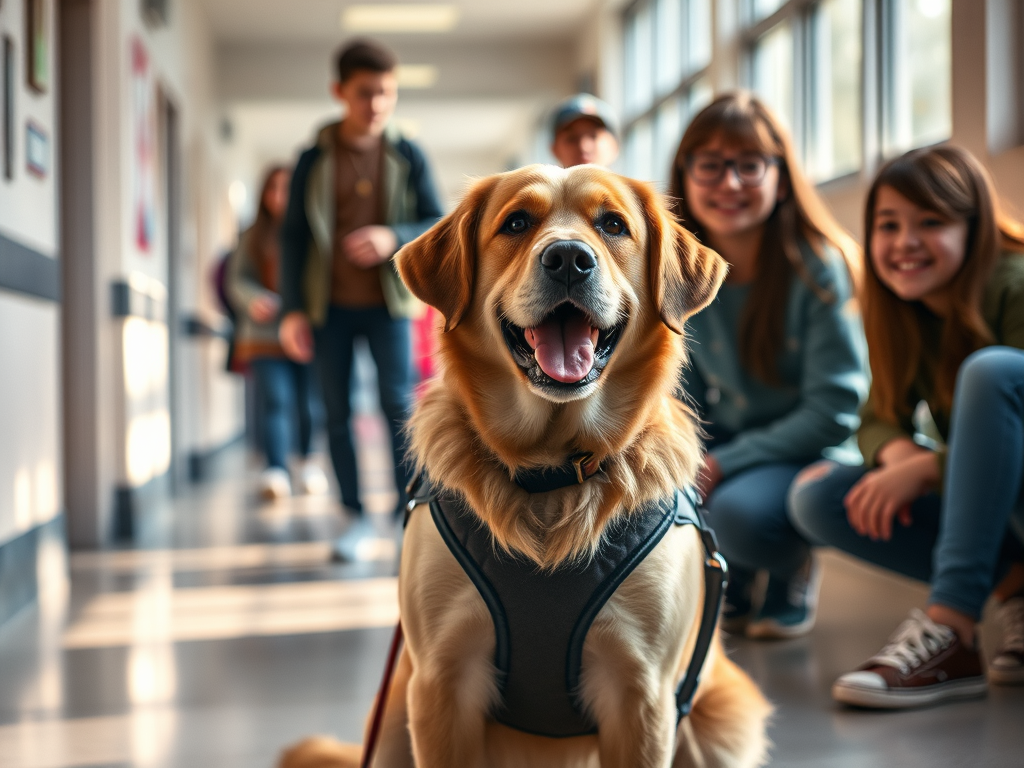
Yes, Your IB World High School Needs a Therapy Dog—Here’s Why

Today is World Mental Health Day, a perfect moment to highlight the well-being of students, faculty, and staff, particularly in high-pressure environments like those of International Baccalaureate (IB) World Schools. The IB program, renowned for its rigorous academic standards, challenges students to think critically, act compassionately, and manage complex workloads. However, with this academic intensity comes an ever-growing need to support the emotional and mental health of students who are managing exacerbating feelings resulting from a myriad of factors, one of which being the pandemic (Maricevic, 2022).

As Olli-Pekka Heinonen, Director General of the International Baccalaureate, emphasized in a recent commentary, the IB is re-evaluating education to prioritize well-being in every decision. Therefore, school and district leaders must consider alternative solutions to address the ever-evolving landscape of the 21st-century learner. One such solution is the integration of therapy dogs into the IB high school setting, a decision which not only enhances student well-being but also seamlessly aligns with the IB’s holistic educational approach.

Serving as a unique form of emotional support, therapy dogs in the high school setting transcends traditional methods of student care, fostering empathy, reducing stress, and cultivating a more inclusive school environment (Maricevic, 2022). Their presence encourages students to develop key attributes from the IB Learner Profile, such as being caring, balanced, and reflective, while also promoting emotional resilience. By bridging the gap between academic pressures and personal well-being, therapy dogs help create a learning environment where students can focus, engage, and perform to their fullest potential.

Therapy Dogs: More Than a Comfort, a Core Resource

Therapy dogs offer far more than comfort during stressful times; they play a crucial role in cultivating emotional intelligence and resilience—key components of the IB Learner Profile. Attributes such as being caring, balanced, and reflective are not merely learned from textbooks but are nurtured through lived experiences, often with the guidance of compassionate role models. Therapy dogs provide a unique opportunity for students to develop these traits by offering an empathetic, non-judgmental presence (Maricevic, 2022).

According to Heinonen (2023), well-being is central to learning; without it, students’ minds and bodies become burdened, making academic success increasingly difficult to achieve. Therapy dogs have been shown to alleviate stress, lower anxiety, and increase feelings of belonging—elements crucial for creating a positive learning atmosphere (Maricevic, 2022). By helping students manage academic pressure and emotional strain, therapy dogs directly contribute to the IB’s goal of developing balanced, reflective learners (Maricevic, 2022).

Addressing the Well-Being Crisis

The pandemic has created an undeniable shift in how schools conceptualize well-being. As remote learning became the norm and face-to-face interactions dwindled, students and educators alike experienced heightened levels of stress and uncertainty (Heinonen, 2023). A survey conducted under the #BetterTogether initiative revealed that two in five individuals have faced personal mental health struggles during the pandemic (Heinonen, 2023). Heinonen’s (2023) inclusion of #BetterTogether’s findings reflects the growing concerns voiced by parents and educators worldwide, who are advocating for a more holistic approach to education—one that prioritizes not only academic achievement but also the social and emotional development of students (Maricevic, 2022).

The good news is that the IB Organization appears to recognize these challenges, as it prides itself on a whole-school approach to well-being (Heinonen, 2023). As Heinonen (2023) notes, this approach encompasses every aspect of school life, not merely exam results or curriculum delivery. This is why the inclusion of therapy dogs in IB World Schools aligns perfectly with such a philosophical and pedagogical position, providing a means to support the mental health of students, faculty, staff, and the entire learning community. By fostering a supportive, calming environment, therapy dogs help mitigate the effects of stress, build community, and promote emotional resilience—elements that are key to long-term academic success (Maricevic, 2022).

Mitigating Concerns and Overcoming Barriers

As with any new initiative, the introduction of therapy dogs raises concerns about logistics, allergies, and liability. However, with careful planning and clear policies, these challenges—including allergies, sensitivities, safety, and cultural considerations—can be effectively addressed (Maricevic, 2022). For instance, schools can establish designated dog-free zones for students and staff with allergies or sensitivities, ensuring their comfort while still allowing others to benefit from the therapy dog program (Maricevic, 2022). Another approach is to partner with certified therapy dog organizations to ensure the animals are well-trained for school environments, addressing safety concerns (Maricevic, 2022). Moreover, cultural differences can be respected by making participation voluntary and providing education on the role and benefits of therapy dogs (Maricevic, 2022). With these precautions in place, the program can be smoothly integrated into the school community, offering emotional support without compromising the needs or preferences of others (Maricevic, 2022).

Building a Holistic Educational Experience

Therapy dogs align with the IB’s mission to foster emotional, social, and academic growth, making them a vital addition to IB schools. Heinonen’s (2023) call to redesign education with a focus on well-being underscores the importance of such resources. Therapy dogs serve as more than mere add-ons; they assist students and educators in navigating the pressures of a complex world. By enhancing emotional well-being, therapy dogs enable students to engage more deeply with the curriculum, fostering a growth mindset that encourages them to embrace challenges and learn from mistakes (Maricevic, 2022).

A Call to Action on World Mental Health Day

As we observe World Mental Health Day, there has never been a more urgent time to advocate for innovative solutions that address the well-being of students and educators. Therapy dogs offer a practical, impactful way to enhance emotional resilience, reduce stress, and foster a sense of belonging—qualities that are essential for the success of any educational program, particularly one as demanding as the IB.

Incorporating therapy dogs into secondary IB World Schools is not about diluting academic rigor (Maricevic, 2022). Instead, this programmatic addition represents a commitment to fostering holistic student development—one that recognizes the inseparability of emotional well-being and academic success (Maricevic, 2022). As Heinonen stated, “We know that the time to intervene in the well-being crisis is now” (2023). School and district leadership must act with intentionality, creating environments that prioritize progress over perfection and place student well-being at the heart of learning.

By welcoming therapy dogs into the fold, IB schools can demonstrate their continued commitment to creating a better, more compassionate world—one that nurtures the whole student, mind and heart—one paw at a time.

Restoring Comfort: Advocating for the Return of a Therapy Dog Program

Photo by Helena Lopes on Pexels.com

Just the other day, I received a message from an educator in a current leadership position. In the message, the school leader expressed frustration and confusion over the abrupt discontinuation of a beloved therapy dog program at their school. This decision, a result from a change in district regulations, now prohibits employees from bringing therapy dogs into the school, and many in the learning community are disheartened. It is the educator’s belief that the therapy dog program was a vital source of comfort and emotional support, fostered positive connections and contributed to a supportive school culture for the faculty, staff and student body as a whole.

Which is why I was then brought to wonder about the original policy language prior to the regulatory change for the 2024-2025 school year and why such a change would occur: What explicit language existed in district’ policy regarding therapy dogs before this decision? Was there any formal language at all? Could it be that the therapy dog program was running under an unspoken understanding rather than an official framework?

Policy isn’t necessarily a “bad thing,” for without formal guidelines, such programs can easily grow unchecked, potentially leading to conflicts—especially if there was an increase in the number of dogs coming to school, concerns about certification, or misunderstandings about what constitutes a legitimate therapy dog. The absence of a clear policy on therapy dogs may have allowed the program to grow naturally. However, this lack of structure could have led to unforeseen issues, ultimately contributing to the decision to end the program.

Having said that, while the regulatory change in the educator’s school poses a significant challenge, it doesn’t have to mean the end of the therapy dog program altogether. In the absence of a clear explanation, it’s essential to propose thoughtful solutions to address the concerns of stakeholders while advocating for the reinstatement of the therapy dog program. Below, I outline several considerations for the educator—and others impacted by similar policy shifts—to navigate the current situation with the hopes of reinstating a revised therapy dog program to meet the needs of all stakeholders.

The Role of Unspoken Understandings

When therapy dog programs aren’t codified into official district policy, they may rely on informal arrangements or personal agreements (Maricevic, 2022). In some cases, administrators may allow other school leaders, teachers or staff to bring certified therapy dogs without objection, trusting the intentions of the program (Maricevic, 2022). But without written guidelines, inconsistencies and confusion can arise, which may have contributed to the recent decision to prohibit therapy dogs altogether for the school leader. 

Now, if there were concerns about the number of dogs on campus, questions about certifications, or uncertainty around how to manage liability, any one of these issues—or all of them—could have prompted the district to take a blanket approach and halt the program. In either scenario, the issue comes back to the need for clear policy to ensure the viability of any programmatic addition, with the goal of sustaining a long-term impact on the learning community—especially if that program includes therapy dogs (Maricevic, 2022).

Schools with transparent policies, can foster a supportive environment where therapy dogs, or any programmatic enhancements to the wellness and learning of students, can thrive as valuable resources, ensuring that their benefits are accessible to all students and staff while minimizing potential conflicts or concerns. Without clear, formal guidelines, programs can become vulnerable to misunderstandings and inconsistencies that ultimately jeopardize their effectiveness and long term sustainability within the organization (Maricevic, 2022).

Establishing a comprehensive policy framework would not only provide a solid foundation for the program but also clarify roles, responsibilities, and expectations for all parties involved (Maricevic, 2022). Ultimately, a well-defined policy will help safeguard the educator’s therapy dog program’s integrity and reinforce its positive impact on the school community (Maricevic, 2022). 

Certification Confusion: Therapy Dogs vs. Emotional Support Dogs

Another layer of complexity is the widespread misunderstanding between therapy dogs and emotional support animals (ESAs), particularly when it comes to certification. This confusion can create legal and logistical issues, making it difficult to establish a program that complies with district policies.

First and foremost, it’s important to clarify that there is no formal “certification” for emotional support dogs. ESAs are animals that provide comfort and emotional support to individuals with mental health challenges, but they are not trained to perform specific tasks like service dogs. There’s no official certification for ESAs, and they do not have the same legal rights as service animals.

On the other hand, therapy dogs are specifically trained and certified to provide comfort in settings like schools, hospitals, and nursing homes (Maricevic, 2022). These animals are often part of structured programs, with certification from reputable organizations like Alliance of Therapy Dogs, Pet Partners, and The Good Dog Foundation.

The Problem with Therapy Dog Certifications

Unfortunately, not all organizations that claim to certify therapy dogs are legitimate. Some companies exploit loopholes, offering quick and easy certifications bypassing the necessary training or certification assessment. Such unethical practices can undermine the credibility of therapy dog programs and cause confusion in school districts trying to maintain appropriate standards.

In the case of this educator’s dilemma, if the district encountered concerns about the legitimacy of the certifications held by therapy dogs on campus,such a concern could have triggered the decision to halt the existing therapy dog program. Without clear guidelines or a trusted certification process in place, district leadership may have felt the risks—whether related to liability, safety, or standards—outweighed the benefits. To ensure the program’s legitimacy and effectiveness, schools must establish clear guidelines that require certification only from trusted, reputable organizations, like those presented above (Maricevic, 2022).

Moving Forward: Addressing Policy Gaps and Certification Concerns

To advocate for the reinstatement of the therapy dog program, the educator must first address these potential gaps. Maybe start a conversation with key stakeholders, follow the dialogue with a collaborative review of the district’s policy language (or lack thereof) and discuss additional language to formalize clear guidelines around the use of therapy dogs in schools. Here’s how this educator can approach the current situation:

  1. Review the Old Policy (or Unspoken Understanding): If the program previously operated without formal policy, it’s time to work with district leadership to establish clear guidelines. This would ensure that any future therapy dog program operates within a well-defined framework, preventing misunderstandings or unchecked growth (Maricevic, 2022).
  2. Ensure Proper Certification: Address concerns about certifications by only working with well-established, reputable organizations that train and certify therapy dogs according to recognized standards (Maricevic, 2022). Research and recommend organizations that adhere to the highest levels of training, evaluation, and insurance, helping the district feel more confident in the legitimacy of the program (Maricevic, 2022).
  3. Clarify the Difference Between Therapy Dogs and ESAs: Educate both staff and district leadership on the key distinctions between therapy dogs and emotional support animals. Emphasize that while ESAs provide comfort, they are not part of structured therapy programs, nor do they have certification or training requirements. Therapy dogs, on the other hand, must undergo rigorous training and certification to operate in school settings (Maricevic, 2022).
  4. Propose a Pilot Program with Clear Oversight: If the primary concerns are related to certification and management, propose reinstating the program as a small pilot with stringent guidelines. Start by bringing in one or two certified therapy dogs through reputable organizations during designated times throughout the school year (i.e. Wellness Day, midterms, finals, etc) with clear oversight and documentation. This approach may help ease district concerns while demonstrating the value of the therapy dog in the high school setting.

Bridge the Gap Between Intention and Implementation

The abrupt end of this educator’s therapy dog program highlights the importance of having clear, well-structured policies in place for any school or district initiative’s longterm sustainability. Without them, even well-intentioned programs can become vulnerable to mismanagement, confusion, and abrupt decisions like the one that occurred in this example. By examining the district’s language around therapy dogs, clearing up misunderstandings around certification, and other inconsistencies within the established protocol, this educator, and others who might find themselves in a similar scenario, can build a stronger case for reinstating the program in a way that benefits everyone—students, staff, and dogs alike.

The Power of Empathy: How Therapy Dogs in High School Can Fill an Empathy Void

Photo by Ivan Babydov on Pexels.com

Empathy is a cornerstone of human connection, fostering relationships and emotional well-being. In an insightful CNN article, Dr. Katie Hurley highlights the contagious nature of empathy and the crucial role parents play in modeling it for their teens. However, what happens when a teen lacks an empathic parent or guardian? How can these adolescents learn to cultivate empathy? One promising solution lies in the unique power of the canine companion.

The Empathy Deficit

Dr. Hurley’s article underscores the importance of parental warmth and emotional support in developing a teen’s empathy. The study Dr. Hurley references demonstrates a clear generational transmission of empathic behaviors from parents to children and beyond. But for teens who do not have access to such nurturing environments, this pathway to empathy can be obstructed, leading to potential emotional and social difficulties.

Benefits of Therapy Dogs

Enter therapy dogs. These specially trained animals offer unconditional love, companionship, and emotional support, which can be incredibly beneficial for teens struggling with empathy development. Therapy dogs have been shown to help individuals, particularly those with emotional and social challenges, to open up and engage in empathic behaviors.

Emotional Support: Therapy dogs provide a non-judgmental and consistent source of emotional support. Their presence can help teens feel understood and valued, which is essential for building self-esteem and emotional resilience (Maricevic, 2022).

Stress Reduction: Interacting with therapy dogs has been proven to reduce stress levels, which can create a more conducive environment for learning and practicing empathy. Lower stress levels allow teens to focus more on others’ feelings and less on their own anxieties (Maricevic, 2022).

Social Skills Improvement: Therapy dogs encourage social interactions. Teens may feel more comfortable practicing empathy and social skills with a dog first, which can then translate to better interactions with peers (Maricevic, 2022).

Modeling Empathy: By caring for and understanding the needs of a therapy dog, teens can learn to recognize and respond to emotions, a skill that is directly transferable to human relationships (Maricevic, 2022).

Real-Life Applications: Therapy Dogs in High School Settings

Several schools and therapy programs have successfully integrated therapy dogs to help students develop empathy and other social skills (Maricevic, 2022). For instance, programs like “Reading to Dogs” in libraries and schools encourage children and teens to read aloud to therapy dogs, improving their reading skills and building a sense of empathy and connection.

While the absence of an empathic parent can pose significant challenges for a teen’s emotional development, therapy dogs offer a viable and effective alternative to cultivate empathy. By providing emotional support, reducing stress, improving social skills, and modeling empathic behaviors, therapy dogs can fill a crucial gap, ensuring that all teens have the opportunity to develop this essential human trait (Maricevic, 2022).

Which is why the integration of therapy dogs in high school settings is an innovative approach that has proven to be highly beneficial in fostering empathy, reducing stress, and enhancing social skills among students (Maricevic, 2022). Here are some specific ways therapy dogs can make a significant impact in high schools:

Stress Relief and Mental Health Support

High school can be an incredibly stressful time for students due to academic pressures, social dynamics, and the challenges of adolescence (Maricevic, 2022). Therapy dogs can provide a calming presence, helping students manage stress and anxiety. Schools that have implemented therapy dog programs often report noticeable improvements in the overall mental health of their students (Maricevic, 2022).

Counseling Sessions: Therapy dogs can be incorporated into school counseling sessions. Their presence helps create a more relaxed environment, making it easier for students to open up and discuss their feelings and issues (Maricevic, 2022). This can be particularly beneficial for students who are reluctant to seek help from a counselor.

Stress-Relief Zones: Some high schools have established designated areas where students can interact with therapy dogs during breaks or free periods (Maricevic, 2022). These stress-relief zones provide a much-needed respite from the pressures of school life and offer a safe space for students to unwind and recharge.

Crisis Intervention: In the aftermath of traumatic events, therapy dogs can be brought in to provide comfort and emotional support to students. Their calming presence can help students feel safer and more secure, aiding in the healing process (Maricevic, 2022).

Enhancing Empathy and Social Skills

Therapy dogs can play a crucial role in teaching students empathy and improving their social skills. Interacting with dogs requires understanding their needs and emotions, which can translate into better interpersonal skills among students (Maricevic, 2022).

Empathy Workshops: Schools can organize workshops where students learn about empathy and emotional intelligence through interactions with therapy dogs. These workshops can include activities such as caring for the dogs, understanding their body language, and practicing gentle and respectful handling. These experiences can help students develop a deeper understanding of empathy, which they can then apply in their interactions with peers (Maricevic, 2022).

Social Skills Groups: Therapy dogs can be used in social skills groups to help students practice and enhance their social interactions. For example, students with social anxiety or autism spectrum disorders can benefit greatly from the presence of a therapy dog, which can act as a social bridge, making it easier for them to engage with others (Maricevic, 2022)

Peer Mediation Programs: Therapy dogs can be integrated into peer mediation programs, where students help resolve conflicts among their peers. The presence of a therapy dog can create a more relaxed atmosphere, making it easier for students to communicate openly and resolve their issues amicably (Maricevic, 2022).

Academic Benefits

The presence of therapy dogs in high schools can also have positive effects on academic performance (Maricevic, 2022). By reducing stress and creating a more supportive and relaxed environment, students may find it easier to focus and perform better academically (Maricevic, 2022).

Reading Programs: Similar to programs in elementary schools, high schools can implement reading programs where students read aloud to therapy dogs. This can be particularly beneficial for students who struggle with reading or have low confidence in their reading abilities. The non-judgmental presence of a dog can help them practice without fear of criticism, improving their skills and confidence over time (Maricevic, 2022).

Attendance and Engagement: Schools that have therapy dog programs often see improvements in student attendance and engagement. The presence of therapy dogs can make school a more welcoming and enjoyable place, encouraging students to attend regularly and participate more actively in their classes (Maricevic, 2022).

Exam Stress Reduction: During exam periods, therapy dogs can be brought in to help students cope with the heightened stress and anxiety. Short interactions with therapy dogs before exams can help calm students and improve their focus and performance (Maricevic, 2022).

Building a Supportive School Community

Therapy dogs can help create a more supportive and inclusive school community by bringing students, teachers, and staff together (Maricevic, 2022).

Community Events: Schools can host events and activities centered around therapy dogs, such as “dog days” where therapy dogs visit the school, or fundraising events for local animal shelters. These events can foster a sense of community and shared purpose among students and staff (Maricevic, 2022).

Teacher and Staff Support: Therapy dogs can also provide support for teachers and staff, who often face high levels of stress. A happier and more relaxed staff can contribute to a more positive school environment, benefiting everyone in the school community (Maricevic, 2022).

Positive School Culture: The presence of therapy dogs can contribute to a more positive school culture by promoting kindness, compassion, and empathy. Students may be more inclined to engage in positive behaviors and support their peers, creating a more inclusive and welcoming environment (Maricevic, 2022).

As schools continue to explore innovative ways to support their students, therapy dog programs stand out as a promising and impactful solution. The presence of therapy dogs in schools not only provides immediate emotional and psychological benefits but also helps in building lifelong skills of empathy and compassion in students. By addressing the emotional needs of teens, especially those lacking empathic parental or guardian support, therapy dogs can help create a generation of more understanding, resilient, and emotionally intelligent individuals.