
Restoring Comfort: Advocating for the Return of a Therapy Dog Program

Photo by Helena Lopes on Pexels.com

Just the other day, I received a message from an educator in a current leadership position. In the message, the school leader expressed frustration and confusion over the abrupt discontinuation of a beloved therapy dog program at their school. This decision, a result from a change in district regulations, now prohibits employees from bringing therapy dogs into the school, and many in the learning community are disheartened. It is the educator’s belief that the therapy dog program was a vital source of comfort and emotional support, fostered positive connections and contributed to a supportive school culture for the faculty, staff and student body as a whole.

Which is why I was then brought to wonder about the original policy language prior to the regulatory change for the 2024-2025 school year and why such a change would occur: What explicit language existed in district’ policy regarding therapy dogs before this decision? Was there any formal language at all? Could it be that the therapy dog program was running under an unspoken understanding rather than an official framework?

Policy isn’t necessarily a “bad thing,” for without formal guidelines, such programs can easily grow unchecked, potentially leading to conflicts—especially if there was an increase in the number of dogs coming to school, concerns about certification, or misunderstandings about what constitutes a legitimate therapy dog. The absence of a clear policy on therapy dogs may have allowed the program to grow naturally. However, this lack of structure could have led to unforeseen issues, ultimately contributing to the decision to end the program.

Having said that, while the regulatory change in the educator’s school poses a significant challenge, it doesn’t have to mean the end of the therapy dog program altogether. In the absence of a clear explanation, it’s essential to propose thoughtful solutions to address the concerns of stakeholders while advocating for the reinstatement of the therapy dog program. Below, I outline several considerations for the educator—and others impacted by similar policy shifts—to navigate the current situation with the hopes of reinstating a revised therapy dog program to meet the needs of all stakeholders.

The Role of Unspoken Understandings

When therapy dog programs aren’t codified into official district policy, they may rely on informal arrangements or personal agreements (Maricevic, 2022). In some cases, administrators may allow other school leaders, teachers or staff to bring certified therapy dogs without objection, trusting the intentions of the program (Maricevic, 2022). But without written guidelines, inconsistencies and confusion can arise, which may have contributed to the recent decision to prohibit therapy dogs altogether for the school leader. 

Now, if there were concerns about the number of dogs on campus, questions about certifications, or uncertainty around how to manage liability, any one of these issues—or all of them—could have prompted the district to take a blanket approach and halt the program. In either scenario, the issue comes back to the need for clear policy to ensure the viability of any programmatic addition, with the goal of sustaining a long-term impact on the learning community—especially if that program includes therapy dogs (Maricevic, 2022).

Schools with transparent policies, can foster a supportive environment where therapy dogs, or any programmatic enhancements to the wellness and learning of students, can thrive as valuable resources, ensuring that their benefits are accessible to all students and staff while minimizing potential conflicts or concerns. Without clear, formal guidelines, programs can become vulnerable to misunderstandings and inconsistencies that ultimately jeopardize their effectiveness and long term sustainability within the organization (Maricevic, 2022).

Establishing a comprehensive policy framework would not only provide a solid foundation for the program but also clarify roles, responsibilities, and expectations for all parties involved (Maricevic, 2022). Ultimately, a well-defined policy will help safeguard the educator’s therapy dog program’s integrity and reinforce its positive impact on the school community (Maricevic, 2022). 

Certification Confusion: Therapy Dogs vs. Emotional Support Dogs

Another layer of complexity is the widespread misunderstanding between therapy dogs and emotional support animals (ESAs), particularly when it comes to certification. This confusion can create legal and logistical issues, making it difficult to establish a program that complies with district policies.

First and foremost, it’s important to clarify that there is no formal “certification” for emotional support dogs. ESAs are animals that provide comfort and emotional support to individuals with mental health challenges, but they are not trained to perform specific tasks like service dogs. There’s no official certification for ESAs, and they do not have the same legal rights as service animals.

On the other hand, therapy dogs are specifically trained and certified to provide comfort in settings like schools, hospitals, and nursing homes (Maricevic, 2022). These animals are often part of structured programs, with certification from reputable organizations like Alliance of Therapy Dogs, Pet Partners, and The Good Dog Foundation.

The Problem with Therapy Dog Certifications

Unfortunately, not all organizations that claim to certify therapy dogs are legitimate. Some companies exploit loopholes, offering quick and easy certifications bypassing the necessary training or certification assessment. Such unethical practices can undermine the credibility of therapy dog programs and cause confusion in school districts trying to maintain appropriate standards.

In the case of this educator’s dilemma, if the district encountered concerns about the legitimacy of the certifications held by therapy dogs on campus,such a concern could have triggered the decision to halt the existing therapy dog program. Without clear guidelines or a trusted certification process in place, district leadership may have felt the risks—whether related to liability, safety, or standards—outweighed the benefits. To ensure the program’s legitimacy and effectiveness, schools must establish clear guidelines that require certification only from trusted, reputable organizations, like those presented above (Maricevic, 2022).

Moving Forward: Addressing Policy Gaps and Certification Concerns

To advocate for the reinstatement of the therapy dog program, the educator must first address these potential gaps. Maybe start a conversation with key stakeholders, follow the dialogue with a collaborative review of the district’s policy language (or lack thereof) and discuss additional language to formalize clear guidelines around the use of therapy dogs in schools. Here’s how this educator can approach the current situation:

  1. Review the Old Policy (or Unspoken Understanding): If the program previously operated without formal policy, it’s time to work with district leadership to establish clear guidelines. This would ensure that any future therapy dog program operates within a well-defined framework, preventing misunderstandings or unchecked growth (Maricevic, 2022).
  2. Ensure Proper Certification: Address concerns about certifications by only working with well-established, reputable organizations that train and certify therapy dogs according to recognized standards (Maricevic, 2022). Research and recommend organizations that adhere to the highest levels of training, evaluation, and insurance, helping the district feel more confident in the legitimacy of the program (Maricevic, 2022).
  3. Clarify the Difference Between Therapy Dogs and ESAs: Educate both staff and district leadership on the key distinctions between therapy dogs and emotional support animals. Emphasize that while ESAs provide comfort, they are not part of structured therapy programs, nor do they have certification or training requirements. Therapy dogs, on the other hand, must undergo rigorous training and certification to operate in school settings (Maricevic, 2022).
  4. Propose a Pilot Program with Clear Oversight: If the primary concerns are related to certification and management, propose reinstating the program as a small pilot with stringent guidelines. Start by bringing in one or two certified therapy dogs through reputable organizations during designated times throughout the school year (i.e. Wellness Day, midterms, finals, etc) with clear oversight and documentation. This approach may help ease district concerns while demonstrating the value of the therapy dog in the high school setting.

Bridge the Gap Between Intention and Implementation

The abrupt end of this educator’s therapy dog program highlights the importance of having clear, well-structured policies in place for any school or district initiative’s longterm sustainability. Without them, even well-intentioned programs can become vulnerable to mismanagement, confusion, and abrupt decisions like the one that occurred in this example. By examining the district’s language around therapy dogs, clearing up misunderstandings around certification, and other inconsistencies within the established protocol, this educator, and others who might find themselves in a similar scenario, can build a stronger case for reinstating the program in a way that benefits everyone—students, staff, and dogs alike.
Celebrating Humble Honors: A Journey Among Champions in Advocacy

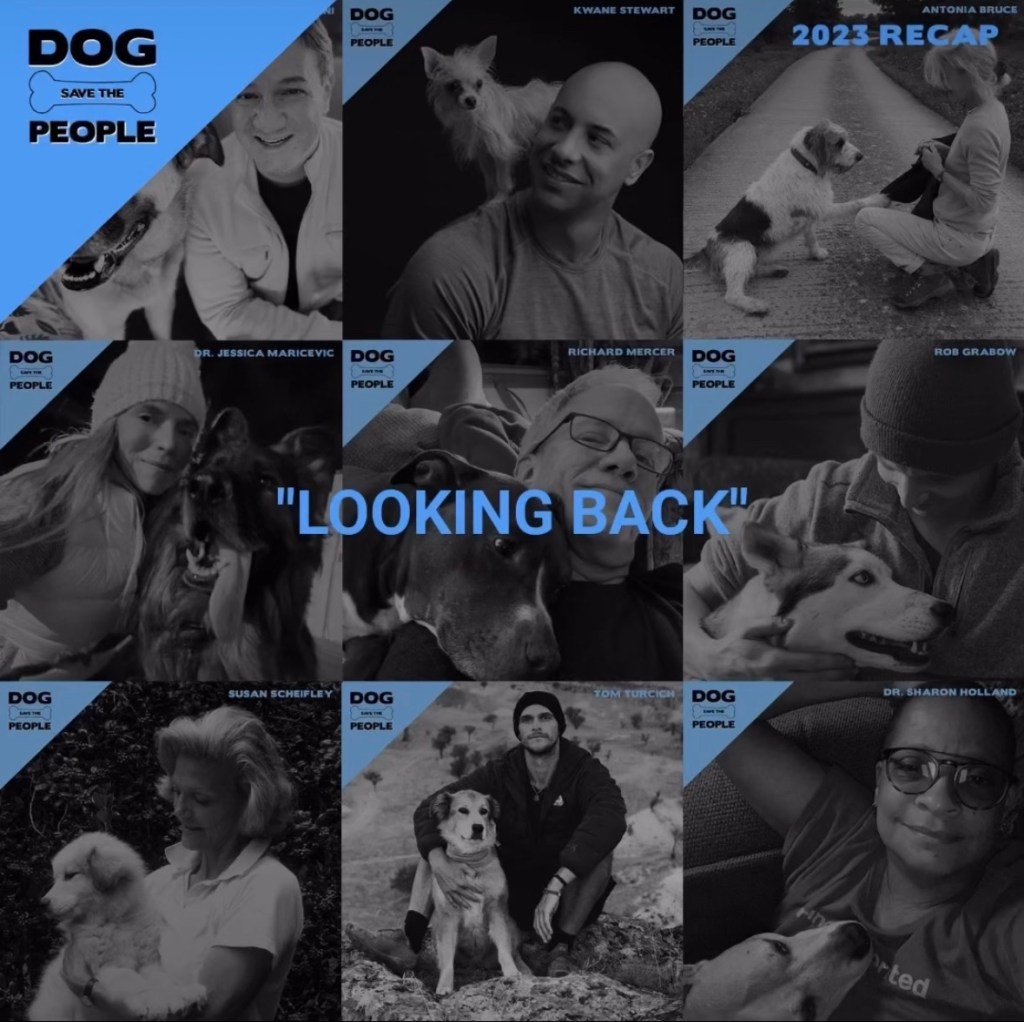
Dog Save the People’s most recent Instagram post

As 2023 comes to an end, I am reminded of an extraordinary privilege afforded to me this year—being featured alongside incredible human-animal bond advocates in the 2023 podcast series, Dog Save the People. In a world filled with remarkable voices dedicated to uplifting humanity, there are those who stand out, inspiring change and progress. To find myself nestled amidst luminaries—a Nobel Prize winner and CNN’s #2023HeroOfTheYear, well, to say it was a surreal experience would be an understatement.

The honor was not just a personal triumph. Dog Save the People’s decision to devote an entire episode to my research and to unpack the why behind the need for therapy dogs in high school settings, gave credence to my research, the human-animal bond (specifically the one between teenagers and therapy dogs), and so much more. But here’s the best part, I’m not the only person to hold such convictions.

Dog Save the People’s dedication to nurturing meaningful discussions, with a focus on the profound bond between humans and animals, is truly commendable. Each episode’s authentic portrayal and reverence for diverse perspectives reflects an unwavering commitment to fostering impactful dialogue for the greater good.

And then there’s my voice.

The inclusion of my voice alongside this esteemed 2023 group of guests serves as a reminder of the collective strength found in passionate advocacy. It’s a testament to the transformative potential of shared conversations and the ripple effect they create.

To those who stood by EmpathicPaws, supported my ventures, and rallied for the advocacy work addressing the human-animal bond across public and private sectors, and continue to do so, I extend my deepest gratitude.

And as I glance at the time, the minutes tick closer to 2024. It’s exciting to affirm my empathic journey is one that is far from over. Here’s to carrying forth the torch of empathy and advocacy into the new year. Together, let our collective voices resonate louder, ushering in positive change—one paw at a time.

Let Me Remind You

An excerpt from my most recent blog, “Dog Save the People: My Conversation with John Bartlett.”

21st century students need more of the tangible, more ways to feel safe, secure, valued and loved, with opportunities to reciprocate those feelings towards another, without judgement (Maricevic, 2022).

Dr. Jessica Maricevic
Why therapy dogs? Why now?

This pseudo post-COVID America has unearthed a tremendous amount of pain, a pain some have tried desperately to suppress, or flat out ignore. Secondary stakeholders who acknowledge the macro reality of the invasive impact of the current geo-political climate are better equipped to consider the micro implications in the high school setting. And to those stakeholders who believe they must personally observe the influence of the macro reality in the micro setting, see with their own eyes presentable evidence of societal stressors, complex anxieties and invisible traumas to adequately address the social and emotional needs of students…

Well, read a little bit more of this post, because today’s high school students are carrying more than a load of books and a laptop with little to no storage.

So say you.

I’ll hold off on the details of my own research and findings for the time being simply to prove you don’t need to read academic journals and peer reviewed articles to establish an understanding of this crisis.

Yet, even with their respective leans, the conscious decision to report on the social and emotional concerns of teens suggests a unified effort to convey the severity of this stark reality.

Dr. Jessica Maricevic

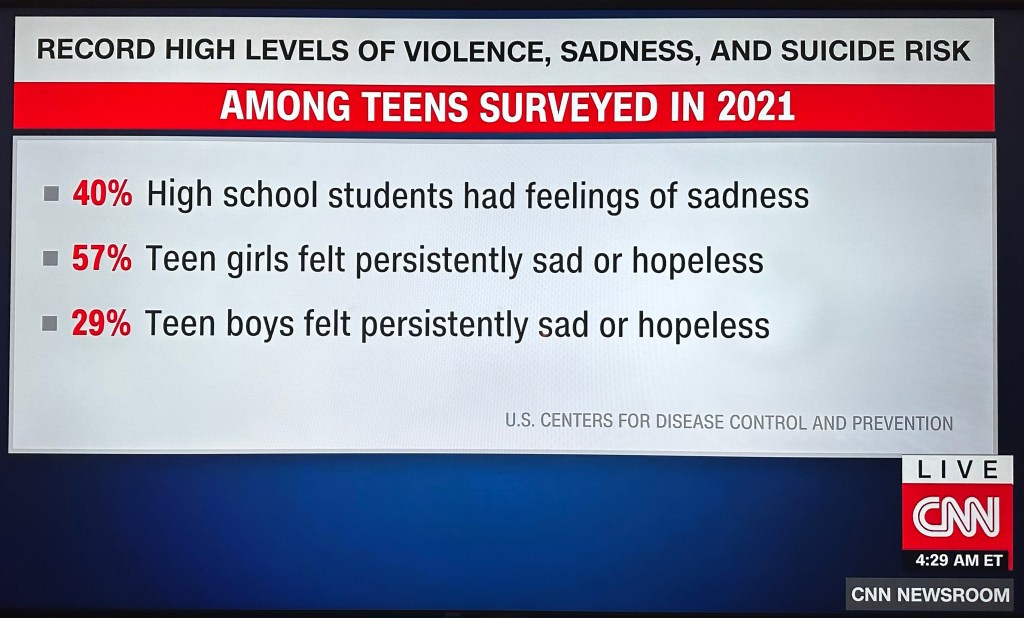
Here are some statistics presented from three national cable news outlets within the last 12 months:

An image I captured from my television during an early morning CNN live broadcast (February 14, 2023).
Read Elizabeth Pritchett’s article in its entirety: Teenage brains aged faster
April 26, 2022 segment from MSNBC’s Morning Joe; guest Harvard University’s John Della Volpe.

Understand, the above sources are a mere snapshot of reporting from three national cable news outlets, and yes I am well aware each source brings with it their own distinct bias. Yet, even with their respective leans, the conscious decision to report on the social and emotional concerns of teens suggests a unified effort to convey the severity of this stark reality.

It is extremely important to note the three news outlets referenced here in this post have observed an increase in viewership during the years of 2016 – 20220 (Pew Research Center, 2023). The research suggests such an increase in viewership is most likely connected to presidential elections, societal conflicts, and the coronavirus pandemic (Pew Research Center, 2023).

Hypothetically, if the Pew Research Center reports either (1) a decrease the numbers of viewers, (2) a plateau of viewership (it remains at its current rate), or (3) a continued upward viewership trend for the period of 2020-2023, millions of Americans would still receive the message loud and clear, teens are hurting, they need something more, and it’s up to the adults in their lives to make it happen.

Back in my day…

As students go from class to class, they carry the weight of the world and the plight of America’s transgressions on their shoulders, they are accompanied by feelings of sadness, hopelessness, feeling down, and depressed. And then, some students hold their breath when a school wide announcement interrupts a class period without warning, flinch upon hearing an unsuspecting sound, and ask what if questions the day after cable news outlets, those very outlets referenced above, consume airwaves with incessant reporting of yet another unthinkable event.

Even with all of this chaos, students aren’t desensitized by their reality. They remain hyper vigilant, in-tune to their emotional responses, and astute to the emotional affect of others in their orbit. But that doesn’t mean they are okay.

The last thing adolescents need is another adult telling them how to manage life as a teenager, or why they need grit and perseverance to get through “these unprecedented times.” Unfortunately, the reality for today’s teens requires more than “Back in my day” talks and harping on trendy jargon (I wish it were that easy). Couple that with the contradictory expectations to prioritize emotional wellbeing and academic performance— students need something more than whatever is provided at the secondary level to meet or exceed their social and emotional needs.

I can hear stakeholders’ “yeah, but…” phrases, ready to launch their counter claims:

Yeah, but their grades are fine.

Yeah, but they’re participating in sports.

Yeah, but they’re not alone in the cafeteria.

Yeah, but they’re taking selfies.

Yeah, but they’re friends with that student; they’re not a bully.

Yeah, but they seem happy.

It’s time to stop assuming. It’s time to stop dismissing the teenage experience. It’s time to start listening, and infuse differentiated support systems that are more real-world centric.

21st century students need more of the tangible, more ways to feel safe, secure, valued and loved, with opportunities to reciprocate those feelings towards another, without judgement (Maricevic, 2022).

Establish a therapy dog program (start today).

Now more than ever, therapy dogs are a viable resource to meet those needs for all high school students— no matter the zip code, regional location or poverty designation of a given school or district.

Yeah, but…

I know, I know! You’re asking yourself, “Yeah, but what about the challenges?” Mitigating challenges, is a totally different blog all together, but believe you me, I’ve got it all covered. I will tell you this, any perceived challenges from fears to allergies can be addressed to ensure the efficacy of board policy and the sustainability of an in-house therapy dog program in your high school (Maricevic, 2022).

This is my original gif which includes slides displaying my research and findings. These slides appeared in my Fall 2022 presentation to members of Association of Professional Humane Educators (and that presentation was an awesome experience).

I’ll also tell you that any stakeholder who flat out says no to an in-house therapy dog program to meet the social and emotional needs of students, is saying no for the sake of saying no (Maricevic, 2022). Don’t forget it.

The student-therapy dog relationship in the high school setting is an indelible, transformative fixture, a relationship with the infinite ability to transcend the four year high school experience. My findings suggest the omnipresence of a therapy dog in the high school setting does more than influence the social-emotional competency development in adolescents (Maricevic, 2022). In fact, the organic development of the student-therapy dog relationship may very well be the antidote to [feel free to fill in the blank to reflect the needs of your students and high school] (Maricevic, 2022).

My study reveals much more about the therapy dog phenomenon, its profound impact on secondary students and the high school setting. I’m proud to say my study also exposes inequities that must be addressed to ensure all students are afforded the opportunity to benefit from the student-therapy dog relationship during their high school years.

The above is a mere snippet of some of the points touched upon during my conversation with John Bartlett, host and founder of Dog Save the People. I encourage you to listen to the podcast in its entirety through any of the following platforms:

And let’s connect! Share your thoughts! Questions! I look forward to it.