
A Force for Good at Somers High School: Vader the Therapy Dog

This weekend, the Harrison High School boys varsity football team heads to Somers, New York, for an epic face-off against the Tuskers of Somers High School—a game that is sure to be charged with excitement and school pride. Interestingly enough, even with high-stakes football game merely days away, it’s important to acknowledge that Harrison High School and Somers High School (SHS) are more similar than they are different in many ways, including, but not limited to their shared reputation for excellence, offering outstanding sports programs, extracurricular opportunities for students, and the prestigious International Baccalaureate (IB) programme. But while the Harrison superfans proudly rally behind their mighty Husky mascot, a symbol of strength and loyalty, Somers boasts a different kind of leader in its ranks. Instead of an in-house elephant, as one might expect from the Tusker name, Somers parades an unexpected champion of compassion and well-being: a certified therapy dog named Vader.

Vader is more than just a furry companion; he is a critical part of Somers High School’s commitment to social and emotional wellness. Like many of his therapy dog counterparts across the country, Vader, a certified therapy dog, offers students a source of comfort, helping to ease stress and anxiety in a way that is uniquely effective to meet and quite possibly exceed the needs of students and the larger learning community (Maricevic, 2022). Additionally, given Vader’s placement in an IB secondary school, his role aligns perfectly with the IB philosophy, which emphasizes developing caring, resilient, and well-rounded individuals (IBO, 2024). 

Defying Preconceived Notions

While Harrison boasts the fierce strength of its Husky mascot, Somers leads the charge with implementing an innovative approach to support the needs of the 21st century high school student—proof that sometimes, the best solution to meet the needs of students does not necessarily need to have bells and whistles, or boast a mighty bark, or possess the ability to trumpet trunks; the solution may just be a simple wagging tail.

As a Labrador-Shepherd mix, Vader defies preconceived notions about which breeds are worthy of therapy dog certification and designation; he is valued more for his ability to offer comfort and support to students who need it most than for his genetic composition. Handled by Brenda O’Shea, the school’s Student Life Coordinator, Vader is a familiar face in the halls. As an inseparable duo on the days he visits, O’Shea believes Vader is aware of his purpose: to lift spirits and provide emotional support to students. “On the days when I have Vader, I am invisible,” O’Shea remarks, emphasizing the connection students feel with Vader, and indirectly, O’Shea. Vader’s influence on campus is more than just a morale boost; it is a therapeutic outlet that has continued to make a difference for the past three years (Somers Central School District, 2024).

The IB DP & MYP Alignment
Vader exemplifies a unique form of student support that aligns with the values of the IB Diploma Programme (DP) and Middle Years Programme (MYP), in his ability to foster emotional well-being, empathy, and resilience in students. Vader’s impact, highlighted in the article “Therapy Dog Vader is a Force for Good at SHS” showcases the way SHS embraces an innovative approach to promoting social and emotional wellness, directly supporting the IB mission of developing caring, well-rounded individuals.

Vader’s impact is further evident in reports of how he interacts with students, offering comfort and support. Senior Julia Schmidberger fondly recalls, “Vader has been here since my freshman year… The first time he was here, it was so fun to meet him” (Somers Central School District, 2024). Schmidberger’s experience reflects the caring aspect of the IB Learner Profile, as she reports joy and solace in Vader’s companionship (Somers Central School District, 2024). IB learners like Schmidberger are encouraged to be empathetic and supportive, and one can deduce Vader plays a role in modeling these traits by providing emotional comfort to students during challenging times.

In the district’s article, O’Shea continues to underscore Vader’s influence: “If a student is having a tough day, it can be a lot easier to tell a dog what’s going on… If that day is even 2% better for them because they know they are going to see Vader, then we take that as a victory” (Somers Central School District, 2024). O’Shea’s perspective speaks directly to the IB’s whole child approach, which emphasizes not only academic growth but also emotional well-being (Heinonen, 2023). Through O’Shea’s observations, it appears as if Vader’s role in the school helps alleviate stress, making students more balanced and better able to engage in their studies, which is a core goal of the IB programmes.

Vader and the IB Learner Profile
Moreover, based on first-had accounts, Vader’s presence during stressful moments, such as fire drills and lockdowns, highlights his role in promoting resilience among students—a critical trait in the IB Learner Profile (Somers Central School District, 2024). O’Shea notes, “Vader has been here at the school when we have fire and lockdown drills, and he is great. He is a comfort and a distraction for the kids” (Somers Central School District, 2024). O’Shea’s example serves to illuminate Vader’s inclusion in SHS as a reflection of the district’s commitment to emotionally supporting Somers’ students, a commitment that aligns with the IB’s emphasis on self-management skills, particularly in helping students manage stress and maintain focus under pressure.

Vader also plays a significant role in fostering reflection and empathy, qualities that IB students are encouraged to develop as they progress through the MYP and DP years. O’Shea mentions how Vader “does not wander up to any student he does not know” and that “his goal is not to increase anyone’s anxiety,” demonstrating the importance of respecting boundaries and being sensitive to others’ needs—key components of global citizenship in the IB context (Somers Central School District, 2024).

Additionally, Vader’s therapy dog role in easing pre-exam anxiety is yet another way he supports the Approaches to Learning (ATL) skills central to the MYP and DP. O’Shea notes, “You want that last connection with the topics to push the serotonin up and the anxiety down. Vader helps that happen” (Somers Central School District, 2024). By reducing students’ stress, Vader presents the theory that his presence enhances the students’ ability to manage emotions and approach academic challenges with a clearer mind.

Vader’s contribution to SHS aligns perfectly with the IB mission and philosophy, which seeks to develop caring, balanced, and reflective individuals who contribute to their communities (IBO, 2024). His impact is a testament to how high schools, whether holding the IB designation or not, can adopt innovative practices to support the whole child, ensuring that students are not only academically prepared but also emotionally resilient—proving that, in education, sometimes the quietest support systems make the loudest impact.

Vader’s Force
Unlike his intimidating Star Wars namesake, Vader demonstrates how a therapy dog enhances the high school learning environment as the learning community maintains the rigorous academic program expectations, like the IB DP and MYP curricula, for students. The smiling faces of the students is a testament to Vader’s ability to ease anxieties and foster a sense of community, warmth and comfort among students and staff alike. It’s clear that Vader’s presence among the SHS learning community is truly a force unto itself: a force motivated by pure intentions and an uncanny ability to love unconditionally, Vader is truly a force for good.

Outside of school, Vader continues to live the “good life,” complete with hiking adventures and weekend fun. Be sure to follow his adventures on Instagram, @dog_vader_shs.
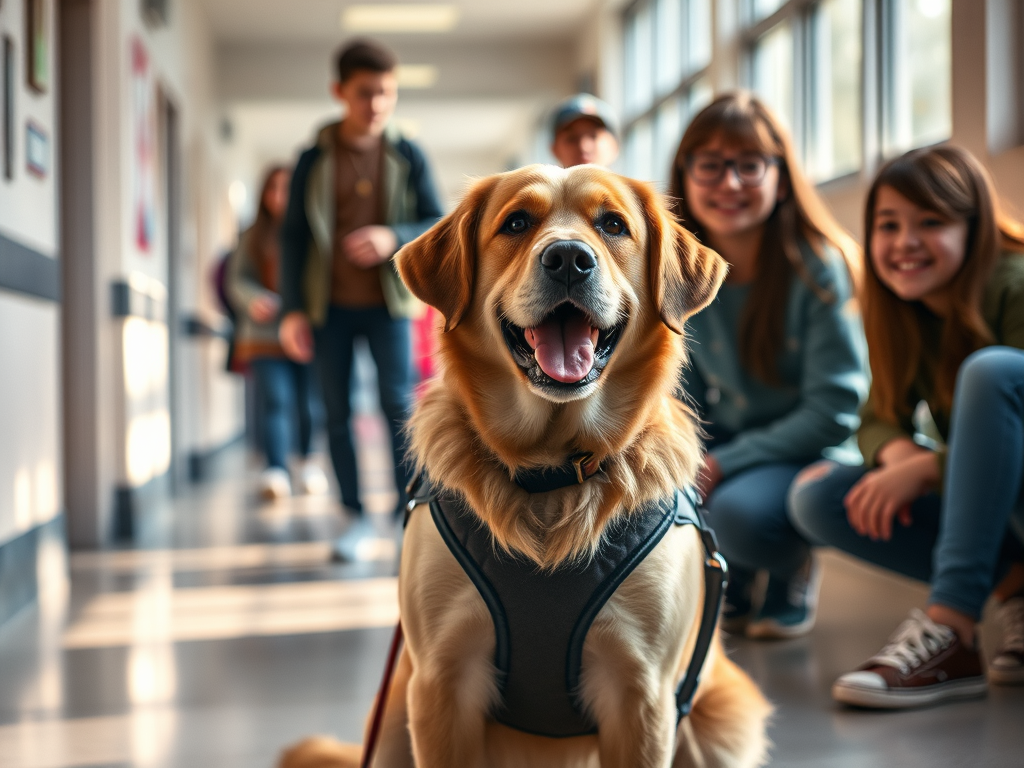
Yes, Your IB World High School Needs a Therapy Dog—Here’s Why

Today is World Mental Health Day, a perfect moment to highlight the well-being of students, faculty, and staff, particularly in high-pressure environments like those of International Baccalaureate (IB) World Schools. The IB program, renowned for its rigorous academic standards, challenges students to think critically, act compassionately, and manage complex workloads. However, with this academic intensity comes an ever-growing need to support the emotional and mental health of students who are managing exacerbating feelings resulting from a myriad of factors, one of which being the pandemic (Maricevic, 2022).

As Olli-Pekka Heinonen, Director General of the International Baccalaureate, emphasized in a recent commentary, the IB is re-evaluating education to prioritize well-being in every decision. Therefore, school and district leaders must consider alternative solutions to address the ever-evolving landscape of the 21st-century learner. One such solution is the integration of therapy dogs into the IB high school setting, a decision which not only enhances student well-being but also seamlessly aligns with the IB’s holistic educational approach.

Serving as a unique form of emotional support, therapy dogs in the high school setting transcends traditional methods of student care, fostering empathy, reducing stress, and cultivating a more inclusive school environment (Maricevic, 2022). Their presence encourages students to develop key attributes from the IB Learner Profile, such as being caring, balanced, and reflective, while also promoting emotional resilience. By bridging the gap between academic pressures and personal well-being, therapy dogs help create a learning environment where students can focus, engage, and perform to their fullest potential.

Therapy Dogs: More Than a Comfort, a Core Resource

Therapy dogs offer far more than comfort during stressful times; they play a crucial role in cultivating emotional intelligence and resilience—key components of the IB Learner Profile. Attributes such as being caring, balanced, and reflective are not merely learned from textbooks but are nurtured through lived experiences, often with the guidance of compassionate role models. Therapy dogs provide a unique opportunity for students to develop these traits by offering an empathetic, non-judgmental presence (Maricevic, 2022).

According to Heinonen (2023), well-being is central to learning; without it, students’ minds and bodies become burdened, making academic success increasingly difficult to achieve. Therapy dogs have been shown to alleviate stress, lower anxiety, and increase feelings of belonging—elements crucial for creating a positive learning atmosphere (Maricevic, 2022). By helping students manage academic pressure and emotional strain, therapy dogs directly contribute to the IB’s goal of developing balanced, reflective learners (Maricevic, 2022).

Addressing the Well-Being Crisis

The pandemic has created an undeniable shift in how schools conceptualize well-being. As remote learning became the norm and face-to-face interactions dwindled, students and educators alike experienced heightened levels of stress and uncertainty (Heinonen, 2023). A survey conducted under the #BetterTogether initiative revealed that two in five individuals have faced personal mental health struggles during the pandemic (Heinonen, 2023). Heinonen’s (2023) inclusion of #BetterTogether’s findings reflects the growing concerns voiced by parents and educators worldwide, who are advocating for a more holistic approach to education—one that prioritizes not only academic achievement but also the social and emotional development of students (Maricevic, 2022).

The good news is that the IB Organization appears to recognize these challenges, as it prides itself on a whole-school approach to well-being (Heinonen, 2023). As Heinonen (2023) notes, this approach encompasses every aspect of school life, not merely exam results or curriculum delivery. This is why the inclusion of therapy dogs in IB World Schools aligns perfectly with such a philosophical and pedagogical position, providing a means to support the mental health of students, faculty, staff, and the entire learning community. By fostering a supportive, calming environment, therapy dogs help mitigate the effects of stress, build community, and promote emotional resilience—elements that are key to long-term academic success (Maricevic, 2022).

Mitigating Concerns and Overcoming Barriers

As with any new initiative, the introduction of therapy dogs raises concerns about logistics, allergies, and liability. However, with careful planning and clear policies, these challenges—including allergies, sensitivities, safety, and cultural considerations—can be effectively addressed (Maricevic, 2022). For instance, schools can establish designated dog-free zones for students and staff with allergies or sensitivities, ensuring their comfort while still allowing others to benefit from the therapy dog program (Maricevic, 2022). Another approach is to partner with certified therapy dog organizations to ensure the animals are well-trained for school environments, addressing safety concerns (Maricevic, 2022). Moreover, cultural differences can be respected by making participation voluntary and providing education on the role and benefits of therapy dogs (Maricevic, 2022). With these precautions in place, the program can be smoothly integrated into the school community, offering emotional support without compromising the needs or preferences of others (Maricevic, 2022).

Building a Holistic Educational Experience

Therapy dogs align with the IB’s mission to foster emotional, social, and academic growth, making them a vital addition to IB schools. Heinonen’s (2023) call to redesign education with a focus on well-being underscores the importance of such resources. Therapy dogs serve as more than mere add-ons; they assist students and educators in navigating the pressures of a complex world. By enhancing emotional well-being, therapy dogs enable students to engage more deeply with the curriculum, fostering a growth mindset that encourages them to embrace challenges and learn from mistakes (Maricevic, 2022).

A Call to Action on World Mental Health Day

As we observe World Mental Health Day, there has never been a more urgent time to advocate for innovative solutions that address the well-being of students and educators. Therapy dogs offer a practical, impactful way to enhance emotional resilience, reduce stress, and foster a sense of belonging—qualities that are essential for the success of any educational program, particularly one as demanding as the IB.

Incorporating therapy dogs into secondary IB World Schools is not about diluting academic rigor (Maricevic, 2022). Instead, this programmatic addition represents a commitment to fostering holistic student development—one that recognizes the inseparability of emotional well-being and academic success (Maricevic, 2022). As Heinonen stated, “We know that the time to intervene in the well-being crisis is now” (2023). School and district leadership must act with intentionality, creating environments that prioritize progress over perfection and place student well-being at the heart of learning.

By welcoming therapy dogs into the fold, IB schools can demonstrate their continued commitment to creating a better, more compassionate world—one that nurtures the whole student, mind and heart—one paw at a time.

From Wellness Days to Therapy Dogs: Building a Healthier School Culture for the 21st Century

Photo by Karolina Kaboompics on Pexels.com

The concept of a school wellness initiative isn’t new; it has been a growing focus for many years among administrators, faculty, staff, and students as schools increasingly recognize the link between student health and academic success. For instance, in their 1991 article “Schoolsite Health Promotion: Establishing a Wellness Culture in Gwinnett County, Georgia,” David M. Hayes and Leslie F. Lambert discussed creating a wellness culture during a time when health promotion was becoming integrated into educational settings. Hayes and Lambert (1991) highlighted the importance of supporting students’ physical, mental, and emotional health to improve both well-being and academic outcomes. While this was a forward-thinking approach at the time, today’s landscape reveals that the need for such programs are even more urgent, as new challenges further reinforce the importance of comprehensive wellness initiatives in schools.

The Wellness Culture: Then and Now

In Gwinnett County, the health promotion programs aimed to build a comprehensive wellness culture focused on physical fitness, nutrition, and mental health (Hayes and Lambert, 1991). These efforts responded to concerns about childhood obesity, sedentary lifestyles, and rising stress among students (Hayes and Lambert, 1991). The goal was to create an environment where students could thrive physically and academically. While these initiatives successfully addressed student health issues at the time, the challenges highlighted in 1991 have only intensified, emphasizing the need for expanded wellness efforts.

Which brings one to wonder, if a 1991 wellness initiative was effective for the teens of Gwinnett County, wouldn’t a similar program benefit today’s teens? Absolutely! The adolescents of 1991 and 2024 face similar challenges—until they don’t. Today’s students contend with added pressures attached to increased technology use, social media, competitive academic environment, and the ongoing mental health crises exacerbated by the COVID-19 pandemic. It’s safe to conclude that the need for robust wellness initiatives in high schools has never been greater.

There is no harm in acknowledging the heightened need for sustained wellness programs, but to ignore the glaring evidence of its existence is a disservice to 21st-century learners. Students today face traditional adolescent stressors as well as the long-term effects of isolation and disrupted learning environments. Anxiety, depression, and other mental health concerns have surged, and schools must prioritize mental health with the same urgency as academics and athletics.

Expanding Wellness Programs to Meet Current Needs

While the program highlighted in Hayes and Lambert’s (1991) article laid the foundation for integrating physical fitness and mental health initiatives, today’s schools must adopt even more comprehensive approaches. A Wellness Day is an excellent starting point to emphasize emotional health, with the long-term goal of evolving this one-day initiative into ongoing support systems to address the whole students’ needs on the daily.

The Importance of Prioritizing Wellness in High Schools

Schools that prioritize emotional wellness send a powerful message: emotional health is just as important as academic achievement. And for high schools that have yet to implement a Wellness Day, now is the time to consider the lasting positive impact such an initiative can have on the learning environment. A day dedicated to mental health—through activities like meditation, art therapy, nature walks, or interacting with therapy dogs—offers a much-needed break from students’ regular routines.

Here’s some more good news attached to a school’s Wellness Day! A Wellness Day doesn’t have to be a standalone event. A Wellness Day can serve as a gateway to broader, ongoing wellness programs and one such program could be the inclusion of therapy dogs. Beyond the immediate benefits of stress relief and emotional support, a Wellness Day could introduce students to the long-term advantages of a therapy dog program, creating lasting improvements in their well-being.

The Impact of Therapy Dogs on Student Well-Being

The benefits of therapy dogs in schools are well-documented. Numerous studies have shown that providing students with an opportunity to interact with therapy dogs can reduce anxiety, lower stress, and improve overall mood (Maricevic, 2022). This is due in part to the therapy dogs ability to provide a calming presence, helping students feel more at ease in stressful environments, or as they manage invisible traumas (Maricevic, 2022). More good news attached to the presence of therapy dogs in the high school setting! Therapy dogs don’t just help students with specific needs—they offer support to anyone feeling overwhelmed, whether from exams, social difficulties, or other stressors, discretely and in a non-judgmental manner (Maricevic, 2022).

By incorporating therapy dogs into a Wellness Day, schools can introduce students and staff to the positive effects of animal-assisted therapy programs, potentially paving the way for a permanent addition of such support systems in schools.

Moving Toward a Wellness-Focused School Culture

For schools seeking to strengthen their commitment to student well-being, starting with a Wellness Day is a simple yet impactful first step. But it doesn’t have to stop there. By exploring the benefits of therapy dogs during a Wellness Day event, schools can build a wellness-focused culture that extends beyond a single day. A therapy dog program can offer continuous support for students, with therapy dogs available in counseling offices, classrooms, or even libraries, creating a more nurturing environment year-round.

While implementing a therapy dog program requires planning and collaboration, the potential benefits make it well worth the effort. Schools can partner with local therapy dog organizations or work with faculty and staff members who might have extensive training as a certified therapy dog handlers to ensure the program’s success.

The Need Remains

Ultimately, creating space for emotional wellness in high schools is not just a trend—it’s an investment in students’ futures. The article by Hayes and Lambert (1991) reflected a critical moment in the promotion of school wellness, but the need for wellness programs has only grown since the early 1990s. Today’s students face more complex mental health challenges, and schools must continue to prioritize student wellness by expanding programs to include initiatives like therapy dogs and sustained emotional support. The wellness culture envisioned in the 90s must now evolve to meet current needs, ensuring that schools remain spaces where students’ mental, emotional, and physical health are valued as much as academic success. By fostering an innovative wellness culture that prioritizes holistic health, schools can create a supportive environment where high school students are equipped to face both academic and personal challenges with resilience and confidence.

Kudos to those high schools making it happen.