To Love Like Judge

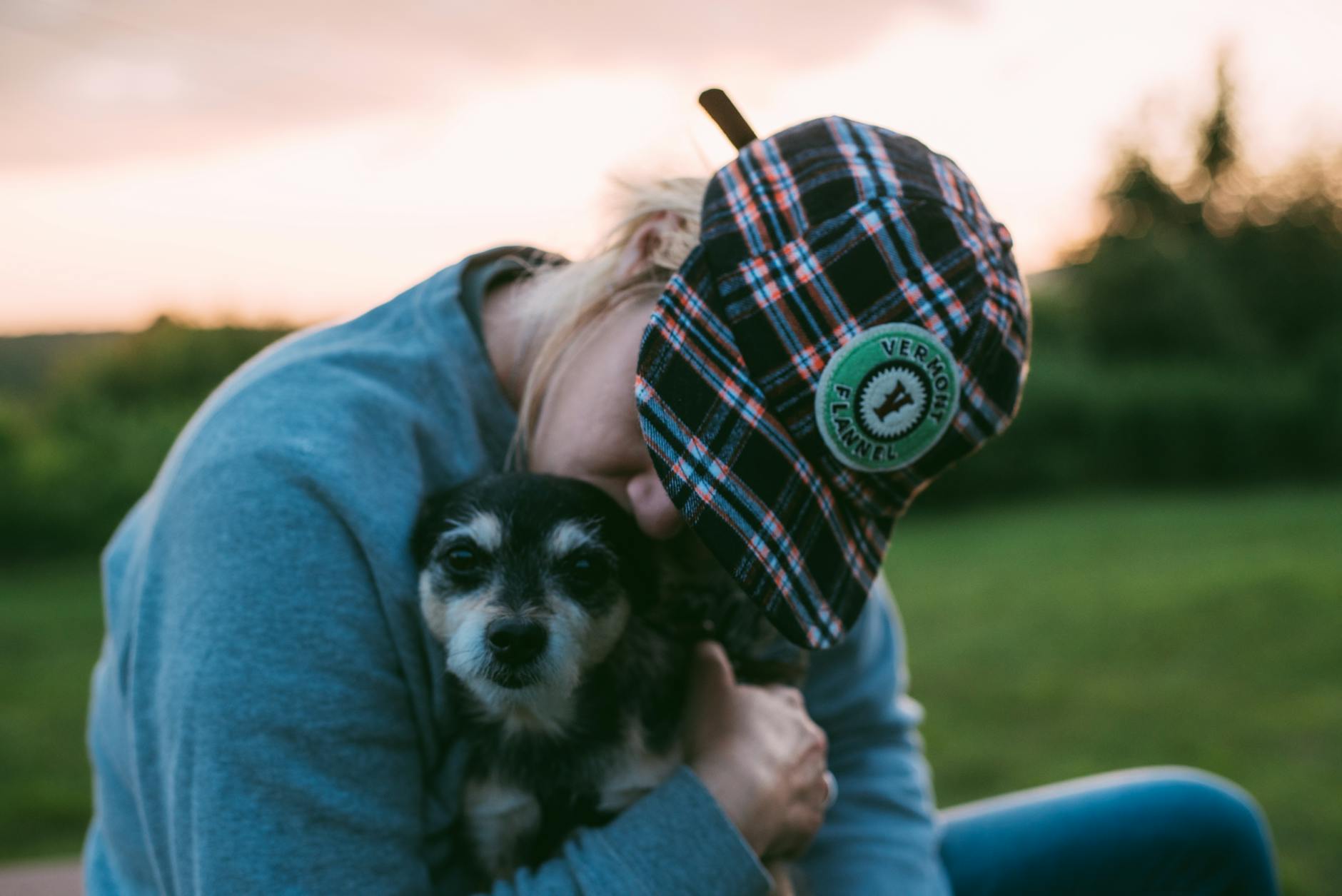
It’s taken me time to write this—maybe because putting it into words means admitting he’s really gone. But grief has a strange way of nudging us forward—through moments of kindness, memory, and unexpected connection.

You see, the other day I received a friendly question from a local gas station attendant. His question opened the door to this reflection, reminding me that Judge’s presence didn’t just change my life—it left a mark on others, too.


I stopped for gas, and the attendant—always kind and jovial—leaned ever so slightly in through the window with a warm smile.

“Where’s your big dog friend?” he asked, looking toward the back seat as if Judge might be curled up, ready to pop his head up—as was the norm.

I felt the weight of the words before I even spoke. But I said them. The attendant’s face shifted—genuine heartbreak in his expression. He wanted to know what happened to my friend, so I told him.

I thanked him for remembering Judge, for asking, for seeing us. He gave me a fist pump, “I’ll be thinking of you.”

The gas station attendant’s words and supportive fist-pump immediately brought me back to a warm summer evening walk a few seasons ago. An older gentleman on his evening stroll passed us and paused, his eyes soft with admiration. “Magnificent,” he said, nodding. “Simply magnificent.”

At the time, I thought he was talking about Judge, and he was, because Judge was magnificent—“magical,” to quote my son. But today, I wonder if the neighborly observation was referring to us—our bond, our rhythm, the strength in how we moved together, how we communicated.

There was something sacred in my connection with Judge, something that didn’t need to be explained—only admired for the authentic love it displayed. It was beautiful.

Intersectionality of Time and Space

The comment at the gas station isn’t so different from the one that summer day. Both came from strangers who saw something beautiful in our everyday. Both moments remind me that Judge’s legacy isn’t just the love he gave me—it’s the way he made people stop and feel something.

People gravitated toward him. Kids, neighbors, delivery drivers, the mailman who kept treats in his pocket just for Judge—they all felt it.

I’ve come to realize that people didn’t just see a beautiful dog when Judge was around—they felt something in his presence. There was a gentleness about him, a knowing. He carried himself with quiet confidence, never asking for attention but always drawing it.

It wasn’t just that he was loyal or smart or handsome or protective, though he was all of those things. It was the way he made people feel seen, safe, and loved—without needing words. He had that rare gift.

Love Like Judge

You know, whenever I posted a picture of Judge to Instagram, it was usually accompanied by the #mustlovejudge hashtag—a playful twist on the early 2000s rom-com Must Love Dogs. It became my unspoken rule, the standard for who I let into my life, into our life: “Must Love Judge.” If you didn’t get Judge or love him, you probably didn’t get me—or love me—either (not to mention our entire pack). Now, after losing him, I see that phrase a little differently.

It’s not enough to have loved Judge. The real challenge, the real calling, is to love like Judge—offering the same quiet comfort walking with people through joy and sorrow, listening without needing to speak, being loyal, steady, and present.

I once heard that grief is just love that has nowhere to go. I’m not sure I’ll ever be over the loss of Judge—and honestly, I don’t think I want to be. But my everlasting love for Judge does have somewhere to go.

The way forward is to carry what he taught me into every space I enter and meet the world with the same unwavering heart and the same quiet grace. This is Judgie’s Yoda-like life lesson I know he wants me to carry forward, reminding me to hold steadfast to my ability to love unconditionally, to always remember that I am deserving of that same unconditional love from the universe, and to encourage others to do the same.

So I choose love—the kind that asks for nothing but gives everything. The kind that lingers, even after goodbye.

I choose to love like Judge.


I want to take a moment to thank everyone who has been so incredibly supportive and kind throughout Judge’s battle—and through everything since. Your calls, texts, DMs, beautiful flowers, cards, handmade drawings, thoughtful gifts, hugs, and check-ins have lifted us all in ways I can’t fully put into words.

Every gesture, no matter how big or small, has been a testament to the love you had for Judge—and for us.

My wish for you is simple but sincere:

May everyone in this world be lucky enough to experience a love like Judge in their lifetime.

And may we all honor that gift by paying it forward—simply by loving like Judge.

Thank you for standing with my pack. Thank you for loving us through our heartbreaking loss.

We love you,

Jess, Jacob, Daisy, Bravo, & Bud

✌️🫶🐾

The Honorable Judge

September 10, 2017 – March 25, 2025

The Privilege of a Second Chance

Reunited with Judge • February 16th, 2025

I was given two options: immediate surgery or I needed to say goodbye. The surgery wasn’t guaranteed, the risks were high, and there was no promise of a miracle. But when I looked into Judge’s eyes, I knew it wasn’t time for us to part.

You see, his eyes told me everything—full of life, determination, and an unbreakable spirit that’s always defined him. And in those eyes, I saw a Rolodex of memories and moments in which Judge never gave up on me. Not once. Through every high and low, he’s been there, my constant, my protector, my best friend. How could I possibly give up on him now?

The doctors were honest. They told me the risks, the during and post-operative possibilities. But they also told me Judge was strong with an excellent heart—minus a bum spleen, Judge was a relatively healthy German Shepherd. It was all I needed to hear.

But making that choice was a privilege.

Emergency surgery isn’t just a matter of love and loyalty—it’s a matter of resources. It requires financial stability, access to specialized care, and the ability to take time away from life’s other responsibilities to be fully present for recovery. Not everyone has that choice. For many, the cost of life-saving surgery for a pet is simply out of reach. For others, the lack of nearby medical facilities or the inability to take time off work becomes the deciding factor.

When I stood at that crossroads, I was painfully aware of this privilege. I had a support system that rallied around me, offering love, prayers, and help with life’s other demands. I had access to my own veterinarian, the Veterinary Emergency Group, and Cornell’s exceptional veterinary team which carried out the life saving surgery. Without any one of those things, the outcome could have been heartbreakingly different.

This awareness weighed heavily on me because I know so many people face the same gut-wrenching decision without the resources to choose hope. I was able to fight for Judge because I had the privilege to do so. But others have to make the hardest choice of all—not because they don’t love their pets just as fiercely, but because life’s realities leave them no other option.

Judge isn’t just a dog. He’s my family, my guardian, my heart. He’s watched over my son, protected our home, and shown me a love so pure it’s changed me for the better. He is the reason why I started my entire dissertation over and focused on the adolescent-animal bond in secondary settings. In Judge, I saw the power of connection, the depth of loyalty, and the healing power that only a dog’s love can bring. His impact on my life was profound enough to shape my career, my research, and my purpose.

Today, the doctors are hopeful. Even with three liters of blood in his abdomen, the surgery was clean, a successful splenectomy, and Judge is home healing. He’s eating like the picky king of the castle that he is, back to reigning over his Mötley crew, his spirit as unbreakable as ever. Watching Judge return to himself, sneaking back to his spot on the couch, seeing that familiar spark in his eyes cataloging another memory together—it’s nothing short of a miracle.

Judge’s road to recovery won’t be easy, but he’s here, alive, because he never gave up and because I had the privilege to fight for him—just as he’s always fought for me. But for those who aren’t given that choice, my heart aches.

I will never take for granted the opportunity I had to fight for Judge and will advocate for solutions to ensure all pet parents can make balanced choices for the well-being of their furry family member—without having to choose between love and necessity. It’s my hope that one day, every pet parent will have the freedom to choose what’s best for their pet, without limitations.


I want to sincerely thank the veterinary teams at White Plains Animal Hospital, Veterinary Emergency Group of White Plains, and Cornell University Veterinary Specialists of Stamford. Your expertise, compassion, and dedication have meant everything to our family and Judge. You’ve given us more than just a second chance—you’ve given us hope. I am forever grateful for all you’ve done to give us back our Judgie Boy.

Building Trust, One Paw at a Time: Using an Extracurricular Club to Introduce Therapy Dogs in Schools

Many educators and school leaders recognize the benefits of therapy dogs in academic settings but hesitate to implement a full-scale program due to knowledge gaps, logistical challenges, financial constraints, or policy concerns. A Therapy Dog Club offers a structured, low-risk way to introduce animal-assisted therapies, easing leadership apprehensions. In fact, I strongly recommend beginning the therapy dog implementation process in this way to build trust in the program’s effectiveness while addressing concerns in a controlled environment.

So let’s dive in together as I define the concept of a Therapy Dog Club, outline its benefits, and provide a brief guide to getting started.

What is a Therapy Dog Club?

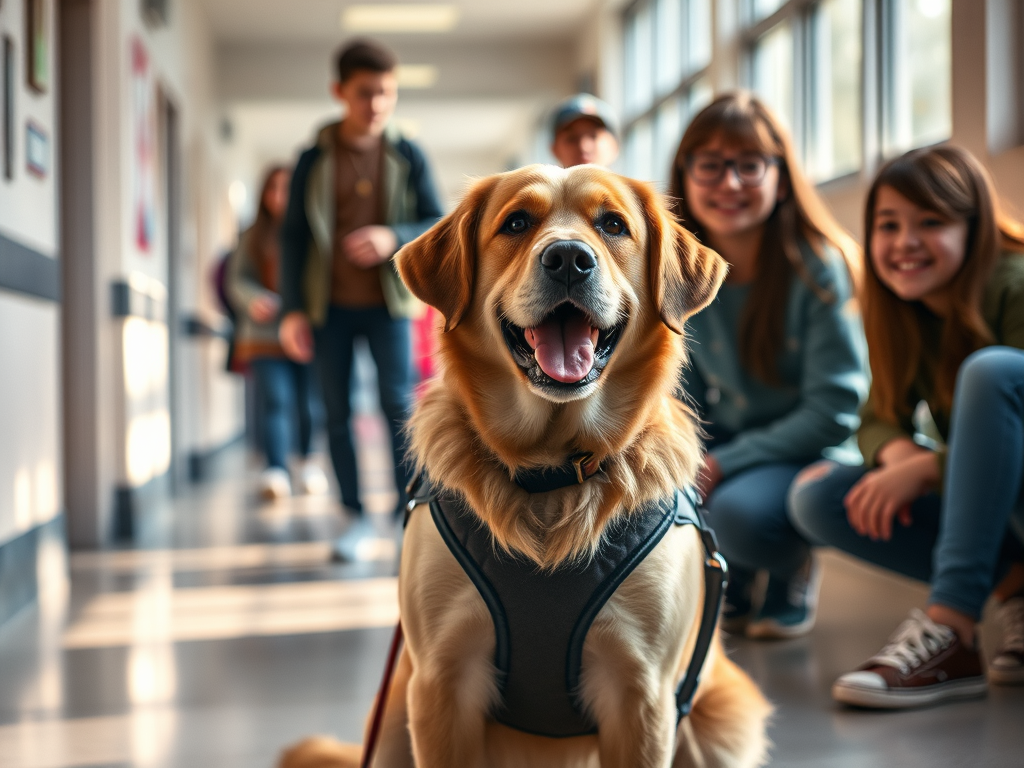
As I define it, a Therapy Dog Club is a student-led, faculty-advised group that brings trained therapy dogs into a school environment on a scheduled basis. The club provides a structured, low-risk way for students and staff to interact with therapy dogs, typically for emotional support, stress relief, and social engagement. It allows students to experience the benefits of animal-assisted interventions without the immediate need for implementing a full-time therapy dog program.

Participation is voluntary, making it an accessible option for a wide range of students. In my view, a Therapy Dog Club operates on a smaller, flexible scale, bringing therapy dogs into the school on specific days rather than having a resident dog on campus daily. Additionally, a Therapy Dog Club may meet after school or during designated extracurricular periods, which can be particularly appealing to school and district leaders.

Benefits of a Therapy Dog Club

Eases Administrative Concerns

Even with strong research supporting the benefits of therapy dogs, one of the biggest barriers to implementation is navigating perceptions, assumptions, and stereotypes. A club helps schools challenge misconceptions and test the waters before committing to a full-time therapy dog program. It also offers:

• Student Autonomy – Participation is voluntary, so students who are uncomfortable around dogs or have allergies can simply opt out. This eliminates concerns about mandatory exposure in classrooms or common areas.

• Waivers for Participants – Schools can require students (and guardians, if necessary) to sign waivers acknowledging participation and understanding any risks. This adds a layer of protection for the school and provides transparency for families.

• Gradual Implementation – Schools can observe how students and staff interact with therapy dogs before considering a larger-scale program. This allows time to refine policies, address concerns, and build community support.

Provides Emotional and Social Benefits for Students

A Therapy Dog Club offers many of the same emotional and mental health benefits as a full program. Interacting with therapy dogs has been shown to reduce stress, improve mood, and boost social interactions—all of which can be particularly helpful for students struggling with anxiety, academic pressure, or social isolation (Maricevic, 2022).

Fosters Student Leadership and Engagement

A Therapy Dog Club empowers students to take on leadership roles by organizing events, coordinating with therapy dog teams, and advocating for expanding the club into a full program. Giving students ownership fosters responsibility, teamwork, and community engagement.

Strengthens Community Partnerships

Starting a club opens the door to collaborations with local therapy dog organizations, shelters, or animal-assisted therapy programs. Schools can invite certified therapy dogs for visits, partner with community groups for educational sessions, or create service-learning opportunities where students volunteer with therapy animals.

Gathers Data to Support a Future Program

If a school is hesitant about implementing a therapy dog program, a club can serve as a pilot initiative to collect data on the impact of animal-assisted therapies. Surveys, testimonials, and anecdotal evidence from students, teachers, parents, and other key stakeholders can provide compelling reasons to expand the club into a permanent program.

How to Start a Therapy Dog Club

Identify a Faculty Advisor – A teacher, counselor, or staff member passionate about student well-being and animal therapy can oversee the club.

Partner with Local Therapy Dog Organizations – Certified therapy dog teams can schedule regular visits to meet with students.

Plan Activities – Meetings can include guest speakers, stress-relief sessions, volunteer opportunities, and advocacy efforts for therapy dog programs.

Involve Students – Let students lead initiatives, create outreach materials, and develop events.

Implement Waivers – Have students (and their guardians, if needed) sign participation waivers to ensure transparency and address liability concerns.

Final Thoughts

A Therapy Dog Club is a low-risk, high-reward way for schools to explore the benefits of therapy dogs before committing to a full program. It fosters a positive school culture, supports student mental health, and builds a foundation for a larger initiative in the future.

If your school is on the fence about a therapy dog program, starting with an extracurricular offering might be the perfect first step. By starting small and scaling thoughtfully, schools can introduce therapy dogs in a way that minimizes risks, maximizes benefits, and paves the way for a sustainable, well-integrated program.

Honoring the Legacy: Ensuring Continuity in School Therapy Dog Programs

Photo by Laura Stanley on Pexels.com

In a school setting, therapy animals can become cornerstones of the emotional support system for students and the learning community at large (Maricevic, 2022). Whether helping a student cope with anxiety, providing comfort during stressful academic periods, or serving as a calming presence in the classroom, therapy animals form deep therapeutic connections with the people around them in the school setting (Maricevic, 2022).

Sadly, earlier this week, a colleague shared news of the sudden passing of a therapy dog at her child’s middle school. My colleague shared how profoundly this loss impacted her child and the community, as many students relied on the therapy dog for comfort and emotional stability. While shared anecdotally, I learned parents expressed how devastated their children were, followed by their immediate desire to reach out to the school leadership to inquire about ways students would be supported–all highlighting the critical role the therapy dog played in the daily school life.

When a therapy animal becomes unavailable due to illness, retirement, or passing, students who rely on the animal for emotional stability can feel its absence deeply. Younger children, or neurodivergent learners, may struggle to understand why the animal is no longer present, while older students may experience anxiety, loss, or disengagement from the norms established with the help of therapy animals.

To maintain continuity and support for all stakeholders, schools need contingency plans for a therapy animal’s absence (Maricevic, 2022). Preparing students gradually for the possibility that therapy animals may not always be present is crucial, much like teaching resilience in other areas of life. Having other support systems—such as school counselors, peers, substitute therapy interventions, or on-call therapy dog teams—helps to heal the heartache. Schools can also consider honoring the animal upon retirement, or when the time comes to cross “The Rainbow Bridge,” helping students process their emotions.

The Human Factor

The loss of a therapy animal or handler should never be a reason to discontinue a program or cause a school to question its implementation. To say the bond between students and therapy animals are strong would be an understatement, so structured plans must address these inevitable life events. This could involve training a backup handler, having another therapy dog available, or providing grief support for students and the learning community (Maricevic, 2022).

In my research, participants frequently highlighted the need to plan not only for the therapy dog’s absence but also for the handler’s unexpected departure from their role (Maricevic, 2022). Participants emphasized the importance of protocols for the long-term sustainability of therapy dog programs and the consequences of not having a plan in place for this very scenario where either the dog or handler might be unavailable due to illness, injury, or unforeseen circumstances (Maricevic, 2022).

Of course, addressing the human side of the therapy dog team is important; handlers are often the bridge between the animal and the students, and their presence is crucial to the program’s success (Maricevic, 2022). Schools must be prepared to transition the handler’s role smoothly to maintain the relationships fostered through the therapy animal, while also understanding the possibility that, if a handler is no longer able to be part of the team, it may impact whether the therapy dog can continue in the learning community (Maricevic, 2022).

Such a scenario emerged in my research: after the sudden passing of a beloved teacher who was also the owner and handler of the school’s therapy dog, the family chose not to continue bringing the dog to school (Maricevic, 2022). It was a “big ask” on the part of the school to inquire if the family would be willing to still bring the dog to school to continue its positive impact, even after the loss of their matriarch (Maricevic, 2022). After careful consideration, the family couldn’t emotionally commit to such a responsibility, nor did they want to have someone else take responsibility for their dog’s daily care and well-being, (Maricevic, 2022). Understandable. Not to mention, such a shift might have been traumatic for the dog, who could’ve struggled to adapt to a new handler under such a stressful time, unless they were trained to interact with multiple people during the school day (Maricevic, 2022). 

Planning ahead ensures that therapy dogs and handlers remain integral parts of the school community (Maricevic, 2022). By developing clear protocols, schools can ensure that these essential relationships continue to thrive, even through transitions or losses (Maricevic, 2022).

Honor the Impact, Carry On the Mission

No one likes to consider the possibility of a therapy animal abruptly leaving a school or a handler becoming unavailable, but it’s important to emphasize that, in such situations, the solution isn’t about “replacing” a cherished member of the therapy team, regardless of the reason for their departure. Therapy animal teams are irreplaceable and beloved parts of the school, and their contributions are deeply felt by students and staff alike. However, for the greater good of the learning community and the long-term sustainability of the program, planning for these realities is “a must.”

By shifting the policy focus from preparing for an untimely event to policy language centered around ensuring the next team carries on the therapy animal program in honor of their years of service, schools can ensure that transitions are respectful and positive. Such a perspective remains true to following in the therapy dog’s paw prints, continuing the meaningful work they began, and preserving their spirit in every comforting moment shared with students. Decide on an empathic approach to honor the legacy of the therapy team while allowing the program to continue providing the emotional support the learning community needs. By being proactive, schools can safeguard the stability and warmth of animal assisted therapy interventions, ensuring they remain a source of comfort, even through the most challenging transitions.

Yes, Your IB World High School Needs a Therapy Dog—Here’s Why

Today is World Mental Health Day, a perfect moment to highlight the well-being of students, faculty, and staff, particularly in high-pressure environments like those of International Baccalaureate (IB) World Schools. The IB program, renowned for its rigorous academic standards, challenges students to think critically, act compassionately, and manage complex workloads. However, with this academic intensity comes an ever-growing need to support the emotional and mental health of students who are managing exacerbating feelings resulting from a myriad of factors, one of which being the pandemic (Maricevic, 2022).

As Olli-Pekka Heinonen, Director General of the International Baccalaureate, emphasized in a recent commentary, the IB is re-evaluating education to prioritize well-being in every decision. Therefore, school and district leaders must consider alternative solutions to address the ever-evolving landscape of the 21st-century learner. One such solution is the integration of therapy dogs into the IB high school setting, a decision which not only enhances student well-being but also seamlessly aligns with the IB’s holistic educational approach.

Serving as a unique form of emotional support, therapy dogs in the high school setting transcends traditional methods of student care, fostering empathy, reducing stress, and cultivating a more inclusive school environment (Maricevic, 2022). Their presence encourages students to develop key attributes from the IB Learner Profile, such as being caring, balanced, and reflective, while also promoting emotional resilience. By bridging the gap between academic pressures and personal well-being, therapy dogs help create a learning environment where students can focus, engage, and perform to their fullest potential.

Therapy Dogs: More Than a Comfort, a Core Resource

Therapy dogs offer far more than comfort during stressful times; they play a crucial role in cultivating emotional intelligence and resilience—key components of the IB Learner Profile. Attributes such as being caring, balanced, and reflective are not merely learned from textbooks but are nurtured through lived experiences, often with the guidance of compassionate role models. Therapy dogs provide a unique opportunity for students to develop these traits by offering an empathetic, non-judgmental presence (Maricevic, 2022).

According to Heinonen (2023), well-being is central to learning; without it, students’ minds and bodies become burdened, making academic success increasingly difficult to achieve. Therapy dogs have been shown to alleviate stress, lower anxiety, and increase feelings of belonging—elements crucial for creating a positive learning atmosphere (Maricevic, 2022). By helping students manage academic pressure and emotional strain, therapy dogs directly contribute to the IB’s goal of developing balanced, reflective learners (Maricevic, 2022).

Addressing the Well-Being Crisis

The pandemic has created an undeniable shift in how schools conceptualize well-being. As remote learning became the norm and face-to-face interactions dwindled, students and educators alike experienced heightened levels of stress and uncertainty (Heinonen, 2023). A survey conducted under the #BetterTogether initiative revealed that two in five individuals have faced personal mental health struggles during the pandemic (Heinonen, 2023). Heinonen’s (2023) inclusion of #BetterTogether’s findings reflects the growing concerns voiced by parents and educators worldwide, who are advocating for a more holistic approach to education—one that prioritizes not only academic achievement but also the social and emotional development of students (Maricevic, 2022).

The good news is that the IB Organization appears to recognize these challenges, as it prides itself on a whole-school approach to well-being (Heinonen, 2023). As Heinonen (2023) notes, this approach encompasses every aspect of school life, not merely exam results or curriculum delivery. This is why the inclusion of therapy dogs in IB World Schools aligns perfectly with such a philosophical and pedagogical position, providing a means to support the mental health of students, faculty, staff, and the entire learning community. By fostering a supportive, calming environment, therapy dogs help mitigate the effects of stress, build community, and promote emotional resilience—elements that are key to long-term academic success (Maricevic, 2022).

Mitigating Concerns and Overcoming Barriers

As with any new initiative, the introduction of therapy dogs raises concerns about logistics, allergies, and liability. However, with careful planning and clear policies, these challenges—including allergies, sensitivities, safety, and cultural considerations—can be effectively addressed (Maricevic, 2022). For instance, schools can establish designated dog-free zones for students and staff with allergies or sensitivities, ensuring their comfort while still allowing others to benefit from the therapy dog program (Maricevic, 2022). Another approach is to partner with certified therapy dog organizations to ensure the animals are well-trained for school environments, addressing safety concerns (Maricevic, 2022). Moreover, cultural differences can be respected by making participation voluntary and providing education on the role and benefits of therapy dogs (Maricevic, 2022). With these precautions in place, the program can be smoothly integrated into the school community, offering emotional support without compromising the needs or preferences of others (Maricevic, 2022).

Building a Holistic Educational Experience

Therapy dogs align with the IB’s mission to foster emotional, social, and academic growth, making them a vital addition to IB schools. Heinonen’s (2023) call to redesign education with a focus on well-being underscores the importance of such resources. Therapy dogs serve as more than mere add-ons; they assist students and educators in navigating the pressures of a complex world. By enhancing emotional well-being, therapy dogs enable students to engage more deeply with the curriculum, fostering a growth mindset that encourages them to embrace challenges and learn from mistakes (Maricevic, 2022).

A Call to Action on World Mental Health Day

As we observe World Mental Health Day, there has never been a more urgent time to advocate for innovative solutions that address the well-being of students and educators. Therapy dogs offer a practical, impactful way to enhance emotional resilience, reduce stress, and foster a sense of belonging—qualities that are essential for the success of any educational program, particularly one as demanding as the IB.

Incorporating therapy dogs into secondary IB World Schools is not about diluting academic rigor (Maricevic, 2022). Instead, this programmatic addition represents a commitment to fostering holistic student development—one that recognizes the inseparability of emotional well-being and academic success (Maricevic, 2022). As Heinonen stated, “We know that the time to intervene in the well-being crisis is now” (2023). School and district leadership must act with intentionality, creating environments that prioritize progress over perfection and place student well-being at the heart of learning.

By welcoming therapy dogs into the fold, IB schools can demonstrate their continued commitment to creating a better, more compassionate world—one that nurtures the whole student, mind and heart—one paw at a time.

Restoring Comfort: Advocating for the Return of a Therapy Dog Program

Photo by Helena Lopes on Pexels.com

Just the other day, I received a message from an educator in a current leadership position. In the message, the school leader expressed frustration and confusion over the abrupt discontinuation of a beloved therapy dog program at their school. This decision, a result from a change in district regulations, now prohibits employees from bringing therapy dogs into the school, and many in the learning community are disheartened. It is the educator’s belief that the therapy dog program was a vital source of comfort and emotional support, fostered positive connections and contributed to a supportive school culture for the faculty, staff and student body as a whole.

Which is why I was then brought to wonder about the original policy language prior to the regulatory change for the 2024-2025 school year and why such a change would occur: What explicit language existed in district’ policy regarding therapy dogs before this decision? Was there any formal language at all? Could it be that the therapy dog program was running under an unspoken understanding rather than an official framework?

Policy isn’t necessarily a “bad thing,” for without formal guidelines, such programs can easily grow unchecked, potentially leading to conflicts—especially if there was an increase in the number of dogs coming to school, concerns about certification, or misunderstandings about what constitutes a legitimate therapy dog. The absence of a clear policy on therapy dogs may have allowed the program to grow naturally. However, this lack of structure could have led to unforeseen issues, ultimately contributing to the decision to end the program.

Having said that, while the regulatory change in the educator’s school poses a significant challenge, it doesn’t have to mean the end of the therapy dog program altogether. In the absence of a clear explanation, it’s essential to propose thoughtful solutions to address the concerns of stakeholders while advocating for the reinstatement of the therapy dog program. Below, I outline several considerations for the educator—and others impacted by similar policy shifts—to navigate the current situation with the hopes of reinstating a revised therapy dog program to meet the needs of all stakeholders.

The Role of Unspoken Understandings

When therapy dog programs aren’t codified into official district policy, they may rely on informal arrangements or personal agreements (Maricevic, 2022). In some cases, administrators may allow other school leaders, teachers or staff to bring certified therapy dogs without objection, trusting the intentions of the program (Maricevic, 2022). But without written guidelines, inconsistencies and confusion can arise, which may have contributed to the recent decision to prohibit therapy dogs altogether for the school leader. 

Now, if there were concerns about the number of dogs on campus, questions about certifications, or uncertainty around how to manage liability, any one of these issues—or all of them—could have prompted the district to take a blanket approach and halt the program. In either scenario, the issue comes back to the need for clear policy to ensure the viability of any programmatic addition, with the goal of sustaining a long-term impact on the learning community—especially if that program includes therapy dogs (Maricevic, 2022).

Schools with transparent policies, can foster a supportive environment where therapy dogs, or any programmatic enhancements to the wellness and learning of students, can thrive as valuable resources, ensuring that their benefits are accessible to all students and staff while minimizing potential conflicts or concerns. Without clear, formal guidelines, programs can become vulnerable to misunderstandings and inconsistencies that ultimately jeopardize their effectiveness and long term sustainability within the organization (Maricevic, 2022).

Establishing a comprehensive policy framework would not only provide a solid foundation for the program but also clarify roles, responsibilities, and expectations for all parties involved (Maricevic, 2022). Ultimately, a well-defined policy will help safeguard the educator’s therapy dog program’s integrity and reinforce its positive impact on the school community (Maricevic, 2022). 

Certification Confusion: Therapy Dogs vs. Emotional Support Dogs

Another layer of complexity is the widespread misunderstanding between therapy dogs and emotional support animals (ESAs), particularly when it comes to certification. This confusion can create legal and logistical issues, making it difficult to establish a program that complies with district policies.

First and foremost, it’s important to clarify that there is no formal “certification” for emotional support dogs. ESAs are animals that provide comfort and emotional support to individuals with mental health challenges, but they are not trained to perform specific tasks like service dogs. There’s no official certification for ESAs, and they do not have the same legal rights as service animals.

On the other hand, therapy dogs are specifically trained and certified to provide comfort in settings like schools, hospitals, and nursing homes (Maricevic, 2022). These animals are often part of structured programs, with certification from reputable organizations like Alliance of Therapy Dogs, Pet Partners, and The Good Dog Foundation.

The Problem with Therapy Dog Certifications

Unfortunately, not all organizations that claim to certify therapy dogs are legitimate. Some companies exploit loopholes, offering quick and easy certifications bypassing the necessary training or certification assessment. Such unethical practices can undermine the credibility of therapy dog programs and cause confusion in school districts trying to maintain appropriate standards.

In the case of this educator’s dilemma, if the district encountered concerns about the legitimacy of the certifications held by therapy dogs on campus,such a concern could have triggered the decision to halt the existing therapy dog program. Without clear guidelines or a trusted certification process in place, district leadership may have felt the risks—whether related to liability, safety, or standards—outweighed the benefits. To ensure the program’s legitimacy and effectiveness, schools must establish clear guidelines that require certification only from trusted, reputable organizations, like those presented above (Maricevic, 2022).

Moving Forward: Addressing Policy Gaps and Certification Concerns

To advocate for the reinstatement of the therapy dog program, the educator must first address these potential gaps. Maybe start a conversation with key stakeholders, follow the dialogue with a collaborative review of the district’s policy language (or lack thereof) and discuss additional language to formalize clear guidelines around the use of therapy dogs in schools. Here’s how this educator can approach the current situation:

  1. Review the Old Policy (or Unspoken Understanding): If the program previously operated without formal policy, it’s time to work with district leadership to establish clear guidelines. This would ensure that any future therapy dog program operates within a well-defined framework, preventing misunderstandings or unchecked growth (Maricevic, 2022).
  2. Ensure Proper Certification: Address concerns about certifications by only working with well-established, reputable organizations that train and certify therapy dogs according to recognized standards (Maricevic, 2022). Research and recommend organizations that adhere to the highest levels of training, evaluation, and insurance, helping the district feel more confident in the legitimacy of the program (Maricevic, 2022).
  3. Clarify the Difference Between Therapy Dogs and ESAs: Educate both staff and district leadership on the key distinctions between therapy dogs and emotional support animals. Emphasize that while ESAs provide comfort, they are not part of structured therapy programs, nor do they have certification or training requirements. Therapy dogs, on the other hand, must undergo rigorous training and certification to operate in school settings (Maricevic, 2022).
  4. Propose a Pilot Program with Clear Oversight: If the primary concerns are related to certification and management, propose reinstating the program as a small pilot with stringent guidelines. Start by bringing in one or two certified therapy dogs through reputable organizations during designated times throughout the school year (i.e. Wellness Day, midterms, finals, etc) with clear oversight and documentation. This approach may help ease district concerns while demonstrating the value of the therapy dog in the high school setting.

Bridge the Gap Between Intention and Implementation

The abrupt end of this educator’s therapy dog program highlights the importance of having clear, well-structured policies in place for any school or district initiative’s longterm sustainability. Without them, even well-intentioned programs can become vulnerable to mismanagement, confusion, and abrupt decisions like the one that occurred in this example. By examining the district’s language around therapy dogs, clearing up misunderstandings around certification, and other inconsistencies within the established protocol, this educator, and others who might find themselves in a similar scenario, can build a stronger case for reinstating the program in a way that benefits everyone—students, staff, and dogs alike.

Never Gonna Give You Up: What Dogs and Rick Astley Teach Us About Loyalty and Human Connection

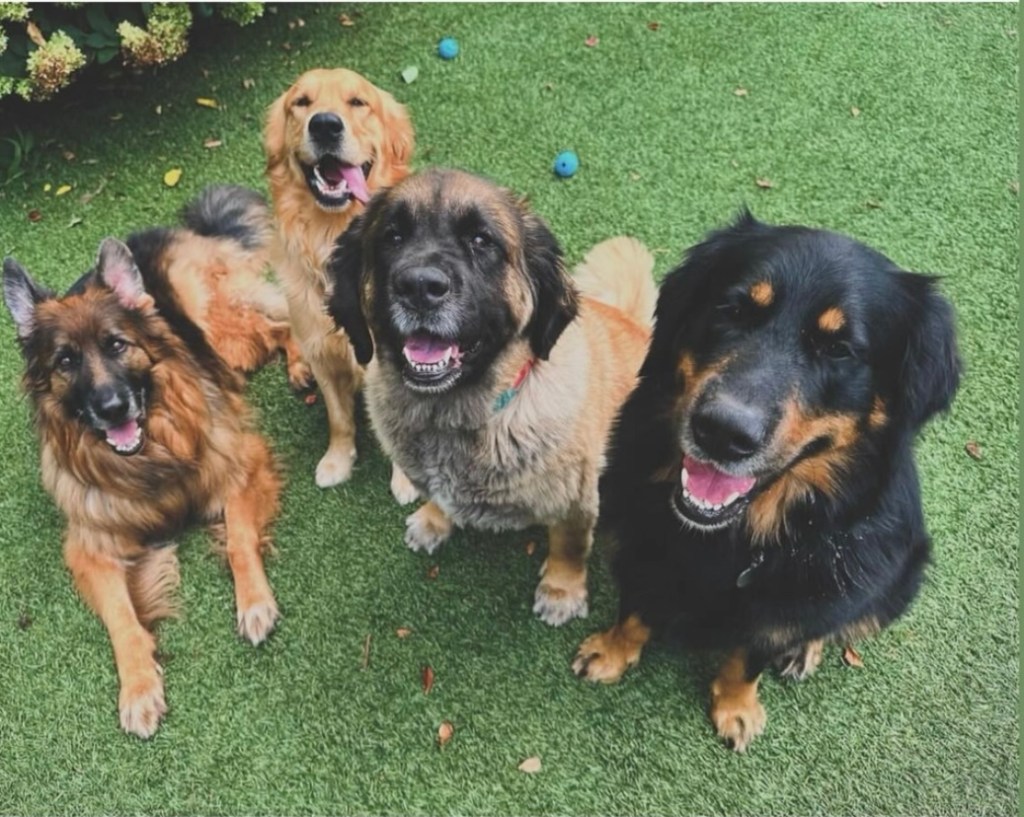
Judge, Bud, Daisy, & Bravo | National Dog Day • August 26th, 2024

Loyalty is a rare and invaluable trait—a kind of dedication we often seek in our human relationships but one that is lived out daily by our four-legged companions. When I captured the above smiling faces of Judge, Daisy, Bravo, and Bud, they immediately offered a powerful reminder of what true loyalty looks like and what we, as humans, can learn from our furry friends. It was in that moment that Rick Astley’s iconic song Never Gonna Give You Up began playing in my mind, its lyrics perfectly mirroring my pack’s unwavering commitment—a promise to never let me or our family down.

Dogs and the Art of Commitment

Astley’s song became an anthem of 1980s pop music not only for its catchy beat but also because it speaks to a timeless truth: genuine loyalty doesn’t falter. It’s safe to say dogs understand this truth instinctively because they:

  • Aren’t driven by obligation or social expectation; they are loyal because they choose to be.
  • Show up every day, no matter what.
  • Greet you at the door, excited to see you, even if you’ve had a bad day.
  • Remain unwavering in their loyalty.

For dogs, there are no conditions to which their commitment is contingent—it’s a steadfast bond rooted in love and trust that remains unshakeable, no matter the circumstances. In contrast, human relationships often hinge on conditions. Friendships, partnerships, and even family bonds can strain when circumstances change. But a dog’s commitment doesn’t work that way; they remain present. Just as Astley promises, “Never gonna let you down,” dogs demonstrate a loyalty that doesn’t just weather storms—they stare down the turbulence, remaining steadfast by your side.

Learning from a Dog’s Loyalty: What If?

Too often, human relationships falter because we set conditions for our loyalty. We withdraw when things get hard or when someone doesn’t meet our expectations. Dogs, on the other hand, don’t play by those rules. They are all in, every day, whether it’s a good one or not. Dogs live by example, and their example is a lesson in showing up, even when life isn’t perfect—especially when it isn’t. Take Astley’s line, “Never gonna run around and desert you.” Those words aren’t just a promise; they’re a commitment to show up, regardless of the challenges.

What if we approached our human relationships with the same kind of loyalty that dogs demonstrate on our best days, worst days, and every day in between? If we were as consistent in our support, our affection, and our willingness to be there for each other, we could deepen those connections. Dogs don’t wait for the perfect moment to offer love—they do it without hesitation, so why can’t we?

The Power of Consistency

Consistency is another hallmark of a dog’s loyalty. Dogs don’t just offer love in the big moments; they show love in the everyday, in the simple moments of routine, and they love hard. Whether it’s sitting by your feet as you work away at the computer (like Judge is doing right at this very moment as I type) or greeting you with excitement every morning like clockwork (cough, cough—BUD), their presence is constant, genuine, and motivated by love.

In Astley’s song, the repeated refrain drives home the importance of consistency: “Never gonna give you up, never gonna let you down.” These aren’t just words; they represent a commitment to consistency, much like the loyalty dogs provide us every day. It’s in that consistency that trust and depth in relationships grow. Dogs are there for you, even when you may not feel like you deserve such unconditional love—but believe me, you do. The human-animal relationship, along with Astley’s lyrics, provides a humbling lesson: to offer loyalty and love consistently—not just when it’s easy or convenient—and to recognize that you deserve such unconditional treatment, whether it comes from a dog or another human.

Dogs Don’t Give Up—Neither Should We

When I look at this image, or any image, of Judge, Daisy, Bravo, and Bud, I see such happy dogs and a powerful reflection of loyalty in action. Dogs live out the core message of Never Gonna Give You Up without even trying, teaching us that loyalty isn’t just about grand gestures; it’s about being present through the everyday ups and downs.

You see, dogs don’t give up on their people, no matter what. It’s often the people who give up on dogs and on each other, and it’s time for that to change. This is why humans have much to learn from our canine companions. We could:

  • Strengthen our relationships—whether romantic, familial, or platonic—by showing the same level of devotion.
  • Stay the course—just as dogs do, day after day, with nothing more than a wagging tail and the quiet assurance that they will always be there.

So, the next time you listen to Rick Astley’s Never Gonna Give You Up, think beyond the music. Then, reflect on the lessons from those unconventional teachers—dogs—and the invaluable lessons they teach us every day about loyalty. It’s a reminder to show up, stay consistent, and offer our support and love, unconditionally.

Just like Judge, Daisy, Bravo, and Bud, we all have the capacity to live out that promise, and if this motley crew can do it, so can you. There’s no better time than the present to simply follow their lead.

If Therapy Dogs are Good Enough for the USA Gymnastics Team, They’re Good Enough for America’s High School Students

How therapy dogs are alleviating pressure felt by elite athletes even at Olympic levels by Steve Dorfman of The Palm Beach Post

I don’t know about you, but I am totally hyped up for the 2024 Olympic Games, ready to cheer on Team USA in all sports. But let’s be real, the Olympic Games aren’t just any old event—this is the high-pressure world of elite sports, where the best of the best compete in the revered global arena, and when an athlete’s physical fitness and success is dependent upon their emotional wellbeing.

Which is why in the weeks leading up to the Olympic Games, I was elated to learn about USA Gymnastics prioritization of the mental and emotional wellbeing of athletes prior to the start of the games. I loved how my social media algorithm flooded my social media feed with videos and images of the USA Gymnastics team warmly embracing therapy dogs to help manage stress and anxiety.

Naturally, I loved these videos and images, and their recurring appearance inspired me to consider my own advocacy efforts. Maybe if the entire world was able to observe the positive effects of therapy dogs on the wellbeing of elite athletes then there might be a more clear pathway to connect the dots to the potential benefits for other groups, like America’s high school students.

If you know me, then you know that my next series of wonderings centered around one thematic implication: if highly driven and talented athletes benefit from the presence of therapy dogs, then high school students across America could also gain significant advantages from similar support. 

At the end of the day, high school students are not fundamentally different from elite athletes in their need for support. For high school students, the academic environment can be a significant source of stress (Maricevic, 2022). Like the gymnast’s pressure to perform flawlessly in routines, maintain peak physical condition, and compete at high-stakes events, high school students can often feel overwhelming pressure to excel academically, manage social relationships, and plan for the future. Incorporating therapy dogs into schools in the same manner as USA Gymnastics offers a valuable outlet for stress relief and emotional support for adolescents. If therapy dogs can aid aspiring Olympians in achieving their goals, they can also play a crucial role in helping America’s teenagers manage the challenges of high school.

So here we go! Here’s a brief argument for why high school students deserve therapy dogs in their learning environment just as much as elite athletes. Let’s begin!

A Quick Refresher on the Benefits of Therapy Dogs

Therapy dogs are dogs specially trained to offer comfort and companionship in a range of public and private settings, including schools, hospitals, and environments affected by traumatic events (Maricevic, 2022). Their presence profoundly impacts individuals’ emotional and mental health (Maricevic, 2022). Research, including my own, confirms that interacting with therapy dogs significantly reduces anxiety, stress, and symptoms of depression in humans, especially for adolescents (Maricevic, 2022). Furthermore, there are notable physical benefits attached to the human-animal bond, such as increased levels of oxytocin—a hormone linked to bonding and emotional well-being—and decreased levels of cortisol, the stress hormone (McDowall, 2023).

A Beacon of Possibilities

You can thank this entire post to Beacon. Beacon, a 4-year-old golden retriever therapy dog, is a pivotal part of USA Gymnastics’ efforts to transform the sport’s toxic culture.

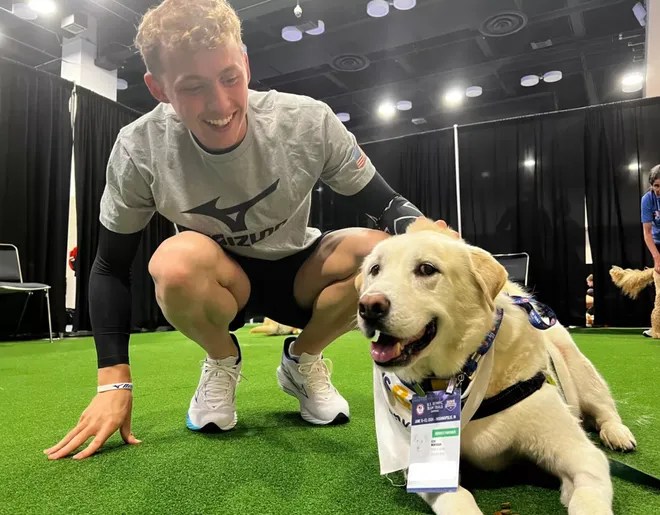
Beacon, along with a brigade of therapy dogs contributed to the national competitions by offering a calming presence to the athletes (even swimmers). One such athlete, Joscelyn Roberson, expressed her love for Beacon saying, “He’s so cute! I’ve already told people that this is the best thing that U.S.A. Gymnastics can do for us” (Macur, 2024).

Under the leadership of Chief Executive Officer Li Li Leung, the USA Gymnastics organization made significant strides in prioritizing mental health following scandals and revelations about the toxic environment in the sport. Leung underscored the importance of mental wellness, stating, “There’s no question that there was a lesson learned from Tokyo in terms of mental wellness being so critically important” (Macur, 2024). Leung’s commitment to this priority is demonstrated through the inclusion of nearly 20 dog-and-handler teams during the U.S. National Gymnastics Championships in Fort Worth this year, providing much-needed emotional support.

According to NBC News, Beacon, the organization’s “first official therapy dog,” made rounds during the trials, watching over athletes and coaches (Portée 2024). As gymnasts tackled floor routines, balance beams, and vaults, Beacon was there to alleviate the strain of injuries and the stresses of the multi-day event. Beacon’s human-run Instagram page notes that he “loves pet therapy, fridge time” and “making friends with everyone” (Portee, 2024). Beacon’s handler, Tracey Callahan Molnar, shared with ESPN that Beacon’s role involves acting as an “emotional sponge” for athletes, absorbing their stress. As Molnar explained, “Beacon gets tired by the end of the day [and] absorbs the stress of the people they’re relieving the stress off of” (Portee, 2024). Although exhausting work, it is profoundly meaningful.

Extending the Success of Therapy Dogs to High Schools

The success of Beacon and other therapy dogs with the USA Gymnastics team, as well as those that comforted members of the USA Swimming team during qualifying events, raises important questions: if therapy dogs can help aspiring Olympians achieve their dreams, in what ways, if any, can they do the same for America’s teenage population in high schools? Are high school students any less deserving of the same opportunity afforded to Olympic hopefuls? If therapy dogs provide emotional support and stress relief for success in the athletic arena, why shouldn’t they do the same for high school students to thrive in the academic arena? More importantly, why aren’t they?

How therapy dogs are alleviating pressure felt by elite athletes even at Olympic levels by Steve Dorfman of The Palm Beach Post’s photo of American swimmer Carson Foster with therapy dog Izzo. Courtesy of USA Swimming

While elite athletes certainly benefit from therapy dogs, high school students face unique and substantial pressures that make the support of therapy dogs not just beneficial but essential as they experience significant stress and emotional challenges that can deeply impact their academic performance and overall well-being. The academic demands, social pressures, and the uncertainty about the future create a high-stress environment. Therapy dogs offer a much-needed respite, providing emotional support and reducing stress in ways that are crucial for students navigating these formative years.

Not to mention the transition from adolescence to adulthood is a critical period of physical and emotional maturation where students are developing essential life skills, including emotional regulation and social interaction (Maricevic, 2022). Therapy dogs as a presence during this period of development help in fostering emotional resilience, enhancing social skills, and building empathy, foundational skills for personal growth and future success, thus making the presence of therapy dogs an invaluable support system during this developmental stage (Maricevic, 2022).

The research that accompanies my advocacy for therapy dogs in high school settings does not diminish the reality elite athletes face from intense pressure and high expectations. However, their access to support systems and resources is generally more robust and innovative, as observed through the inclusion of Beacon. Elite athletes often have dedicated mental health professionals, coaches, and structured programs to address their needs. In comparison, high school students may lack such comprehensive support, all the more reason to include therapy dogs as a particularly impactful and equitable enhancement to their educational experience, addressing a critical need by supporting students in a holistic and meaningful way, ultimately fostering a healthier, more supportive learning environment (Maricevic, 2022).

The example set by the USA Gymnastics team underscores the powerful role that therapy dogs can play in promoting mental health and emotional well-being. By bringing therapy dogs into high schools, educational leaders can offer students the same level of support that helps elite athletes thrive in their complex lives.

Are you convinced yet that if therapy dogs are good enough for elite athletes they are more than good enough for our high school students?

Well, here’s the deal, you should be convinced by now, and if not, let me share some important information. Incorporating therapy dogs into high schools yields a variety of positive outcomes, from enhancing the overall school environment to the student experience (Maricevic, 2022):

  • High school students experience significant stress and emotional challenges that can deeply impact their academic performance and overall well-being. The academic demands, social pressures, and the uncertainty about the future create a high-stress environment. Therapy dogs offer a much-needed respite, providing emotional support and reducing stress in ways that are crucial for students navigating these formative years.
    • Reduced Stress and Anxiety: Therapy dogs help lower students’ stress and anxiety levels, creating a more relaxed and conducive learning environment.
    • Improved Academic Performance: Lower stress levels leads to better focus and concentration, improving academic performance.
    • Enhanced Emotional Support: Therapy dogs provide unconditional love and companionship, offering a comforting presence that helps students navigate emotional challenges.
  • The transition from adolescence to adulthood is a critical period where students are developing essential life skills, including emotional regulation and social interaction. Therapy dogs help in fostering emotional resilience, enhancing social skills, and building empathy. These skills are foundational for personal growth and future success, making the presence of therapy dogs an invaluable support system during this developmental stage.
    • Increased Social Interaction: The presence of a therapy dog encourages social interaction among students, fostering a sense of community and reducing feelings of isolation.
    • Priotizating Mental Health: Regular interaction with therapy dogs contributes to improved overall mental health, reducing symptoms of depression and anxiety.
    • Development of Empathy and Responsibility: Caring for and interacting with therapy dogs helps students develop empathy and a sense of responsibility.
  • Furthermore, therapy dogs can play a transformative role in creating a positive school environment. They not only alleviate individual stress but also promote a sense of community among students. By reducing feelings of isolation and fostering social interaction, therapy dogs contribute to a more inclusive and supportive school culture.
    • Positive School Environment: The inclusion of therapy dogs creates a more positive and welcoming school environment, promoting happiness and well-being among students, staff and stakeholders in the greater learning community.

Hey Educators, Remember This!

Educators need to remember that while elite athletes face intense pressure and high expectations, they generally have more robust support systems and resources. They often have access to dedicated mental health professionals, coaches, and structured programs to address their needs. Despite this, a transformative leader like USA Gymnastics’ Leung recognized more needed to be done to support athletes and incorporated a seemingly unconventional resource—therapy dogs—to support team members in a truly authentic and organic way.

Educators need to remember that, in comparison to elite athletes, high school students may lack comprehensive support systems in and out of school for a myriad of reasons. This is why the inclusion of therapy dogs would be a particularly impactful and equitable enhancement to the adolescent educational experience. However, it requires a transformative leader with an innovative mindset, like Leung, to recognize the long-term benefits of including a therapy dog within their organization.

It’s clear therapy dogs are good enough for Olympians, then they are more than good enough for America’s high school students. The example set by the USA Gymnastics team highlights the significant role therapy dogs can play in fostering mental health and emotional stability. Educational leaders and stakeholders must put ego aside and kick past-practice to the curb. Bringing therapy dogs into high schools will provide students with the same level of support that contributes to the success of elite athletes. Educational stakeholders must challenge the status quo and make a meaningful advancement in supporting the mental health and emotional well-being of America’s youth. 

USA Today

Embracing Unconditional Love: Lessons from Our Dogs

Photo by Laura Stanley on Pexels.com

Earlier today, I stumbled upon an Instagram post from @moderndogco that read, “Imagine if we loved each other the way our dogs love us.” Of course this post immediately struck a chord with me, as it undoubtedly has with many others. “Imagine if we loved each other the way our dogs love us” is a sentiment that, on the surface, seems straightforward, but carries with it a deep and transformative message about love, compassion, and humanity.


The Unconditional Love of Dogs

Dogs are often described as a person’s best friend, and for good reason. A dog’s love is pure, unconditional, and unwavering. Whether the human in a dog’s life had a bad day, made mistakes, or are feeling down, it is always the dog there to offer a wagging tail, the dog who is willing to do anything to elicit a smile from their person. A dog’s love doesn’t depend on their human’s actions, socio-economic status, or fluctuating moods. A dog’s love is an inherent part of who they are.

The Underlying Message

“Imagine if we loved each other the way our dogs love us,” invites us to imagine a world where we love each other with the same boundless generosity that our dogs demonstrate on-the-daily. You see, love is about embracing each other’s imperfections and offering support and kindness, no matter the circumstances. In essence, “Imagine if we loved each other the way our dogs love us,” is a call to elevate our capacity for empathy and understanding in our daily interactions, to love without conditions, judgments, or expectations.

Our Responsibility as Readers

“Imagine if we loved each other the way our dogs love us,” are more than just words to inspire a fleeting moment of inspiration; it’s a call to action. Here are 5 possible ways to bring these simple words to fruition in an impactful way:

  • Practice Empathy: Strive to understand others’ perspectives and feelings. Just as dogs sense our emotions and offer comfort, we can be more attuned to the needs and emotions of those around us.
  • Forgive Freely: Dogs don’t hold grudges. They forgive quickly and move on. Let’s adopt this attitude by letting go of past grievances and focusing on building positive relationships.
  • Show Consistent Kindness: Small acts of kindness can make a significant impact. Whether it’s a smile, a kind word, or a helping hand, these gestures can brighten someone’s day and create a ripple effect of goodwill.
  • Be Present: Dogs are masters of living in the moment. They don’t dwell on the past or worry about the future. By being present, we can fully engage with those around us and appreciate the beauty of each moment.
  • Love Unconditionally: This is perhaps the most challenging, yet most rewarding aspect. Unconditional love means accepting others as they are, flaws and all. It means offering love without expecting anything in return.

The Transformative Power of Love

Imagine the profound impact on our communities, workplaces, and families if we all loved a little more like our dogs love their humans. Relationships would be stronger, conflicts fewer, and the world a kinder place. Each of us has the power to contribute to this vision by embracing these principles in our daily lives.

“Imagine if we loved each other the way our dogs love us,” serves as a gentle yet powerful reminder of the transformative power of love. By taking this message to heart and integrating its essence into our lives, we can create a more compassionate and connected world.

The Silent Echo of a Promise: How Dogs Quietly Shape Our Understanding of Relationships

Life’s most profound lessons often come from unexpected sources. One such source is the stoic presence of a dog in our lives. Another is a timeless song that speaks to the heart: “The Promise” by the 1980s pop group When in Rome. So what happens when you combine the two, the narrative of one family dog + When in Rome’s The Promise? Through the lens of the human-animal bond and one particular 80s classic, I delve into our family dog Bravo’s steadfast presence and the way in which it helps reveal profound life lessons on unconditional love and loyalty.

When In Rome – The Promise (Official Music Video)

Bravo’s Early Days

Bravo’s story begins far from our doorstep but is forever etched in the chronicles of his Alaskan journey. His early days were marked by a true “it can only happen in New York” debut, highlighting the loving kindness of a local woman who fought tirelessly to keep Bravo, his siblings, and their mother alive. One woman’s compassion and dedication set the stage for Bravo’s miraculous survival and eventual arrival in our lives. That’s why when I read on a local social media page about a little guy with big paws who needed a place to call home, I knew our hearts were big enough to welcome him with open arms.

Those who meet Bravo immediately recognize he is far from an ordinary dog. Bravo is a stunning blend of Golden Retriever, German Shepherd, and Bernese Mountain Dog, with a splash of Super Mutt. This unique combination gives Bravo a majestic appearance—a regal stance of a German Shepherd, the golden warmth of a retriever, and the gentle giant presence of a Bernese. His soulful eyes, framed by his thick, multi-colored coat, reflect a depth of experience and emotion that words often fail to capture.

Cue “The Promise” by When in Rome

“The Promise” by When in Rome is one of my favorite 80s songs to sing during a round of living room karaoke, in part because it seems to resonate deeply with anyone who loves 80s music, has experienced the transformative power of unconditional love, loyalty, and companionship; oh and loves the 2004 movie Napoleon Dynamite.

Napoleon Dynamite (2004)

But more importantly, the lyrics of this poppy-80s song speak of unwavering support and the assurance that, no matter what, someone will always be there for you—and that someone might just be a four-legged friend:

That’s why when I recently heard “The Promise” on the radio, its thematic message reverberated within me. Later that same day, I happened to capture a beautiful image of Bravo’s soulful eyes. Immediately, I put the two together. It was as if the speaker of the song was narrating Bravo’s silent vow to stand by me, stand by our family, through thick and thin.

You see, unlike humans, dogs communicate their loyalty and love through actions rather than words, underscoring the connection of the silent promise that dogs make to their human companions. “The Promise” intertwines melody and lyrics to evoke a person’s universal longing for comfort, reassurance, and security, mirroring the steadfast presence that a loyal dog offers day in and day out.

Bravo’s Unspoken Promise

From the moment Bravo entered our lives to this very moment in which I write this piece, he shared, and continues to share, an unspoken promise to be there for me, for our family in his every action.

Dogs, with their intuitive nature, grasp the very essence of human emotions. They sense when we are happy and join in our joy with wagging tails and playful antics. They also detect our sadness and respond with gentle nudges and soulful eyes that seem to say, “I’m here.” The unspoken promise between humans and dogs parallels the beautifully encapsulated motif in “The Promise.”

Bravo’s presence serves as a reminder of the silent promises that bind us. He stands by us during difficult times, offering comfort without words. His watchful eyes and gentle demeanor provide a sense of security and calm, illustrating that simply being there for those we care about can be just enough to guide one through life’s ups, downs, and in-betweens.

Lessons in Loyalty and Presence

The human-animal bond is unique in its purity and depth. Dogs like Bravo teach us invaluable life lessons through their unwavering loyalty and presence. They show us that love does not always need to be expressed through grand gestures or spoken words. Sometimes, the act of being there is enough, and why the subsequent line from “The Promise” captures the struggle to articulate emotions that are often felt more deeply than words can convey:

Bravo’s presence teaches us that it’s okay to not always have the right words, and that sometimes, the most meaningful connections are communicated through loving looks or silent understandings of respect and empathy. Whether it’s a gentle nuzzle or a wagging tail, Bravo demonstrates that genuine affection and support doesn’t require elaborate expressions. In his quiet, steadfast way, he reminds us that being there for one another, through good times and bad, is the true essence of love and loyalty.

The Human-Animal Bond

Relationships are built on trust, mutual respect, and unconditional love. While the bond between humans and animals transcends ordinary relationships, it shares similarities with human connections. Bravo’s journey with us, marked by the echoes of “The Promise,” highlights the transformative power of the human-animal bond and its positive influence on human relationships.

The above lyrics encapsulate what Bravo does for us every day. His steadfast presence is a promise fulfilled, a constant reminder of the strength of the human-animal bond. Bravo teaches us patience, compassion, the beauty of silent companionship, and how to be steadfastly loyal and protective of those we love the most, with or without audible words. This profound bond with Bravo positively influences our human relationships by demonstrating the importance of being present and attentive.

In observing Bravo’s loyalty and protective instincts, we learn to prioritize the well-being of our loved ones, ensuring that they feel safe and becomes a model for us to emulate in our relationships, whether they be familial, platonic, or romantic. Bravo’s presence, therefore, not only enriches our lives with his love but also enhances our ability to build and maintain meaningful, loving relationships with those around us.

The Power of the Silent Promise

As I reflect on my love for Bravo and play “The Promise” throughout the house, I am reminded of the profound impact the human-animal bond has on one’s overall well-being. The lessons imparted by Bravo and the timeless words of When in Rome demonstrate that life’s greatest joys often come from the simplest acts of being there for one another. Bravo’s role in our family and “The Promise” illustrate how some promises really are forever, even if they aren’t audible to the ears, they are felt with the heart.

So, if you ever find yourself in doubt, look to the silent companionship of a loyal friend, whether they be near or far, have two legs or four, and remember: the greatest promises are kept not in words, but in actions and presence. In the end, these silent promises, these unspoken bonds of love, serve as a powerful testament that the simplest acts of being there, literally or figuratively, for another are what truly make life beautiful.

Napoleon Dynamite (2004)