To Love Like Judge

It’s taken me time to write this—maybe because putting it into words means admitting he’s really gone. But grief has a strange way of nudging us forward—through moments of kindness, memory, and unexpected connection.

You see, the other day I received a friendly question from a local gas station attendant. His question opened the door to this reflection, reminding me that Judge’s presence didn’t just change my life—it left a mark on others, too.


I stopped for gas, and the attendant—always kind and jovial—leaned ever so slightly in through the window with a warm smile.

“Where’s your big dog friend?” he asked, looking toward the back seat as if Judge might be curled up, ready to pop his head up—as was the norm.

I felt the weight of the words before I even spoke. But I said them. The attendant’s face shifted—genuine heartbreak in his expression. He wanted to know what happened to my friend, so I told him.

I thanked him for remembering Judge, for asking, for seeing us. He gave me a fist pump, “I’ll be thinking of you.”

The gas station attendant’s words and supportive fist-pump immediately brought me back to a warm summer evening walk a few seasons ago. An older gentleman on his evening stroll passed us and paused, his eyes soft with admiration. “Magnificent,” he said, nodding. “Simply magnificent.”

At the time, I thought he was talking about Judge, and he was, because Judge was magnificent—“magical,” to quote my son. But today, I wonder if the neighborly observation was referring to us—our bond, our rhythm, the strength in how we moved together, how we communicated.

There was something sacred in my connection with Judge, something that didn’t need to be explained—only admired for the authentic love it displayed. It was beautiful.

Intersectionality of Time and Space

The comment at the gas station isn’t so different from the one that summer day. Both came from strangers who saw something beautiful in our everyday. Both moments remind me that Judge’s legacy isn’t just the love he gave me—it’s the way he made people stop and feel something.

People gravitated toward him. Kids, neighbors, delivery drivers, the mailman who kept treats in his pocket just for Judge—they all felt it.

I’ve come to realize that people didn’t just see a beautiful dog when Judge was around—they felt something in his presence. There was a gentleness about him, a knowing. He carried himself with quiet confidence, never asking for attention but always drawing it.

It wasn’t just that he was loyal or smart or handsome or protective, though he was all of those things. It was the way he made people feel seen, safe, and loved—without needing words. He had that rare gift.

Love Like Judge

You know, whenever I posted a picture of Judge to Instagram, it was usually accompanied by the #mustlovejudge hashtag—a playful twist on the early 2000s rom-com Must Love Dogs. It became my unspoken rule, the standard for who I let into my life, into our life: “Must Love Judge.” If you didn’t get Judge or love him, you probably didn’t get me—or love me—either (not to mention our entire pack). Now, after losing him, I see that phrase a little differently.

It’s not enough to have loved Judge. The real challenge, the real calling, is to love like Judge—offering the same quiet comfort walking with people through joy and sorrow, listening without needing to speak, being loyal, steady, and present.

I once heard that grief is just love that has nowhere to go. I’m not sure I’ll ever be over the loss of Judge—and honestly, I don’t think I want to be. But my everlasting love for Judge does have somewhere to go.

The way forward is to carry what he taught me into every space I enter and meet the world with the same unwavering heart and the same quiet grace. This is Judgie’s Yoda-like life lesson I know he wants me to carry forward, reminding me to hold steadfast to my ability to love unconditionally, to always remember that I am deserving of that same unconditional love from the universe, and to encourage others to do the same.

So I choose love—the kind that asks for nothing but gives everything. The kind that lingers, even after goodbye.

I choose to love like Judge.


I want to take a moment to thank everyone who has been so incredibly supportive and kind throughout Judge’s battle—and through everything since. Your calls, texts, DMs, beautiful flowers, cards, handmade drawings, thoughtful gifts, hugs, and check-ins have lifted us all in ways I can’t fully put into words.

Every gesture, no matter how big or small, has been a testament to the love you had for Judge—and for us.

My wish for you is simple but sincere:

May everyone in this world be lucky enough to experience a love like Judge in their lifetime.

And may we all honor that gift by paying it forward—simply by loving like Judge.

Thank you for standing with my pack. Thank you for loving us through our heartbreaking loss.

We love you,

Jess, Jacob, Daisy, Bravo, & Bud

✌️🫶🐾

The Honorable Judge
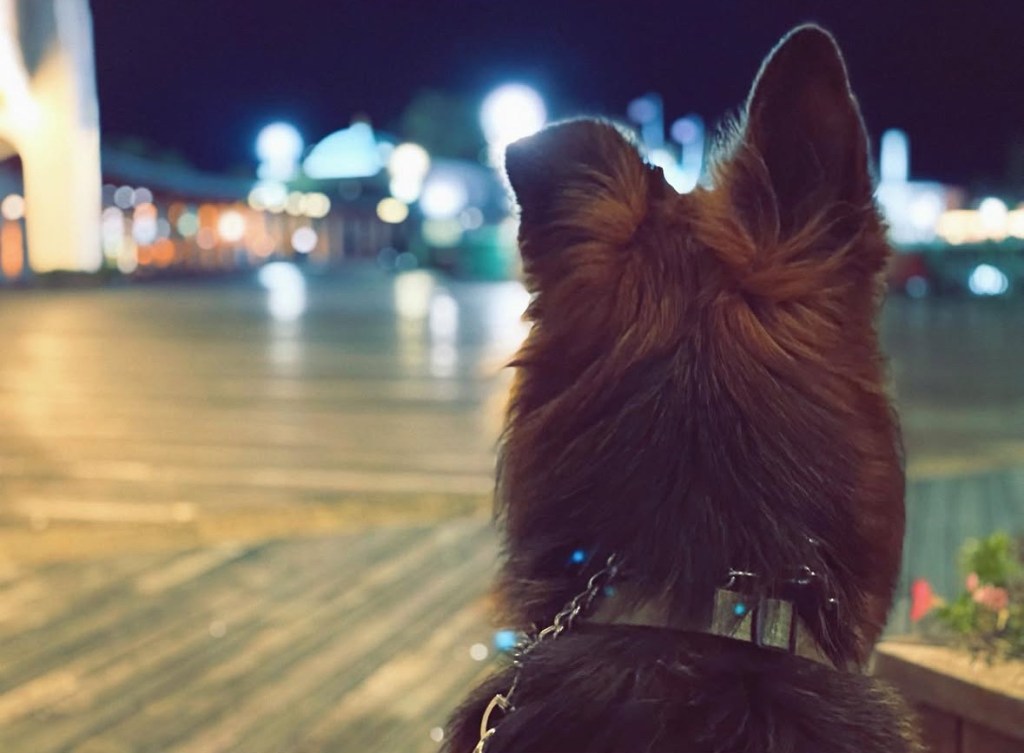
September 10, 2017 – March 25, 2025

Honoring the Legacy: Ensuring Continuity in School Therapy Dog Programs

Photo by Laura Stanley on Pexels.com

In a school setting, therapy animals can become cornerstones of the emotional support system for students and the learning community at large (Maricevic, 2022). Whether helping a student cope with anxiety, providing comfort during stressful academic periods, or serving as a calming presence in the classroom, therapy animals form deep therapeutic connections with the people around them in the school setting (Maricevic, 2022).

Sadly, earlier this week, a colleague shared news of the sudden passing of a therapy dog at her child’s middle school. My colleague shared how profoundly this loss impacted her child and the community, as many students relied on the therapy dog for comfort and emotional stability. While shared anecdotally, I learned parents expressed how devastated their children were, followed by their immediate desire to reach out to the school leadership to inquire about ways students would be supported–all highlighting the critical role the therapy dog played in the daily school life.

When a therapy animal becomes unavailable due to illness, retirement, or passing, students who rely on the animal for emotional stability can feel its absence deeply. Younger children, or neurodivergent learners, may struggle to understand why the animal is no longer present, while older students may experience anxiety, loss, or disengagement from the norms established with the help of therapy animals.

To maintain continuity and support for all stakeholders, schools need contingency plans for a therapy animal’s absence (Maricevic, 2022). Preparing students gradually for the possibility that therapy animals may not always be present is crucial, much like teaching resilience in other areas of life. Having other support systems—such as school counselors, peers, substitute therapy interventions, or on-call therapy dog teams—helps to heal the heartache. Schools can also consider honoring the animal upon retirement, or when the time comes to cross “The Rainbow Bridge,” helping students process their emotions.

The Human Factor

The loss of a therapy animal or handler should never be a reason to discontinue a program or cause a school to question its implementation. To say the bond between students and therapy animals are strong would be an understatement, so structured plans must address these inevitable life events. This could involve training a backup handler, having another therapy dog available, or providing grief support for students and the learning community (Maricevic, 2022).

In my research, participants frequently highlighted the need to plan not only for the therapy dog’s absence but also for the handler’s unexpected departure from their role (Maricevic, 2022). Participants emphasized the importance of protocols for the long-term sustainability of therapy dog programs and the consequences of not having a plan in place for this very scenario where either the dog or handler might be unavailable due to illness, injury, or unforeseen circumstances (Maricevic, 2022).

Of course, addressing the human side of the therapy dog team is important; handlers are often the bridge between the animal and the students, and their presence is crucial to the program’s success (Maricevic, 2022). Schools must be prepared to transition the handler’s role smoothly to maintain the relationships fostered through the therapy animal, while also understanding the possibility that, if a handler is no longer able to be part of the team, it may impact whether the therapy dog can continue in the learning community (Maricevic, 2022).

Such a scenario emerged in my research: after the sudden passing of a beloved teacher who was also the owner and handler of the school’s therapy dog, the family chose not to continue bringing the dog to school (Maricevic, 2022). It was a “big ask” on the part of the school to inquire if the family would be willing to still bring the dog to school to continue its positive impact, even after the loss of their matriarch (Maricevic, 2022). After careful consideration, the family couldn’t emotionally commit to such a responsibility, nor did they want to have someone else take responsibility for their dog’s daily care and well-being, (Maricevic, 2022). Understandable. Not to mention, such a shift might have been traumatic for the dog, who could’ve struggled to adapt to a new handler under such a stressful time, unless they were trained to interact with multiple people during the school day (Maricevic, 2022). 

Planning ahead ensures that therapy dogs and handlers remain integral parts of the school community (Maricevic, 2022). By developing clear protocols, schools can ensure that these essential relationships continue to thrive, even through transitions or losses (Maricevic, 2022).

Honor the Impact, Carry On the Mission

No one likes to consider the possibility of a therapy animal abruptly leaving a school or a handler becoming unavailable, but it’s important to emphasize that, in such situations, the solution isn’t about “replacing” a cherished member of the therapy team, regardless of the reason for their departure. Therapy animal teams are irreplaceable and beloved parts of the school, and their contributions are deeply felt by students and staff alike. However, for the greater good of the learning community and the long-term sustainability of the program, planning for these realities is “a must.”

By shifting the policy focus from preparing for an untimely event to policy language centered around ensuring the next team carries on the therapy animal program in honor of their years of service, schools can ensure that transitions are respectful and positive. Such a perspective remains true to following in the therapy dog’s paw prints, continuing the meaningful work they began, and preserving their spirit in every comforting moment shared with students. Decide on an empathic approach to honor the legacy of the therapy team while allowing the program to continue providing the emotional support the learning community needs. By being proactive, schools can safeguard the stability and warmth of animal assisted therapy interventions, ensuring they remain a source of comfort, even through the most challenging transitions.

“Good Boy,” K9 Steven

NYPD K9 Steven, named after the late Manhattan Detective Steven McDonald, passed away after a battle with cancer; he was 7 years old. K9 Steven, a Dutch Shepherd, was more than a working dog for the NYPD. He transcended his role as a police dog, mirroring the heroic spirit of his namesake and partner, Officer Joe Brayuha.

For six years, K9 Steven and Officer Joe Brayuha formed an inseparable partnership that showcased an unparalleled commitment to their duty. Together, they undertook deployments with NY Task Force 1, demonstrating their versatility, resilience, and unwavering readiness to rise to challenges in moments of crisis. The trials they overcame together, and the unspoken camaraderie they embodied, oh the stories they must have exchanged…

I felt compelled to reach out to Officer Brayuha and our conversations, though brief, resonated deeply. He shared that K9 Steven had an extraordinary ability to connect with people, “he loved everyone he met.” And as I continued to read Officer Brayuha’s response, it became very clear why, as a dog-lover and advocate for animal-assisted therapies, I was curious to learn more about their bond—a bond that, in essence, is more similar than different from the bond I have with my own dogs, and probably more similar than different from your understanding of the human-animal bond.

K9 Steven and Officer Brayuha are, in fact, archetypal beings themselves, and when combined, they form an archetypal duo, the same archetypal duo easily recognized in movies, literature, and typed across front page headlines of real life. They are the quintessential archetypal duo that navigate archetypal situations together, rely on each other in countless ways to make it through archetypal conflicts and to overcome archetypal antagonists.

In many ways, K9 Steven emerged as a modern-day representation of the tragic hero archetype, bravely confronting cancer head-on, Sadly, when our furry friends receive a cancer diagnosis, it is a very tough archetypal villain to defeat.

Which is why there comes a time when the tragic hero must say goodbye, and that goodbye is especially hard when there is nothing more either archetypal character can do to prevent the inevitable closure to a plot line neither wants to end.

And as is life, the story resumes.

This time though, the onus to continue the duo’s mission and K9 Steven’s legacy doesn’t just fall on Officer Joe Brayuha—it’s a collective effort. And my small part is represented in this post.

I created a digital collage of K9 Steven, entitled “Good Boy,” and found my creative inspiration from reading about K9 Steven and viewing his Instagram. If you look close you can observe the Chrysler Building and even Officer Brayuha. It is my intention to share a digital copy with Officer Brayuha as well as get a framed copy to him. I hope it will serve as a reminder of the duo’s positive impact, and their continued impact on others.

K9 Steven was most definitely a “good boy.” You’ll be missed, buddy.