
In High Schools, Therapy Dogs Give Teens Permission to Feel

Photo by Carlos Santiago on Pexels.com

In the bustling halls of high schools across the country, amidst the chatter of students and the ringing of bells, a new kind of support system is quietly at work. It doesn’t come in the form of a teacher, counselor, or peer, but rather, on four paws, with a wagging tail and a pair of soulful eyes.

Therapy dogs are becoming a fixture in high schools, offering a unique form of emotional support that aligns with the principles outlined in Dr. Marc Brackett’s “Permission to Feel.” Brackett, a professor at Yale University and the founding director of the Yale Center for Emotional Intelligence, advocates for the recognition, understanding, labeling, expressing, and regulating of emotions as essential components of emotional well-being. 

A Moment of Inspiration

The idea to explore this intersection between therapy dogs and emotional education came to me while scrolling through the social media platform “X.” Yesterday, Brackett posted a poignant reflection following a talk he gave at Yale reunion weekend. In his post, he shared, “I gave a talk today at @Yale reunion weekend. I shared how only 40% of us had someone in our childhood who gave us #PermissionToFeel. At the end of my talk, a man approached me and shared how he didn’t get an emotion education from his parents. But he did from his two daughters. I was moved that he shared this with me and by the fact that our children can be our teachers. This man felt blessed to have children that gave him permission to feel. Puts tears in my eyes just writing this. Tears of joy, of course.”

Brackett’s words resonated deeply with me, particularly the notion that emotional education can come from unexpected places, even from those younger than us. It prompted me to think about how therapy dogs in high schools grant teens the permission to feel, much like the daughters did for their father.

A Calming Presence

For many students, the school environment can be a source of significant stress and anxiety. Academic pressures, social dynamics, and personal challenges can create a cocktail of emotions that can be overwhelming (Maricevic, 2022). Therapy dogs offer a calming presence that helps students recognize their own emotional states. Many students report that seeing the therapy dog helps them feel a sense of calm, allowing the stress to melt away and enabling them to think more clearly about their feelings.

This initial recognition is a crucial first step. Therapy dogs help students become more aware of their emotions, which is often the most challenging part of emotional intelligence (Maricevic, 2022). 

Understanding and Reflecting

Interacting with therapy dogs also encourages students to understand the sources and reasons behind their feelings. The non-verbal communication and unconditional affection from a dog can prompt introspection and self-reflection. Students often find that spending time with the therapy dog helps them think more deeply about why they are feeling stressed or anxious, aiding them in understanding their emotions better.

Finding the Words

One of the most significant challenges in emotional development is the ability to accurately label emotions. Therapy dogs act as a bridge, making it easier for students to discuss their feelings with counselors or peers. The comfort provided by the dog can facilitate conversations that might otherwise be difficult. School counselors observe that students often find it easier to open up about their feelings when they’re with the dog, as the dog’s presence provides a sense of safety and acceptance.

Expressing and Managing Emotions

Expressing emotions is another critical component of Brackett’s framework. Therapy dogs provide a non-judgmental outlet for students to express their feelings (Maricevic, 2022). Students often feel that they can tell the dog anything, without fear of being judged or misunderstood (Maricevic, 2022).

Moreover, the presence of a therapy dog can help students develop strategies to regulate their emotions. Research has shown that interacting with dogs can reduce levels of cortisol, a stress hormone, and increase levels of oxytocin, a hormone associated with bonding and stress relief (Petersson et al., 2017). This physiological response can help students feel more balanced and in control. Many students report that the therapy dog helps them calm down when they’re feeling overwhelmed, serving as a furry therapist (Maricevic, 2022).

A Growing Trend

As more schools recognize the benefits of therapy dogs, their presence is becoming more common. Programs are being established across the country, bringing these gentle companions into the lives of students who need them most. School administrators note that the impact is profound, with noticeable improvements in students’ emotional well-being since introducing the therapy dog program (Maricevic, 2022).

In a world where teens are often bombarded with pressures and expectations, therapy dogs are providing a much-needed respite. They are giving students the permission to feel—fully, deeply, and without judgment. And in doing so, they are helping to foster a generation of emotionally intelligent and resilient young adults.

The Power of Empathy: How Therapy Dogs in High School Can Fill an Empathy Void

Photo by Ivan Babydov on Pexels.com

Empathy is a cornerstone of human connection, fostering relationships and emotional well-being. In an insightful CNN article, Dr. Katie Hurley highlights the contagious nature of empathy and the crucial role parents play in modeling it for their teens. However, what happens when a teen lacks an empathic parent or guardian? How can these adolescents learn to cultivate empathy? One promising solution lies in the unique power of the canine companion.

The Empathy Deficit

Dr. Hurley’s article underscores the importance of parental warmth and emotional support in developing a teen’s empathy. The study Dr. Hurley references demonstrates a clear generational transmission of empathic behaviors from parents to children and beyond. But for teens who do not have access to such nurturing environments, this pathway to empathy can be obstructed, leading to potential emotional and social difficulties.

Benefits of Therapy Dogs

Enter therapy dogs. These specially trained animals offer unconditional love, companionship, and emotional support, which can be incredibly beneficial for teens struggling with empathy development. Therapy dogs have been shown to help individuals, particularly those with emotional and social challenges, to open up and engage in empathic behaviors.

Emotional Support: Therapy dogs provide a non-judgmental and consistent source of emotional support. Their presence can help teens feel understood and valued, which is essential for building self-esteem and emotional resilience (Maricevic, 2022).

Stress Reduction: Interacting with therapy dogs has been proven to reduce stress levels, which can create a more conducive environment for learning and practicing empathy. Lower stress levels allow teens to focus more on others’ feelings and less on their own anxieties (Maricevic, 2022).

Social Skills Improvement: Therapy dogs encourage social interactions. Teens may feel more comfortable practicing empathy and social skills with a dog first, which can then translate to better interactions with peers (Maricevic, 2022).

Modeling Empathy: By caring for and understanding the needs of a therapy dog, teens can learn to recognize and respond to emotions, a skill that is directly transferable to human relationships (Maricevic, 2022).

Real-Life Applications: Therapy Dogs in High School Settings

Several schools and therapy programs have successfully integrated therapy dogs to help students develop empathy and other social skills (Maricevic, 2022). For instance, programs like “Reading to Dogs” in libraries and schools encourage children and teens to read aloud to therapy dogs, improving their reading skills and building a sense of empathy and connection.

While the absence of an empathic parent can pose significant challenges for a teen’s emotional development, therapy dogs offer a viable and effective alternative to cultivate empathy. By providing emotional support, reducing stress, improving social skills, and modeling empathic behaviors, therapy dogs can fill a crucial gap, ensuring that all teens have the opportunity to develop this essential human trait (Maricevic, 2022).

Which is why the integration of therapy dogs in high school settings is an innovative approach that has proven to be highly beneficial in fostering empathy, reducing stress, and enhancing social skills among students (Maricevic, 2022). Here are some specific ways therapy dogs can make a significant impact in high schools:

Stress Relief and Mental Health Support

High school can be an incredibly stressful time for students due to academic pressures, social dynamics, and the challenges of adolescence (Maricevic, 2022). Therapy dogs can provide a calming presence, helping students manage stress and anxiety. Schools that have implemented therapy dog programs often report noticeable improvements in the overall mental health of their students (Maricevic, 2022).

Counseling Sessions: Therapy dogs can be incorporated into school counseling sessions. Their presence helps create a more relaxed environment, making it easier for students to open up and discuss their feelings and issues (Maricevic, 2022). This can be particularly beneficial for students who are reluctant to seek help from a counselor.

Stress-Relief Zones: Some high schools have established designated areas where students can interact with therapy dogs during breaks or free periods (Maricevic, 2022). These stress-relief zones provide a much-needed respite from the pressures of school life and offer a safe space for students to unwind and recharge.

Crisis Intervention: In the aftermath of traumatic events, therapy dogs can be brought in to provide comfort and emotional support to students. Their calming presence can help students feel safer and more secure, aiding in the healing process (Maricevic, 2022).

Enhancing Empathy and Social Skills

Therapy dogs can play a crucial role in teaching students empathy and improving their social skills. Interacting with dogs requires understanding their needs and emotions, which can translate into better interpersonal skills among students (Maricevic, 2022).

Empathy Workshops: Schools can organize workshops where students learn about empathy and emotional intelligence through interactions with therapy dogs. These workshops can include activities such as caring for the dogs, understanding their body language, and practicing gentle and respectful handling. These experiences can help students develop a deeper understanding of empathy, which they can then apply in their interactions with peers (Maricevic, 2022).

Social Skills Groups: Therapy dogs can be used in social skills groups to help students practice and enhance their social interactions. For example, students with social anxiety or autism spectrum disorders can benefit greatly from the presence of a therapy dog, which can act as a social bridge, making it easier for them to engage with others (Maricevic, 2022)

Peer Mediation Programs: Therapy dogs can be integrated into peer mediation programs, where students help resolve conflicts among their peers. The presence of a therapy dog can create a more relaxed atmosphere, making it easier for students to communicate openly and resolve their issues amicably (Maricevic, 2022).

Academic Benefits

The presence of therapy dogs in high schools can also have positive effects on academic performance (Maricevic, 2022). By reducing stress and creating a more supportive and relaxed environment, students may find it easier to focus and perform better academically (Maricevic, 2022).

Reading Programs: Similar to programs in elementary schools, high schools can implement reading programs where students read aloud to therapy dogs. This can be particularly beneficial for students who struggle with reading or have low confidence in their reading abilities. The non-judgmental presence of a dog can help them practice without fear of criticism, improving their skills and confidence over time (Maricevic, 2022).

Attendance and Engagement: Schools that have therapy dog programs often see improvements in student attendance and engagement. The presence of therapy dogs can make school a more welcoming and enjoyable place, encouraging students to attend regularly and participate more actively in their classes (Maricevic, 2022).

Exam Stress Reduction: During exam periods, therapy dogs can be brought in to help students cope with the heightened stress and anxiety. Short interactions with therapy dogs before exams can help calm students and improve their focus and performance (Maricevic, 2022).

Building a Supportive School Community

Therapy dogs can help create a more supportive and inclusive school community by bringing students, teachers, and staff together (Maricevic, 2022).

Community Events: Schools can host events and activities centered around therapy dogs, such as “dog days” where therapy dogs visit the school, or fundraising events for local animal shelters. These events can foster a sense of community and shared purpose among students and staff (Maricevic, 2022).

Teacher and Staff Support: Therapy dogs can also provide support for teachers and staff, who often face high levels of stress. A happier and more relaxed staff can contribute to a more positive school environment, benefiting everyone in the school community (Maricevic, 2022).

Positive School Culture: The presence of therapy dogs can contribute to a more positive school culture by promoting kindness, compassion, and empathy. Students may be more inclined to engage in positive behaviors and support their peers, creating a more inclusive and welcoming environment (Maricevic, 2022).

As schools continue to explore innovative ways to support their students, therapy dog programs stand out as a promising and impactful solution. The presence of therapy dogs in schools not only provides immediate emotional and psychological benefits but also helps in building lifelong skills of empathy and compassion in students. By addressing the emotional needs of teens, especially those lacking empathic parental or guardian support, therapy dogs can help create a generation of more understanding, resilient, and emotionally intelligent individuals.

Knicks’ Thibodeau Reflects on Season’s End with Resounding Message for Us All

In a poignant moment during the post-Game 7 conference, Tom Thibodeau, the coach of the valiant 2024 New York Knicks, encapsulated the spirit of a season filled with grit, determination, and unyielding belief. “If you give everything you have, you can live with no regret…this team exceeded everybody’s expectations, except probably our own,” Thibodeau remarked, drawing a definitive line under a remarkable journey.

Thibodeau’s Knicks, a team often underestimated by critics, showcased a season that defied the odds and silenced naysayers. As the coach stood before the press, his words were not just a reflection on the game but a broader commentary on the ethos that propelled the team forward.

Effort and Regret: A Life Lesson

Thibodeau’s assertion, “If you give everything you have, you can live with no regret,” resonates far beyond the confines of the basketball court. It’s a universal principle, applicable to all walks of life. The message is clear: total commitment and effort ensure a life free from the burden of “what ifs.” For the Knicks, this season was a testament to that philosophy. Every player, every game, every practice reflected an unrelenting pursuit of excellence.

Throughout the season, the Knicks faced skepticism and doubt. Analysts, fans, and opponents frequently set low expectations, anticipating a performance that would blend into the mediocrity of past seasons. However, the team’s achievements this year shattered those low ceilings. They played with a tenacity and skill that not only impressed the league but also carved a new identity for themselves. Thibodeau’s reflection that the team “exceeded everybody’s expectations, except probably our own” speaks volumes about their mindset. Internally, the Knicks harbored a quiet confidence, a self-belief that propelled them to strive for greatness. This inner conviction was their driving force, creating a standard of excellence that was inherently higher than what others anticipated.

Embracing a Knicks’ Mindset in the High School Classroom

Of course, the educator in me needs to bring Thibodeau’s words into the the high school classroom. You see, Thibodeau’s reflection on the importance of giving everything you have, to live without regret, and exceeding expectations resonates far beyond the basketball court. This mindset is equally powerful and transformative in the high school classroom. Here’s how:

1. Total Commitment to Effort

Just as the Knicks players gave their all on the court, students can apply this principle to their studies. Whether it’s a challenging math problem, a complex science project, or a demanding essay, putting in maximum effort ensures that students do their best work. This commitment helps students develop resilience and perseverance, knowing that they have done everything possible to succeed.

2. Living Without Regret

By putting forth their best effort in every assignment and exam, students can avoid the regret of wondering what might have been if they had tried harder. This mindset encourages them to take ownership of their education, leading to greater satisfaction and a sense of accomplishment.

3. Exceeding Expectations

The Knicks surpassed what others expected of them by believing in their potential and striving for excellence. Similarly, students can set high personal goals and work towards surpassing them. This approach fosters a growth mindset, where students see challenges as opportunities to improve rather than obstacles to fear.

4. Building Self-Belief

The Knicks’ internal confidence drove their success. In the classroom, students who believe in their abilities are more likely to take risks, participate actively, and embrace difficult tasks. Teachers can nurture this self-belief by providing encouragement, recognizing effort, and celebrating progress.

5. Creating a Supportive Environment

A key factor in the Knicks’ success was their team spirit and mutual support. In a high school setting, fostering a collaborative and supportive classroom environment can help students thrive. Group projects, peer tutoring, and open discussions encourage students to support each other’s learning, enhancing overall performance.

6. Resilience in the Face of Failure

The Knicks’ journey wasn’t without setbacks, yet their unwavering effort allowed them to bounce back stronger. Similarly, students can learn to view failures not as endpoints but as valuable learning experiences. This resilience builds character and prepares them for future challenges.

7. Setting Personal Benchmarks

Students can take inspiration from the Knicks by setting personal benchmarks for success. These benchmarks might be improving grades, mastering a particular subject, or developing better study habits. Achieving these goals can boost confidence and motivate further progress.

Applying the Knicks’ mindset to the high school classroom cultivates a culture of effort, self-belief, and continuous improvement. By striving to give their all and exceed their own expectations, students can achieve academic success and personal growth. This approach not only prepares them for higher education and careers but also instills life-long values of perseverance, resilience, and self-confidence.

A Season to Remember

As the Knicks wrap up this season, their journey serves as a powerful narrative of overcoming doubt and surpassing limitations. The coach’s words will likely linger in the minds of players and fans alike, a reminder of what can be achieved with relentless effort and self-belief. In reflecting on this season, the Knicks have not just played basketball; they’ve crafted a story of resilience and ambition. They’ve demonstrated that with the right attitude and determination, exceeding expectations becomes not just a possibility, but a reality.

Looking ahead, the foundation laid this season paves the way for even greater aspirations. The team’s performance has set a new benchmark, one that will undoubtedly shape their future endeavors. As the city of New York reflects on this memorable season, it’s clear that the Knicks have redefined their narrative. They’ve proven that with heart and hustle, they can not only meet the expectations of their most ardent supporters but also inspire a broader audience with their commitment to excellence.

Coach Thibodeau and the 2024 New York Knicks, you are an inspiration to us all.

The Key to UC Davis Health’s CARE Project: The Canine Companion

The Impact of Therapy Dogs in the Healthcare Setting

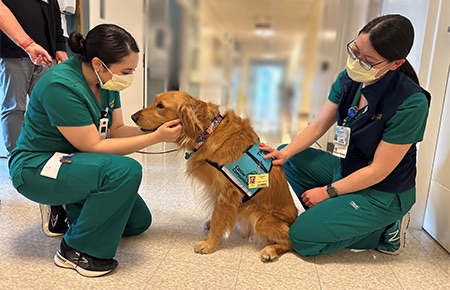
“The newest canine CARE team dog, Landon, is popular not only with patients, but with employees, who enjoy seeing him on the job” (Houser, 2024).

I recently read a social media post by Canine Companions in which the organization highlighted therapy dog Landon and his involvement in the UC Davis Health’s CARE (Creativity, Amenities, Relaxation, Exploration) Project. UC Davis Health takes great pride in the CARE Project, with a focus on treating the whole patient: mind, body, and spirit, its mission goes beyond conventional medical approaches, and recognizes the therapeutic power of what may at first seem to be unconventional—the human-animal bond.

In a healthcare environment, where stress and anxiety can be overwhelming, the introduction of therapy dogs like Landon serves as a beacon of hope and motivation. The partnership between UC Davis Health, Landon and his volunteer handler, Pat Tull, exemplifies the profound impact animals can have on the well-being of individuals facing health challenges. You see, Landon’s supportive role to patients and staff alike, not only highlights the significance of certified therapy dogs but also emphasizes the compassion and comfort they bring to those undergoing hospitalization, and those delivering the medical care.

The CARE Project and UC Davis Health’s commitment to the human-animal bond contributes to patients’ emotional well-being and encourages their active engagement in treatment, which fosters a holistic approach to healthcare. Katie Lorain, the creative arts and recreation therapy manager of the CARE Project, observes patients moved to tears upon encountering a therapy dog, which underscores the transformative nature of these interactions. Lorain’s observations of the patient-therapy dog relationship in the health care setting serves as a testament to the unique and invaluable role that animals can play in enhancing the human experience, especially in challenging circumstances.

The emotional response of patients, often moved to tears at the mere sight of these canine companions, speaks volumes about the profound connection forged in these moments. Let the story of therapy dog Landon and UC Davis Health’s CARE Project remind readers of the healing power embedded in the simplicity of a wagging tail and a comforting presence. Let Landon, and his fellow pawesome therapy dogs, reinforce the idea that, sometimes, love at first sight can come in the form of a furry friend bringing solace and security during moments of vulnerability.

To learn more about Landon and UC Davis Health’s CARE Project, please read Nick Houser’s January 2024 piece, Introducing UC Davis Health’s newest four-legged team member, Landon.

Celebrating Black History Month: Honoring Tina Turner


In honor of Black History Month, each week I will delve into the heartwarming bond between Black voices and their cherished canine companions.

For my final post, I pay tribute to the remarkable life of the iconic Tina Turner, a music legend who reshaped the rock ‘n’ roll landscape and is forever immortalized as the #Queen of Rock ‘n’ Roll. Tina’s electrifying performances, soulful voice, and resilient spirit made her a music icon and one of my favorite artists to karaoke!

I personally found myself even more inspired by Tina after learning about this 1971 image depicting Tina, her son Ronnie, and their majestic Great Dane, Onyx. You see, this image encapsulates the dynamic energy of the rock legend and the serene strength of a canine companion, solidifying the position held by many, other than myself, that dogs are not just pets; they are steadfast companions, offering a unique and irreplaceable bond, one that transcends barriers imposed by others and the society in which they live.

Additionally, the image suggests Onyx exemplified the quintessential #GreatDane attributes, loyalty and a gentle demeanor, not because of his regal posture, but more so by the body language of Onyx’s humans—Tina’s loving embrace of Onyx, the position of her arm and her beaming smile, not to mention her son’s joyous expression. In this moment, the trio appear to share simultaneous happiness.

I’m left to wonder about the myriad of ways Onyx may have offered Tina unwavering reinforcements through the highs and lows of the early days of her illustrious career, including her personal hardships and quest for true love. In the whirlwind of a demanding career, one may consider that the presence of a loyal canine friend, like Onyx, served as a grounding force, for dogs, with their intuitive understanding and unconditional love, fulfill an area of need within their person.

Tina and Onyx, another beautiful example of the human-animal bond to further substantiate my personal belief that standing alongside every great woman is a stoic canine companion (or four). At the end of the day, dogs really are “Simply the Best.”

Please consider a visit to my Instagram to view posts honoring the incomparable Black voices of Billie Holiday, Oprah, Pauli Murray, and their respective love of dogs.

Celebrating Black History Month: Honoring Pauli Murray

👩🏼‍💻: @empathicpaws
📸: Robert D. Farber archives

In honor of Black History Month, each week, I will delve into the heartwarming bond between Black voices and their cherished canine companions. This week, I honor the trailblazing Pauli Murray – a civil rights activist, legal scholar, and champion for equality.

Along with Pauli’s immense contributions to life as we know it today, Pauli was a steadfast dog lover and it is Pauli’s enduring love for dogs that is beautifully captured in this moment. Pictured here you will find an image of Pauli and cherished companion, “Doc” – officially known as “Black and White We Rise Together,” on the lawn of Benedict College (Farber Archives, 1967).

Throughout Pauli’s remarkable life, dogs transcended the role of mere pets; they were steadfast allies, bearing witness to Pauli’s tireless advocacy for justice, equality, and ideals.

Accompanying their groundbreaking contributions, Pauli’s connection with their canine companions is a testament to the enduring strength found in companionship and the human-animal bond. “Doc” stands as one of the many loyal dogs integral to Pauli’s story, quite possibly offering solace, understanding, and unconditional love.

I am inspired by the thought of Pauli Murray making these profound contributions, accomplishing monumental feats all the while having a loyal canine companion equally steadfast by their side—a symbol of companionship, unwavering support, and a unique kind of partnership, but the most true form of love.

Imagine the comfort of having a faithful friend, witnessing tireless advocacy, celebrating triumphs, and offering solace during challenges. This bond may very well have evoked feelings of determination, resilience, and reaffirmed Pauli’s commitment to making a difference.

Pauli and “Doc,” a testament to the extraordinary impact that the companionship of a beloved dog can have on one’s life, the role they play in the narrative of accomplishments, and the inspiration to continue on my own advocacy journey, with gratitude and love for the pack that remains by my side.

Please consider a visit to my Instagram to view posts honoring the incomparable Black voices of Billie Holiday and Oprah, and their respective love of dogs.

The Significance of Digital Knowledge Portfolios in the MYP & DP Classrooms: Navigating the IB and Beyond


In an era shaped by technological advancements and evolving educational paradigms, students face an ever-growing need to showcase their skills and accomplishments comprehensively and accessibly. This is where the concept of Digital Knowledge Portfolios becomes a pivotal tool in the academic journey, especially for those pursuing the International Baccalaureate (IB) Middle Years Programme (MYP), Diploma Programme (DP), and beyond.

Digital Knowledge Portfolios serve as dynamic repositories, housing a student’s academic achievements, reflections, and growth over time. Within the context of the IB framework, they play a crucial role in aligning with the program’s core principles and objectives.

Understanding the IB MYP Framework

The MYP emphasizes holistic learning, encouraging students to explore connections between disciplines while fostering critical thinking and communication skills. It’s within this interdisciplinary approach that Digital Knowledge Portfolios find their stride, enabling students to document projects, essays, artistic creations, and other endeavors that exhibit their multifaceted talents.

When transitioning to the DP, these portfolios become even more vital. The program’s rigorous demands necessitate evidence of research, creativity, and reflection – elements that can be effectively showcased through digital portfolios. Students demonstrate their growth, track their academic journey, and exhibit the skills and attributes sought after in the DP curriculum.

The Power of Reflection and Connection

Digital Knowledge Portfolios are not just repositories of work; they are reflective spaces where students can articulate their learning process, challenges faced, and growth achieved. Through this reflective practice, students gain a deeper understanding of their strengths and areas for improvement, aligning with the IB’s emphasis on metacognition and self-awareness.

Moreover, these portfolios bridge the gap between academic endeavors and future aspirations. They serve as tangible evidence of a student’s capabilities, aiding college admissions, scholarship applications, and career pursuits. As the world increasingly values digital literacy and the ability to curate one’s online presence, the Digital Knowledge Portfolios become invaluable assets.

Aligning IB Command Terms within the Digital Knowledge Portfolio

The International Baccalaureate (IB) program is renowned for its rigorous academic standards and precise language used to articulate student expectations. Central to this I IB language are Command Terms – key words that direct students on how to approach their learning.

Integrating Command Terms Strategically

Integrating the IB’s Command Terms within the Digital Knowledge Portfolio is instrumental in showcasing a student’s mastery of these skills as it pertains to the rigors of the IB’s program.

First, students must determine and demonstrate understanding of the terminology.
Within the Digital Knowledge Portfolio, sections are dedicated to honoring the IB’s definition of the Command Term, as well as designated spaces for students to define the Command Terms in their own words. Clearly defining the Command Terms, in their own words, confirms a foundational understanding of the IB’s terminology and students’ ownership of learning.

Then, students strategically align their work to the content specific Command Terms. Students identify an artifact, include an image and/or a direct link to the artifact, and then justify their rationale for the selected artifact.

Hypothetical Artifacts & Justification

In this section, I put forth hypothetical artifacts and justification aligned to some of the Command Terms to showcase how a student might demonstrate engagement in the IB curriculum framework and ownership of learning.

  • Define: The artifact might be an essay or research paper where the student meticulously defines and clarifies key terms within a specific subject area. The justification here would involve highlighting how this artifact serves to establish a foundational understanding of the topic under discussion.
  • Explain: An artifact showcasing an elaborate project presentation or an instructional video might justify its inclusion by emphasizing how it succinctly explains complex concepts or methodologies, showcasing the student’s adeptness in simplifying intricate ideas.
  • Evaluate: If a portfolio entry involves a reflective piece where the student assesses the efficacy of a scientific experiment or a historical analysis, the justification would focus on how this artifact demonstrates the student’s capacity for critical evaluation.
  • Discuss: In the case of a recorded debate or a written dialogue on socio-political issues, the justification would elucidate how this artifact displays the student’s ability to engage in meaningful discussions, considering multiple perspectives.
  • Compare and Contrast: An artifact might feature a project that compares and contrasts different literary works or scientific theories, justifying its inclusion by highlighting how it showcases the student’s understanding of interdisciplinary connections.

Conclusion

By consciously aligning their work to the IB Command Terms within the Digital Knowledge Portfolio, students not only showcase their understanding of these terms but also demonstrate their ability to engage with the academic material at a higher level. This strategic curation enhances the depth of the Digital Knowledge Portfolio, presenting a comprehensive overview of a student’s academic journey while explicitly highlighting their mastery of the IB’s language and expectations.

Celebrating Humble Honors: A Journey Among Champions in Advocacy

Dog Save the People’s most recent Instagram post

As 2023 comes to an end, I am reminded of an extraordinary privilege afforded to me this year—being featured alongside incredible human-animal bond advocates in the 2023 podcast series, Dog Save the People. In a world filled with remarkable voices dedicated to uplifting humanity, there are those who stand out, inspiring change and progress. To find myself nestled amidst luminaries—a Nobel Prize winner and CNN’s #2023HeroOfTheYear, well, to say it was a surreal experience would be an understatement.

The honor was not just a personal triumph. Dog Save the People’s decision to devote an entire episode to my research and to unpack the why behind the need for therapy dogs in high school settings, gave credence to my research, the human-animal bond (specifically the one between teenagers and therapy dogs), and so much more. But here’s the best part, I’m not the only person to hold such convictions.

Dog Save the People’s dedication to nurturing meaningful discussions, with a focus on the profound bond between humans and animals, is truly commendable. Each episode’s authentic portrayal and reverence for diverse perspectives reflects an unwavering commitment to fostering impactful dialogue for the greater good.

And then there’s my voice.

The inclusion of my voice alongside this esteemed 2023 group of guests serves as a reminder of the collective strength found in passionate advocacy. It’s a testament to the transformative potential of shared conversations and the ripple effect they create.

To those who stood by EmpathicPaws, supported my ventures, and rallied for the advocacy work addressing the human-animal bond across public and private sectors, and continue to do so, I extend my deepest gratitude.

And as I glance at the time, the minutes tick closer to 2024. It’s exciting to affirm my empathic journey is one that is far from over. Here’s to carrying forth the torch of empathy and advocacy into the new year. Together, let our collective voices resonate louder, ushering in positive change—one paw at a time.

The Beauty of the Inquiry Conversation

Unearthing School Needs, Listening, and Fostering Hope

We all know the fact that no two schools are alike. Each school has its unique set of strengths and challenges, its own character and culture, its own needs. Which is why the inquiry conversation, like those I have with school districts interested in learning more about what exactly a therapy dog program would look like in their school, is a truly beautiful thing. Let me tell you why.

During these conversations, I listen… a lot. I listen to educators share their experiences and insights. I get an insider’s perspective that no policy document or data report can ever fully capture. I hear the voices of passionate educators, who use their passion and commitment to paint a vivid picture of the real-world challenges faced by students in the day-to-day realities of the 21st century classroom.

Just Listen

Listening to educators during inquiry conversations is not just about absorbing information; it’s about building a bridge of trust and understanding. It’s about acknowledging the educators expertise, valuing their contributions to the organization, and recognizing how their efforts to even initiate an inquiry conversation in the first place is rooted in the best interest of students.

If an educator in your learning organization is passionate about a cause, advocates for their students’ needs, takes time out of their evening to connect with someone, like me, who can provide insight and thoughts for further consideration, that’s a pretty dang good, awesome, educator. Never, ever, let them go.

Hopes 

Inquiry conversations often reveal the hopes and dreams educators hold for their students. These hopes and dreams are deeply rooted in a genuine commitment to fostering the growth, well-being, and success for each learner.

And with each conversation, the voice of the educator carries with it a vision of what they wish for their students. It might be the hope for greater inclusivity with the student body, improved access to resources, or enhanced social-emotional support. 

Step One, Done.

So here’s to those next steps, the ones that take a conversation of hypotheticals to reality. And it will be a journey–a journey that involves dedication, collaboration, and a deep commitment to the well-being of students. I am honored and humbled to be included in step one of your process and cannot wait for step two, and three, and four…. thank you.

Empathic Paws: Unleashing the Power of Therapy Dogs in Your High School

As a passionate writer, educator, researcher, and the founder of Empathic Paws, my dedication lies in bringing the incredible benefits of therapy dogs to adolescents in your high school.

My Journey

My educational journey includes a bachelor’s degree in English Literature from Stonehill College, a master’s degree in Curriculum and Teaching from Teachers College, Columbia University, and a Doctorate in Educational Leadership from Manhattanville College. Since 2005, I’ve been committed to the adolescent learner, developing curriculum that nurtures empathy, advocacy, and social responsibility for secondary students. This commitment is what led me to my groundbreaking qualitative research in “Therapy Dogs in Secondary Schools: Implementation Processes & Relationships to Students’ Social-Emotional Competencies,” and equips me in providing invaluable insights to the therapy dog implementation process.

The Power of the Paw

Not only am I a dedicated professional, but I also live with my family, which includes our four dogs, in the dog-friendly Sound Shore region of Westchester County, New York. My commitment to Empathic Paws goes beyond my professional life (I too have benefited from the human-animal bond for close to four decades.), making me the perfect champion for bringing therapy dogs into your school environment.

I firmly believe in the untapped potential of the human-animal bond as a genuine way to address the social-emotional needs of a school community, and beyond. Empathic Paws is dedicated to supporting institutions in incorporating animal-assisted therapies, including therapy dogs, utilizing research-based policy and programmatic protocols to meet and potentially exceed the physical, mental, and emotional needs of all stakeholders.

The Empathic Paws’ Approach

To ensure a smooth and successful integration of a therapy dog program in your school, I will use my original 10 Empathic Steps to Establishing a Therapy Dog Program in Your High School. The 10 Empathic steps to Establishing a Therapy Dog Program in Your High School will assist in implementing, establishing, and maintaining the long-term sustainability of a customized therapy dog program for your specific school and identified area of need, as well as educate, honor and empower stakeholders by:

  • Presenting comprehensive information on animal-assisted therapies and related topics to ensure all stakeholders are well-informed prior to the implementation process.
  • Remaining rooted in collaboration and empowerment, identified stakeholders will be included in the process.
  • Providing empathic guidance and expertise to navigate every step of the implementation process

There is no better thought than knowing your visit to Empathic Paws means you are one step closer to creating a unique therapy dog program that enriches the lives of your students and members of your learning community. Together, let’s harness the transformative power of the human-animal bond and enhance the well-being of all who call your high school home.

Get in touch

Ready to start the process? Don’t hesitate to send a message.

Go back

Your message has been sent

Warning
Warning
Warning
Warning.